
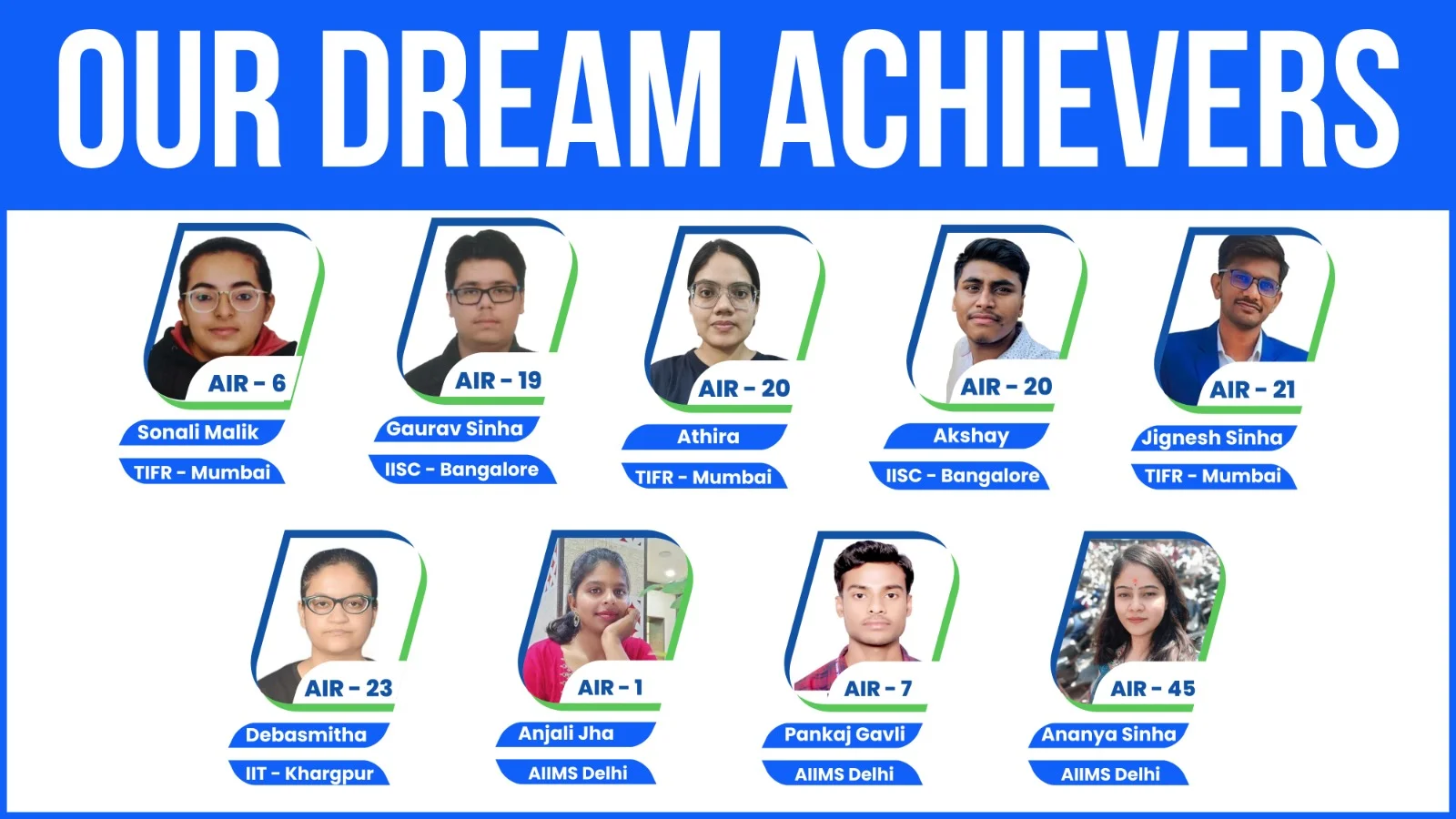
If you are a life science graduate dreaming of a prestigious research fellowship, a seat at IIT or IISc, or a career in top government laboratories, then the Graduate Aptitude Test in Engineering — more commonly known as GATE — is your golden ticket. Every year, lakhs of students appear for GATE Life Sciences (XL) and Biotechnology (BT) papers, and yet only a fraction manage to crack it with a competitive score. The difference between those who make it and those who don’t often comes down to one critical decision: choosing the right GATE life science online coaching.
This guide is written specifically for life science students who are serious about GATE — students who want to understand not just what to study, but how to study, which institute to trust, and what strategy to follow from day one. By the time you finish reading this, you will have a clear roadmap, an honest understanding of what quality coaching actually looks like, and a recommendation that has been helping students across India transform their GATE scores.
Understanding GATE Life Sciences: What You’re Actually Signing Up For
Before you even think about coaching, you need to truly understand the GATE Life Sciences exam. GATE XL (Life Sciences) and GATE BT (Biotechnology) are two of the most comprehensive and conceptually deep papers in the entire GATE examination system. Unlike engineering streams, where problems tend to be formulaic, life science questions demand a deep, interconnected understanding of concepts across multiple disciplines.
GATE XL covers Chemistry (mandatory) plus two optional sections from Biology, Biochemistry, Botany, Microbiology, Zoology, and Food Technology. GATE BT covers Biotechnology as a unified paper, including engineering mathematics, general aptitude, and core biotechnology subjects spanning cell biology, genetics, molecular biology, recombinant DNA technology, bioprocessing, and more.
The exam is 3 hours long, carries 100 marks, and includes both Multiple Choice Questions (MCQs) and Numerical Answer Type (NAT) questions. There is negative marking for MCQs — 1/3 mark for 1-mark questions and 2/3 mark for 2-mark questions — which makes accuracy equally as important as speed.
Here’s what makes GATE Life Sciences genuinely challenging:
The syllabus is enormous. A student preparing for GATE BT, for example, needs to be comfortable with subjects as diverse as enzyme kinetics, bioreactor design, immunology, plant tissue culture, genomics, and engineering mathematics — all at the same time. This is not a paper you can crack by memorising random facts. The questions are application-based, conceptual, and increasingly experimental in nature.
The competition is intense. While the total number of GATE Life Science and BT aspirants is smaller than CS or ECE, the quality of competition is high. Your competitors are MSc students, research scholars, and working professionals who have been preparing for months. To get a rank in the top 200–500 — which is typically needed for IISc, IIT, and CSIR fellowships — you need structured, disciplined preparation backed by expert guidance.
This is precisely why finding the best GATE life science online coaching is not a luxury — it is a strategic necessity.
What Makes GATE Life Science Online Coaching Effective?
Not all coaching is created equal. The online coaching space has exploded in the last five years, and while this gives students more options, it also creates confusion. Students end up subscribing to multiple platforms, watching hundreds of hours of disorganised video lectures, and still feeling lost when mock tests expose their gaps.
Here is what genuinely effective GATE life science online coaching must offer:
1. Expert Faculty with Research-Level Knowledge Life science questions at the GATE level often test understanding that goes beyond standard textbook content. Faculty members should not just be “teachers” — they should ideally have a background in research, postgraduate-level expertise, and the ability to explain why something happens, not just what happens.
2. Structured, Syllabus-Aligned Curriculum The coaching program should follow the official GATE syllabus in a logical sequence — starting from foundational topics and building toward integrated, application-level understanding. Random topic coverage is one of the most common problems with low-quality online programs.
3. Regular Tests and Performance Analysis Weekly tests, chapter-wise quizzes, and full-length mock tests are non-negotiable. More importantly, the coaching should help students understand their mistakes — not just show them a scorecard. Detailed solutions, error analysis, and revision strategies based on test performance are what separate good coaching from great coaching.
4. Doubt Resolution That Actually Works. One of the biggest drawbacks of purely self-paced online learning is that doubts pile up and go unresolved. Quality coaching programs offer live sessions, dedicated doubt-clearing classes, and one-on-one interaction with mentors. When a student is stuck on a concept like competitive versus uncompetitive inhibition or the regulation of the lac operon, they need an answer from a human expert — not a forum thread from 2017.
5. Previous Year Question (PYQ) Analysi:s GATE has a pattern. Questions from previous years often reappear in modified form, and topics that have historically carried heavy weightage tend to remain important. Serious coaching programs integrate PYQ analysis deeply into their curriculum rather than treating it as an afterthought.
6. Motivational and Mental Support GATE preparation is a marathon, not a sprint. Students preparing for 6–12 months often go through phases of burnout, self-doubt, and anxiety. Good coaching acknowledges this reality and builds in motivational sessions, peer learning communities, and regular student check-ins.
Introducing Chandu Biology Classes: A Name Students Trust
When it comes to genuine, student-centric GATE life science online coaching, one name consistently comes up in recommendations across GATE preparation communities, WhatsApp groups, and student forums: Chandu Biology Classes.
Founded with the mission of making quality GATE Life Sciences coaching accessible to every serious student in India, Chandu Biology Classes has built a reputation for excellence through consistent results, deeply knowledgeable faculty, and a teaching style that makes even the most complex biological concepts feel approachable.
What sets Chandu Biology Classes apart is not just the depth of content — it is the commitment to every individual student’s success. The teaching methodology is built around conceptual clarity first, followed by application-based practice, and finally, exam-specific strategy. Students are not just taught what to answer — they are trained to think the way GATE expects them to think.
Why Students Choose Chandu Biology Classes
Conceptual Depth: Every topic is taught with a level of biological detail that helps students genuinely understand rather than superficially memorize. Whether it is the nuances of DNA replication fidelity, the biochemical intricacies of oxidative phosphorylation, or the genetics of epistasis, students leave each class with a clear mental framework they can apply to unseen questions.
Comprehensive Coverage: The curriculum covers every section of the GATE BT and XL syllabus with no shortcuts. From General Aptitude and Engineering Mathematics (for BT students) to specialized sections in microbiology, immunology, cell biology, and molecular biology, the program leaves no stone unturned.
Exam-Oriented Practice: Regular mock tests, subject-wise tests, and previous year question analysis are woven throughout the program. Students develop the ability to manage time, maintain accuracy, and handle NAT questions — one of the trickiest components for most aspirants.
Accessible and Flexible: The online program is designed keeping in mind the diverse backgrounds of GATE aspirants. Whether you are a final-year BSc student, an MSc graduate preparing for a second attempt, or a working professional trying to balance a job with GATE preparation, the course structure accommodates your schedule.
Dedicated Doubt Support: Unlike platforms where your doubts go into a ticketing system and disappear, Chandu Biology Classes maintains active communication channels where students can get their conceptual and numerical doubts resolved in a timely manner.
Fee Structure at Chandu Biology Classes
One of the most common questions students have before enrolling in any coaching program is: “How much does it cost, and is it worth it?”
Chandu Biology Classes offers two modes of coaching, and the fee structure is transparent and straightforward:
- Online GATE Life Science Coaching: ₹25,000
- Offline GATE Life Science Coaching: ₹30,000
Given the quality of instruction, the comprehensiveness of the curriculum, and the level of student support offered, these fees represent exceptional value when compared to the career opportunities that a strong GATE score unlocks — from direct PhD admissions at IITs and IISc to CSIR-NET fellowships and government research positions that can transform your professional life.
For students in remote areas of India who previously had no access to quality coaching, the ₹25,000 online program is a particularly important offering. It brings IIT-level preparation strategy and research-oriented teaching directly to your screen, regardless of where you live.
How to Prepare for GATE Life Sciences: A Strategic Roadmap
Good coaching is one pillar of GATE preparation. The other pillars are self-study discipline, smart resource usage, and consistent revision. Here is a roadmap that works:
Phase 1 — Foundation Building (Months 1–3)
In this phase, the goal is to cover the entire GATE syllabus at least once with strong conceptual understanding. Do not rush this phase. Take notes in your own words, make concept maps, and understand the why behind every major biological process. Use standard textbooks — Lehninger for Biochemistry, Lodish for Cell and Molecular Biology, Stryer if needed, and Campbell for general biology — as reference alongside your coaching material.
Phase 2 — Application and Practice (Months 4–6)
Now that you have a foundation, begin shifting toward application. Start solving chapter-wise questions, previous year GATE questions, and subject-specific mock tests. Identify your weak areas and dedicate extra time to them. This is when coaching classes become most valuable — the structured tests, faculty feedback, and doubt-clearing sessions help you convert understanding into marks.
Phase 3 — Revision and Mock Tests (Months 7–8)
In the final two months before the exam, full-length mock tests should become your primary activity. Aim to take at least one full mock test every week under real exam conditions. After each mock test, spend as much time analyzing your mistakes as you spent taking the test. Revision of your notes, formula sheets for enzyme kinetics and bioprocess calculations, and PYQ analysis should run in parallel.
Phase 4 — Final Fortnight
In the last two weeks, stop learning new material. Focus entirely on revision, confidence-building, and maintaining your mental and physical health. Sleep well, eat well, and trust your preparation.
Subjects That Demand Special Attention in GATE Life Sciences
While all subjects in the GATE Life Sciences syllabus are important, some areas consistently carry high weightage and are simultaneously the most challenging for students. Here is a subject-wise perspective:
Molecular Biology and Genetics — This is often the highest-weightage area in both GATE BT and XL. Topics like DNA replication, transcription, translation, gene regulation (lac operon, trp operon, eukaryotic gene regulation), recombinant DNA technology, and genomics need to be mastered with precision. The questions in this area are frequently experimental — they describe a real or hypothetical experiment and ask you to interpret results or predict outcomes.
Biochemistry — Enzyme kinetics (including calculation-based questions on Km and Vmax), metabolic pathways (glycolysis, TCA cycle, electron transport chain, gluconeogenesis, fatty acid oxidation), and protein structure are heavily tested. Students who struggle with biochemistry numerical questions often do so because they have learned the concepts qualitatively without practicing the quantitative aspects.
Cell Biology — Signal transduction pathways, cell cycle regulation, apoptosis, organelle function, and membrane biology are important areas. Many questions here test integrated understanding — connecting, for example, a specific protein’s role in the cell cycle with what would happen if it were mutated.
Microbiology — Bacterial genetics, viral replication cycles, microbial metabolism, and immunology (which is technically a separate section but deeply connected to microbiology in practice) are tested with fair regularity.
Bioprocess Engineering (for GATE BT) — This is the section where many pure biology students lose marks because it involves quantitative problems on bioreactor kinetics, mass balances, sterilization design, and downstream processing. Regular practice with numerical problems is the only way to master this section.
Engineering Mathematics (for GATE BT) — Linear algebra, calculus, probability, and differential equations appear every year. While this section is smaller in overall weightage, scoring well here can make a significant difference to your total score because the questions tend to be more straightforward than biological concept questions.
Common Mistakes GATE Life Science Aspirants Make
Learning from others’ mistakes is one of the fastest ways to improve your own preparation. Here are the most common errors that cost students marks and ranks:
Neglecting General Aptitude: GA carries 15 marks and is one of the most reliable scoring sections in GATE. Many life science students ignore it entirely and leave easy marks on the table. Spend 20–30 minutes every day on verbal ability, numerical reasoning, and analytical problems.
Over-relying on Memorization: GATE Life Sciences rewards understanding, not memorization. Students who spend most of their time making flashcards of facts tend to perform poorly on application-based and experimental questions. Build conceptual frameworks, not just fact lists.
Not Practicing NAT Questions: Numerical Answer Type questions have no options to guess from and no negative marking. They can be a huge scoring opportunity if practiced well, or a major source of lost marks if ignored. Practice NATs regularly from mock tests and previous years.
Studying Too Many Resources: One of the most common traps is the “more resources = better preparation” mindset. Pick your standard textbooks, stick to your coaching material, and go deep rather than wide. Switching between five different biochemistry books creates confusion, not clarity.
Skipping Mock Tests: Many students study for months without ever taking a full-length timed mock test. This is a critical mistake. Mock tests train your exam temperament, reveal hidden weaknesses, and build the mental stamina needed for a 3-hour examination.
GATE Life Sciences vs CSIR NET: Which Should You Target?
Many life science students preparing for GATE also have CSIR NET on their radar, and understandably so. Both exams open doors to research fellowships and academic careers, but they are meaningfully different in structure and purpose.
GATE Life Sciences is conducted by IITs and IISc, tests you in a computer-based format with MCQs and NATs, and its score is used primarily for admission to MTech and direct PhD programs at IITs, IISc, and NIT, as well as for recruitment by PSUs.
CSIR NET Life Sciences is conducted by NTA on behalf of CSIR, includes Part A (General Science + Aptitude), Part B (domain knowledge), and Part C (analytical and experimental questions), and its primary purpose is to determine eligibility for Junior Research Fellowship (JRF) and Lectureship.
For students aiming at IIT PhD programs, GATE is generally the more important exam. For students aiming at CSIR institute fellowships and lectureship eligibility, CSIR NET is the priority. Many students target both simultaneously with good results, since the core life science content overlaps significantly. However, the exam format and the style of questioning differ enough that dedicated preparation for each is important.
Why GATE Life Science Online Coaching Is More Relevant Than Ever
The pandemic years accelerated a transformation in how GATE preparation happens in India, and the shift has been permanent. Today’s top GATE coaching is delivered online — with live classes, interactive doubt sessions, digital mock test platforms, and peer learning communities that function entirely in the virtual space.
This transformation has been enormously positive for life science students. The best GATE life science online coaching programs available today are, in many ways, superior to what offline coaching could offer even five years ago. Students in Tier 2 and Tier 3 cities now have access to the same quality of teaching as students in Hyderabad, Pune, or Delhi. Working professionals can attend classes in the evening. Students can rewatch lectures on difficult topics as many times as needed.
The rise of quality GATE life science online coaching has democratized access to exam preparation in a way that was previously impossible. And within this landscape, coaching programs like Chandu Biology Classes represent the best of what online education can deliver — combining the depth of a research-oriented teaching approach with the flexibility and accessibility of a modern online platform.
How to Choose the Right GATE Life Sciences Coaching for You
With so many options available, here is a practical checklist to evaluate any GATE life science online coaching program before you enroll:
Does the coaching offer live, interactive classes — or only recorded video lectures? Live classes allow real-time doubt resolution and keep students accountable. Recorded-only programs require extraordinary self-discipline to be effective.
Is the faculty genuinely experienced in life sciences at a postgraduate or research level? Check faculty qualifications, their own academic background, and the clarity of sample lectures if available.
Does the program include regular testing with detailed analysis? A coaching program without a robust testing component is incomplete, period.
Is there a student community or support system? Peer learning, group discussions, and mentor availability matter enormously over a long preparation period.
Is the fee structure transparent? Hidden charges, add-on fees for test series or study materials, and unclear refund policies are red flags. Chandu Biology Classes, for example, offers clear pricing — ₹25,000 for online and ₹30,000 for offline — with no ambiguity.
Frequently Asked Questions (FAQ): What Students Are Searching For
Q1. Is GATE Life Sciences easy to crack without coaching?
GATE Life Sciences is a highly competitive exam with a vast and interdisciplinary syllabus. While some exceptionally well-prepared students do crack it through self-study alone, the majority of top-ranked students attribute their success to structured coaching. The conceptual depth required, especially for experimental and application-based questions, is difficult to develop without expert guidance. GATE life science online coaching from a quality program significantly improves both efficiency and effectiveness of preparation.
Q2. How many months of preparation are needed for GATE Life Sciences?
Most GATE toppers recommend a minimum of 8–12 months of serious, focused preparation. Students who start earlier tend to perform better because they have time for multiple revision cycles and extensive mock test practice. Students who are attempting GATE for the second time can sometimes prepare in 6 months if they already have a strong foundation. Starting early and staying consistent is always better than cramming in the final months.
Q3. What is the average GATE score needed for IIT PhD admission in Life Sciences?
While cutoffs vary year to year and by institute, a GATE score above 600 (out of 1000) is generally considered competitive for IIT PhD programs. For IISc and top IITs like Bombay, Delhi, or Madras, scores of 650 and above give you a strong chance. However, individual department requirements vary, and many IITs also conduct interviews, so the GATE score is not the only deciding factor.
Q4. Which is better for GATE Life Sciences — GATE XL or GATE BT?
This depends entirely on your academic background and career goals. GATE BT (Biotechnology) is better for students with a BSc/MSc in Biotechnology or Microbiology who want to pursue research in engineering or biotechnology-oriented fields. GATE XL is suitable for students with backgrounds in Botany, Zoology, Biochemistry, or broader Life Sciences. Both papers can lead to PhD admissions, but the specific IIT departments and PSU opportunities differ. Discuss your background with a mentor before deciding.
Q5. Can I prepare for both GATE and CSIR NET simultaneously?
Yes, and many students do so successfully. The core life science content overlaps significantly between GATE BT/XL and CSIR NET LS. The main differences lie in the format and style of questions. CSIR NET has a more theoretical and experimental question style in Part C, while GATE has more calculation-based NATs and straightforward application questions. With a well-organized study plan and proper coaching that covers both exams, simultaneous preparation is achievable without excessive stress.
Q6. What are the job opportunities after qualifying GATE Life Sciences?
A good GATE score opens multiple career paths. Directly, it leads to PhD admissions at IITs, IISc, NITs, and other central universities with fellowship stipends. It also qualifies you for recruitment in PSUs like IOCL, BPCL, ONGC (for relevant profiles) and central government research organizations. Indirectly, a GATE score signals academic rigor to employers and fellowship committees, strengthening your overall research profile.
Q7. Is GATE Life Science online coaching worth the fees?
When you consider what a GATE qualification unlocks — a fully funded PhD with a monthly stipend, admission to premier institutes, and access to top research careers — the investment in quality GATE life science online coaching is minimal in comparison. Programs like Chandu Biology Classes, priced at ₹25,000 for online coaching, offer exceptional value for the quality and comprehensiveness of preparation they provide.
Q8. How many questions come from each subject in GATE BT?
While the official subject-wise breakdown varies slightly year to year, historically Molecular Biology and Genetics, Cell Biology, and Biochemistry together constitute the largest share of questions in GATE BT — roughly 40–50% of the paper. Bioprocess Engineering and General Aptitude each contribute significant marks as well. Engineering Mathematics typically carries around 13% weightage. This distribution makes it critical to prioritize molecular biology, biochemistry, and bioprocess engineering in your preparation.
Q9. What study material is best for GATE Life Sciences preparation?
Standard textbooks remain the gold standard. For Biochemistry: Lehninger’s Principles of Biochemistry. For Molecular Biology and Cell Biology: Lodish’s Molecular Cell Biology and Alberts’ Molecular Biology of the Cell. For Genetics: Lewin’s Genes. For Microbiology: Prescott’s Microbiology. For Bioprocess Engineering: Bioprocess Engineering by Shuler and Kargi. Your coaching material from Chandu Biology Classes, combined with these standard references and regular GATE PYQ practice, forms a complete and powerful preparation toolkit.
Q10. What is the difference between GATE score and GATE rank? Which matters more?
Your GATE score is a normalized score out of 1000 (or sometimes 100 depending on how it is reported) that accounts for the difficulty of your specific exam session. Your GATE rank is your position relative to all other candidates in your paper. For IIT admissions, the GATE score is more commonly used as a cutoff criterion. For PSU recruitment, rank is often the filtering criterion. Both matter depending on your goal, but improving your absolute performance is what drives both metrics upward.
Final Thoughts: Your GATE Life Sciences Journey Starts With the Right Choice
GATE Life Sciences is one of the most intellectually demanding competitive exams in India, and it deserves to be taken seriously. The students who succeed are not always the most naturally talented — they are the most consistently disciplined, the most strategically guided, and the ones who made the right decision early about where to invest their time and energy.
Finding the right GATE life science online coaching is that foundational decision. It shapes how you understand the syllabus, how efficiently you practice, how quickly you resolve your doubts, and how confidently you walk into the examination hall.
Chandu Biology Classes has emerged as a trusted name precisely because it was built with students in mind — not as a mass-production coaching factory, but as a learning environment where depth of understanding and individual student growth actually matter. With transparent fees (₹25,000 for online, ₹30,000 for offline), expert faculty, comprehensive curriculum coverage, and a genuine commitment to student success, it represents the kind of coaching investment that pays dividends for the rest of your research career.
Your GATE journey is not just about cracking an exam. It is about building the scientific mindset, the analytical rigor, and the deep biological knowledge that will define you as a researcher for decades. Choose your coaching wisely. Start early. Stay consistent. And trust the process.
The rank you want is absolutely within reach.
