
If you have been searching for a complete, chapter-wise breakdown of the GAT-B syllabus 2026, you are in exactly the right place. The Graduate Aptitude Test in Biotechnology (GAT-B) is one of India’s most competitive entrance exams for MSc Biotechnology and allied life science programs at premier institutions.
Understanding the GAT-B syllabus 2026 chapter wise is not just important — it is the very foundation of your preparation strategy. This guide breaks down every section, highlights the most important topics, and gives you a realistic 3-month roadmap to ace the exam. Whether you are a self-study candidate or looking for structured guidance, this is the most comprehensive resource you will find online today.
What Is GAT-B 2026 and Who Should Appear?
GAT-B stands for Graduate Aptitude Test in Biotechnology, conducted by DBT (Department of Biotechnology), Government of India. It is the gateway to some of the best MSc Biotechnology programs across India, including JNTU, SRM, Amity, and other DBT-partnered universities.
Who should appear?
- BSc graduates in Biotechnology, Biochemistry, Microbiology, Zoology, Botany, or related life sciences
- Final-year BSc students seeking MSc admissions in 2026
- Candidates aiming for DBT-JRF (Junior Research Fellowship) funding
The exam tests you across four broad domains — Life Sciences, Chemistry, Mathematics & Statistics, and General Aptitude — making it essential to approach the GAT-B syllabus 2026 chapter wise with a clear strategy.
GAT-B 2026 Exam Pattern at a Glance
Before diving into topics, understand the exam structure. Here is the official pattern:
| Section | Subject Area | No. of Questions | Marks |
|---|---|---|---|
| Section A | General Aptitude & Reasoning | 20 | 20 |
| Section B | Chemistry | 15 | 15 |
| Section C | Mathematics & Statistics | 15 | 15 |
| Section D | Life Sciences (Biology/Biotechnology) | 50 | 50 |
| Total | 100 | 100 |
Key exam facts: Duration is 3 hours, Mode is Computer Based Test (CBT), Negative Marking is 1/3 mark per wrong answer, and the medium is English only.
Life Sciences carries 50 marks, making it the single highest-priority section in your entire preparation plan.
GAT-B Syllabus 2026 Chapter Wise — Complete Breakdown
Now let us go section by section, chapter by chapter. This is the most detailed GAT-B syllabus 2026 chapter wise breakdown available for aspirants preparing this year.
Section D — Life Sciences (50 Marks) — Your #1 Priority
This section is the heart of GAT-B. It covers topics from Molecular Biology, Biochemistry, Cell Biology, Microbiology, Genetics, Immunology, and Biotechnology applications.
Chapter 1: Biomolecules
This chapter is almost always the top scorer for well-prepared students. Every year, 6–8 questions come from this unit alone.
Important topics:
- Structure and function of carbohydrates, lipids, proteins, and nucleic acids
- Enzyme kinetics — Michaelis-Menten equation, Km, Vmax, inhibition types
- Vitamins and coenzymes
- Protein folding, denaturation, and chaperones
- Nucleic acid structure — A, B, Z forms of DNA; RNA types
💡 What to Focus On: Enzyme kinetics numerical problems appear almost every year. Master the Michaelis-Menten equation conceptually and numerically. Do not just memorize — understand the derivation.
Chapter 2: Cell Biology
Cell biology bridges Biomolecules and Genetics. Expect 4–6 questions from this area.
Important topics:
- Cell membrane structure — fluid mosaic model, membrane transport
- Organelle structure and function (mitochondria, chloroplast, ER, Golgi)
- Cell signaling — second messengers, receptor types (GPCRs, RTKs)
- Cell cycle — G1, S, G2, M phases; cyclins and CDKs
- Apoptosis — intrinsic and extrinsic pathways
💡 What to Focus On: Cell cycle regulation and signal transduction pathways come with multi-layered questions. Draw out the pathways by hand to memorize them effectively.
Chapter 3: Molecular Biology and Genetics
This is the single largest chapter in the GAT-B life sciences syllabus. Be prepared for 10–12 questions combined from Molecular Biology and Genetics.
Important topics — Molecular Biology:
- DNA replication — prokaryotic and eukaryotic mechanisms
- Transcription — promoter elements, RNA polymerases, initiation/elongation/termination
- Translation — genetic code, ribosomes, post-translational modifications
- Gene regulation — lac operon, trp operon, eukaryotic gene regulation
- Epigenetics — methylation, histone modification, chromatin remodeling
- DNA repair mechanisms — NER, BER, MMR, DSBR
Important topics — Genetics:
- Mendelian genetics — laws, dihybrid crosses, chi-square test
- Linkage and recombination — map distance calculation
- Chromosomal mutations and structural variations
- Extrachromosomal inheritance — mitochondrial and chloroplast genetics
- Population genetics — Hardy-Weinberg equilibrium
💡 What to Focus On: Numerical problems on chi-square, map distances, and Hardy-Weinberg equilibrium appear frequently. Practice these calculations every single day.
Chapter 4: Microbiology
Microbiology questions tend to be conceptual and factual. Expect 4–6 questions.
Important topics:
- Prokaryotic cell structure — bacterial cell wall (Gram+ vs Gram-)
- Bacterial growth kinetics — growth curve phases, generation time
- Microbial metabolism — aerobic/anaerobic respiration, fermentation
- Viruses — bacteriophage life cycle (lytic and lysogenic), plant and animal viruses
- Sterilization and disinfection methods
- Microbial genetics — transformation, conjugation, transduction
💡 What to Focus On: Bacteriophage life cycles and bacterial growth kinetics — especially generation time calculations — are exam favourites every year.
Chapter 5: Immunology
Immunology has steadily increased in importance in recent GAT-B papers. Expect 5–7 questions.
Important topics:
- Innate vs adaptive immunity
- Antibody structure and function — IgG, IgM, IgA, IgE, IgD classes
- MHC class I and class II — antigen presentation
- T cell activation — CD4+ helper and CD8+ cytotoxic pathways
- B cell activation and antibody diversity — VDJ recombination
- Complement system — classical, alternative, and lectin pathways
- Hypersensitivity reactions — Type I, II, III, IV
- Vaccines — types and mechanism of action
💡 What to Focus On: MHC antigen presentation and hypersensitivity types are classic exam favourites. Make a comparison table for all four hypersensitivity types — it can save you 3–4 marks on exam day.
Chapter 6: Biotechnology Techniques
This chapter covers the applied tools of modern biology. Questions here test both conceptual understanding and practical knowledge.
Important topics:
- PCR — conventional, RT-PCR, Real-time qPCR
- Gel electrophoresis — agarose, PAGE, SDS-PAGE, 2D gel
- DNA cloning — restriction enzymes, vectors (plasmid, phage, cosmid, BAC)
- Gene expression systems — prokaryotic and eukaryotic
- CRISPR-Cas9 mechanism and applications
- Recombinant DNA technology — Southern, Northern, Western blotting
- Flow cytometry and FACS
- Biosensors and bioreactor design basics
💡 What to Focus On: CRISPR-Cas9 is a newer but high-frequency topic. Understand the guide RNA design and the double-strand break repair mechanism thoroughly.
Chapter 7: Biochemical Pathways and Metabolism
Metabolism is often underestimated but contributes consistently to the paper.
Important topics:
- Glycolysis — steps, enzymes, energy yield
- TCA cycle — intermediates, regulation
- Oxidative phosphorylation — ETC complexes, ATP synthase
- Gluconeogenesis and glycogen metabolism
- Fatty acid synthesis and beta-oxidation
- Amino acid metabolism and urea cycle
- Photosynthesis — light reactions and Calvin cycle
💡 What to Focus On: Energy yield calculations in glycolysis and oxidative phosphorylation (ATP per glucose) are numerically tested. Never skip these in your preparation.
Section B — Chemistry (15 Marks)
Chemistry in GAT-B is highly scoring territory if approached correctly.
Chapter 8: Physical Chemistry
Important topics: Thermodynamics (laws, Gibbs free energy, enthalpy, entropy), Chemical kinetics (rate laws, Arrhenius equation), Electrochemistry (Nernst equation, electrode potentials), and Colligative properties.
Chapter 9: Organic Chemistry
Important topics: Reaction mechanisms (SN1, SN2, E1, E2), Functional group reactions (alcohols, aldehydes, ketones, carboxylic acids), Stereochemistry (chirality, enantiomers, diastereomers), and biomolecule-related organic chemistry.
Chapter 10: Analytical Chemistry
Important topics: Spectroscopy (UV-Vis, IR, NMR basics), Chromatography (TLC, column, HPLC, GC), and Titration and volumetric analysis.
💡 What to Focus On: Physical chemistry numericals — especially Nernst equation and thermodynamics calculations — have the highest return on investment. Spend at least 30 minutes daily on Chemistry.
Section C — Mathematics & Statistics (15 Marks)
Many biology students fear this section. But with the right approach, it becomes the most manageable scoring section.
Chapter 11: Mathematics
Important topics: Differential calculus (limits, derivatives, maxima/minima), Integral calculus (definite and indefinite integrals), Matrices and determinants, Differential equations (first-order, linear), and Permutations and combinations.
Chapter 12: Biostatistics
Important topics: Measures of central tendency (mean, median, mode), Standard deviation, variance, standard error, Probability distributions (normal, Poisson, binomial), Hypothesis testing (t-test, chi-square, ANOVA), and Correlation and regression.
💡 What to Focus On: Biostatistics is directly applicable to life sciences. Chi-square tests, t-tests, and standard error calculations appear both in Section C and indirectly in Section D genetics problems.
Section A — General Aptitude & Reasoning (20 Marks)
This section requires the least subject knowledge but demands consistent daily practice.
Important topics: Verbal reasoning (reading comprehension, analogies, sentence completion), Quantitative aptitude (percentage, ratio, profit/loss, time and work), Logical reasoning (coding-decoding, blood relations, series), and Data interpretation (graphs, tables, pie charts).
💡 What to Focus On: Do at least 15–20 aptitude questions every single day. This section can be fully mastered with just 4–5 weeks of consistent practice.
Chapter-wise Priority Table for GAT-B 2026
Use this table to allocate your study time intelligently:
| Chapter | Section | Expected Questions | Priority | Study Hours |
|---|---|---|---|---|
| Molecular Biology & Genetics | Life Sciences | 10–12 | 🔴 Critical | 40–50 hrs |
| Biomolecules | Life Sciences | 6–8 | 🔴 Critical | 25–30 hrs |
| Immunology | Life Sciences | 5–7 | 🔴 Critical | 20–25 hrs |
| Cell Biology | Life Sciences | 4–6 | 🟠 High | 20–25 hrs |
| Biotechnology Techniques | Life Sciences | 5–7 | 🟠 High | 20–25 hrs |
| Metabolism | Life Sciences | 4–6 | 🟠 High | 20 hrs |
| Microbiology | Life Sciences | 4–6 | 🟡 Medium | 15–20 hrs |
| Physical & Organic Chemistry | Chemistry | 10–12 | 🟠 High | 20–25 hrs |
| Biostatistics | Mathematics | 8–10 | 🟠 High | 15–20 hrs |
| General Aptitude | Aptitude | 20 | 🟡 Medium | 10–15 hrs |
The 3-Month Study Plan for GAT-B 2026
Here is a month-by-month roadmap designed specifically around the GAT-B syllabus 2026 chapter wise priority order.
Month 1: Foundation & Life Sciences Core (Weeks 1–4)
Week 1–2:
- Complete Biomolecules — full theory and numerical problems
- Begin Cell Biology
- Daily: 10 aptitude questions without fail
Week 3–4:
- Complete Molecular Biology — divide into DNA replication, transcription, and translation as separate sub-topics
- Begin Genetics — Mendelian problems, chi-square numericals
- Daily: 1 Chemistry topic + 10 aptitude questions
Month 1 Target: Clear conceptual understanding of Biomolecules, Cell Biology, and Molecular Biology basics. Build your first set of short revision notes chapter-wise.
Month 2: Advanced Topics + Revision Loops (Weeks 5–8)
Week 5–6:
- Complete Immunology fully
- Complete Microbiology fully
- Chemistry — Physical and Organic chemistry
Week 7–8:
- Biotechnology Techniques
- Metabolism
- Mathematics and Statistics
- Begin mock test practice — 1 full mock test per week with self-analysis
Month 2 Target: All chapters covered at least once. Weekly mock tests running. Identify weak areas immediately and circle back to those chapters before Month 3.
Month 3: Revision, Practice & Exam Readiness (Weeks 9–12)
Week 9–10:
- Revise all high-weightage chapters using short notes
- Focus specifically on weak areas identified from mock tests
- 2 full mock tests per week
Week 11–12:
- Previous year question paper practice (2018–2024)
- Topic-wise question banks
- Final revision of formula sheets and comparison tables
- Proper rest and mental preparation the night before the exam
Month 3 Target: Minimum 3 full-length mocks completed. Accuracy above 75% in Life Sciences. You walk into the exam hall prepared and confident.
5 Common Mistakes GAT-B Students Make — And How to Avoid Them
Knowing what not to do is just as important as knowing what to study.
Mistake 1 — Ignoring Mathematics and Statistics: These 15 marks are essentially free points with practice. Never skip this section during preparation. Even 2 weeks of focused practice can get you 10+ marks here.
Mistake 2 — Reading without solving problems: Passive reading does not work for GAT-B. Every concept you study must be followed immediately by 5–10 related questions from that topic.
Mistake 3 — Not attempting mock tests early enough: Many students wait until they feel “ready.” Start mocks from Week 4 onwards regardless of how prepared you feel. Mock tests are not just tests — they are learning tools.
Mistake 4 — Neglecting negative marking: With 1/3 negative marking, random guessing is dangerous. Only attempt questions where you have at least 60% confidence.
Mistake 5 — Skipping revision loops: Covering a chapter once is never enough. You must revisit each chapter at least twice — once after 2 weeks, and once during the final month. Memory fades without revision.
Why Chandu Biology Classes Is the #1 Choice for GAT-B 2026
When it comes to life sciences coaching in Hyderabad and across India online, Chandu Biology Classes stands in a league of its own. Here is exactly why thousands of students trust them for their GAT-B and life sciences exam preparation.
Expert Faculty with Proven Results
Chandu Biology Classes is led by faculty with deep specialization in life sciences and biotechnology. Every concept is taught with conceptual clarity first, followed by exam-level application. You never just memorize — you understand.
Chapter-wise Structured Coverage
The entire curriculum at Chandu Biology Classes is designed exactly around the GAT-B syllabus 2026 chapter wise framework. Nothing irrelevant is ever taught, and nothing important is ever missed. Every class has a clear chapter-wise objective.
Online Classes for All-India Students
Whether you are in Hyderabad, Delhi, Bangalore, Chennai, Pune, or any other city across India — you can access the exact same high-quality coaching through Chandu Biology Classes’ live and recorded online sessions. Distance is never a barrier.
Study Material That Actually Works
Students at Chandu Biology Classes receive concise chapter-wise notes aligned to the GAT-B pattern, topic-wise question banks with detailed solutions, previous year question paper analysis with trend tracking, and weekly and monthly mock tests with expert solutions.
Small Batch Sizes = Personalized Attention
Unlike large coaching factories where you become just a roll number, Chandu Biology Classes maintains small, focused batches. Every student gets direct doubt resolution and personalized guidance on their weak areas.
Track Record of Success
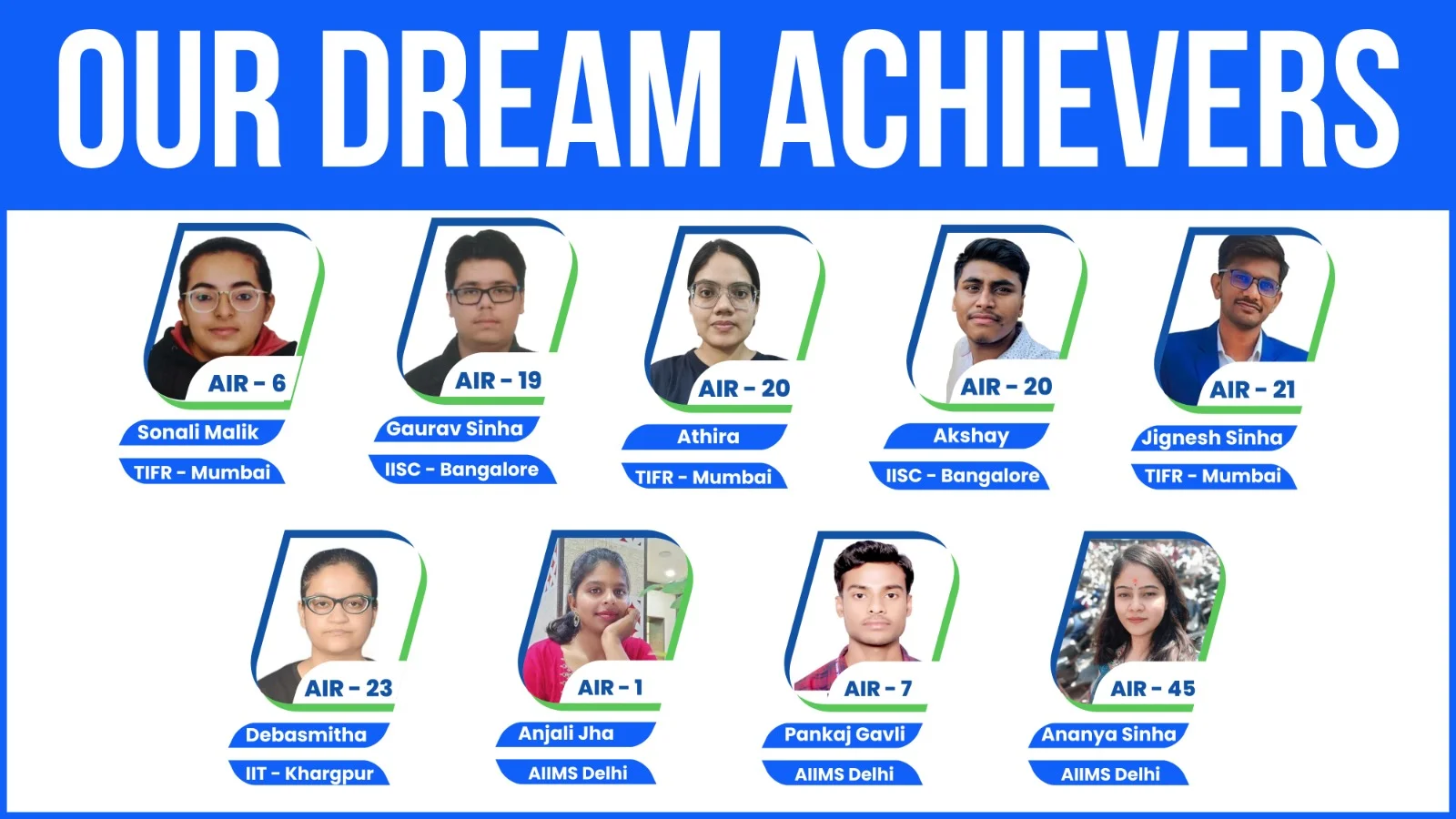
Students from Chandu Biology Classes consistently rank among the top performers in GAT-B, CSIR NET, ICMR JRF, and other life science competitive exams across India.
Courses Available at Chandu Biology Classes
| Course | Mode | Ideal For |
|---|---|---|
| GAT-B 2026 Crash Course | Online + Offline (Hyderabad) | 3-month intensive preparation |
| GAT-B Full Course | Online + Offline | Comprehensive 6-month coverage |
| CSIR NET Life Sciences | Online | NET aspirants combining with GAT-B |
| Topic-wise Modules | Online | Students needing help in specific chapters |
Frequently Asked Questions — GAT-B Syllabus 2026
Q1: Is the GAT-B 2026 syllabus the same as CSIR NET Life Sciences?
There is significant overlap, especially in Cell Biology, Molecular Biology, and Biochemistry. However, GAT-B also includes a dedicated Mathematics/Statistics and Chemistry section that CSIR NET does not. A student preparing for CSIR NET will find GAT-B relatively easier, but must additionally prepare Chemistry and Maths.
Q2: How many months are needed to prepare for GAT-B 2026 from scratch?
Three focused months are sufficient if you follow a structured, chapter-wise study plan and take regular mock tests. Students with a strong BSc foundation in life sciences can do it in 8–10 weeks.
Q3: Which chapter has the highest weightage in GAT-B Life Sciences?
Molecular Biology and Genetics combined consistently carry the highest weightage — approximately 10–12 questions. Biomolecules and Immunology follow closely behind.
Q4: Is coaching necessary for GAT-B or can I self-study?
Self-study is possible, but coaching at an institution like Chandu Biology Classes significantly accelerates your progress by providing structured content, regular mock tests, expert doubt-clearing, and strategic exam guidance that self-study alone cannot replicate.
Q5: Does Chandu Biology Classes offer online coaching for GAT-B?
Yes, absolutely. Chandu Biology Classes offers both offline coaching at their Hyderabad center and fully comprehensive online classes for students across India. Live sessions, recorded lectures, study materials, mock tests, and one-on-one mentorship are all available online.
Q6: What is the GAT-B 2026 exam date?
The exact date is announced by DBT-BET typically in early 2026. Always check the official DBT website for the latest notification. Chandu Biology Classes also sends all important exam updates directly to enrolled students.
Q7: Is there negative marking in GAT-B 2026?
Yes. There is a negative marking of 1/3 mark for each incorrect answer. Attempt only those questions where you are reasonably confident to protect your score.
Final Words — Your GAT-B 2026 Success Starts Right Now
The GAT-B syllabus 2026 chapter wise is extensive — but it is absolutely conquerable with the right strategy. The key is to start early, prioritize intelligently, practice consistently, and seek expert guidance when you need it.
Every high-scorer you read about shares one common trait. They did not try to study everything equally. They identified the high-weightage chapters, mastered them first, and built their confidence from there. That is exactly what this guide has equipped you to do.
The 3-month plan outlined here is not theoretical. It is built on what actually works — structured chapter coverage, regular revision loops, weekly mocks, and daily practice without gaps.
And if you want to accelerate that journey with expert mentorship, detailed study material, and a community of focused aspirants around you — Chandu Biology Classes is your best investment for GAT-B 2026.
