
If you are a life science student with dreams of studying at one of the IITs, IIT JAM Biotechnology 2027 is your golden opportunity. But let’s be honest — this is not an exam you can crack with last-minute preparation. It demands structured planning, consistent revision, and a deep understanding of four core subjects: Biology, Chemistry, Physics, and Mathematics.
This guide is your all-in-one resource. Whether you are just starting out in June or picking up momentum in October, this article breaks down everything — from the exact exam pattern and subject-wise weightage to a detailed IIT JAM Biotechnology 2027 study plan that takes you from Day 1 all the way to exam day. Read it carefully, save it, and come back to it every month.
Why IIT JAM Biotechnology 2027 is Different From 2026
Every year, subtle but important shifts happen in IIT JAM Biotechnology — and 2027 is no exception. Here is why you cannot simply follow someone else’s 2026 preparation strategy blindly.
The conducting IIT changes every year. IIT JAM is conducted by different IITs on a rotation basis. The conducting institute influences the difficulty level, the style of questions, and occasionally the relative emphasis on certain topics. The 2026 exam was conducted by IIT Delhi, which historically leans toward conceptual and application-based questions. The 2027 exam will likely be conducted by a different IIT, potentially bringing a different flavor to the question paper.
Syllabus updates and question style evolution. While the core JAM Biotechnology syllabus has remained relatively stable, the distribution of questions within sections and the type of application asked in Section B and Section C has evolved. Recent papers have shown a clear trend toward higher-order thinking questions, especially in Molecular Biology, Biochemistry, and Cell Biology. Rote learning will not save you in 2027.
Increased competition. The number of candidates appearing for IIT JAM has been rising steadily every year. In 2026, over 1.5 lakh students appeared across all JAM papers. The BT (Biotechnology) paper is among the most competitive. A higher rank cutoff means you cannot afford weak areas — every mark counts.
Post-pandemic learning patterns have normalized. Students who prepared during 2021–2023 had access to more online resources, and this has raised the average preparation quality. Your competition is better-prepared than ever. Your strategy needs to match that.
Understanding these differences is exactly why building a fresh, updated IIT JAM Biotechnology 2027 study plan from scratch — rather than recycling old strategies — is the smartest thing you can do right now.
Exam Pattern — Section A, B, C Explained With Marks
Before you plan a single study session, you must understand what you are actually preparing for. The IIT JAM Biotechnology paper has a total of 100 questions for 100 marks distributed across three sections.
Section A — Multiple Choice Questions (MCQs)
- Number of Questions: 30
- Marks: 50 (10 questions carry 1 mark each; 20 questions carry 2 marks each)
- Negative Marking: Yes — 1/3 mark deducted for 1-mark questions; 2/3 mark deducted for 2-mark questions
- Format: Four options, one correct answer
This section tests breadth. You need to know all four subjects well enough to confidently eliminate wrong options. Guessing randomly here will destroy your score.
Section B — Multiple Select Questions (MSQs)
- Number of Questions: 10
- Marks: 20 (2 marks each)
- Negative Marking: No negative marking
- Format: Four options, one or more correct answers — full marks only if ALL correct options are selected
This is where most average students lose marks. MSQs are brutally unforgiving — a partially correct answer scores zero. However, the absence of negative marking means you should attempt all MSQs. Deep conceptual clarity is critical here.
Section C — Numerical Answer Type (NAT)
- Number of Questions: 20
- Marks: 30 (10 questions carry 1 mark each; 10 questions carry 2 marks each)
- Negative Marking: No negative marking
- Format: You type the answer using a virtual keypad — no options given
NAT questions test precise quantitative understanding. These come from Mathematics, Physics, Biochemistry calculations, genetics problems, and cell biology numerical. Students who master NAT questions gain a significant scoring advantage since there is no negative marking and the answer is either right or wrong.
Total: 60 questions, 100 marks in 3 hours.
Subject-Wise Weightage — Biology vs Chemistry vs Physics vs Maths
The IIT JAM Biotechnology paper tests four subjects, but they are NOT equally weighted. Knowing where to invest your time is a strategic advantage.
Biology (approximately 44–50% of the paper)
This is the core of the BT paper. It covers:
- General Biology (cell structure, biomolecules, enzymes)
- Genetics and Evolution
- Biochemistry
- Microbiology
- Cell Biology
- Molecular Biology and Genetics
- Analytical techniques
Biology consistently dominates the paper. If you are weak here, no amount of Maths or Physics can compensate.
Chemistry (approximately 20–25%)
- Atomic Structure and Periodicity
- Chemical Bonding
- Thermodynamics and Equilibrium
- Organic Chemistry — Reaction Mechanisms, Biomolecule Chemistry
- Solutions and Electrochemistry
Chemistry questions in JAM BT are largely application-based and connected to biochemistry. Understanding organic reaction mechanisms and physical chemistry concepts deeply matters more than memorization.
Physics (approximately 15–18%)
- Measurements and Units
- Force and Motion
- Thermodynamics
- Electricity and Magnetism
- Optics
- Modern Physics basics
Physics is typically the most feared section for biology students, but it is also very predictable. The question types repeat from year to year. Mastering a fixed set of Physics topics thoroughly is more efficient than trying to cover everything.
Mathematics (approximately 12–16%)
- Sets, Relations, Functions
- Mathematical Induction
- Coordinate Geometry
- Limits, Continuity, Derivatives
- Integration
- Matrices and Determinants
- Statistics and Probability
- Differential Equations (basic)
Mathematics questions are largely numerical in nature, and many appear in Section C as NAT questions. This means zero negative marking — and students who practice Maths consistently tend to score disproportionately well.
High-Weightage Topics You Must Master First
Not all topics are created equal. Based on analysis of previous year papers, the following topics have consistently appeared year after year with maximum marks impact:
From Biology:
- Central Dogma — DNA Replication, Transcription, Translation (2–4 questions every year)
- Mendelian Genetics and Extensions (linkage, crossing over, epistasis)
- Cell Cycle, Cell Division, Cancer Biology
- Enzyme Kinetics — Michaelis-Menten, inhibition types
- Recombinant DNA Technology — cloning vectors, PCR, gel electrophoresis
- Microbiology — bacterial genetics, growth curve, sterilization
- Immunology — antibodies, complement system, MHC, vaccines
From Chemistry:
- Stereochemistry and Isomerism
- Carbonyl Chemistry and Named Reactions
- Acids and Bases — Henderson-Hasselbalch equation
- Thermodynamics — Gibbs free energy, entropy
- Electrochemistry — Nernst equation
From Physics:
- Optics — microscopy, lenses, resolving power (directly connected to biology labs)
- Electricity — Ohm’s law, circuits
- Radioactivity and Nuclear Physics basics
From Mathematics:
- Differentiation and Integration problems
- Probability and Combinatorics
- Matrices — determinants, eigenvalues
Prioritize these topics in the first four months of your preparation. They are your foundation and your fastest path to marks.
Best Books for IIT JAM Biotechnology 2027 — Subject-Wise
Choosing the right books is half the battle. Here are the most trusted resources:
Biology Books
- Lehninger Principles of Biochemistry — Nelson & Cox (Biochemistry Bible — must have)
- Molecular Biology of the Cell — Alberts et al. (Cell and Molecular Biology)
- Molecular Biology of the Gene — Watson et al. (Genetics and Molecular Biology)
- Microbiology: An Introduction — Tortora, Funke & Case
- iGenetics — Peter J. Russell (for Genetics)
Chemistry Books
- Physical Chemistry — Atkins (for thermodynamics and electrochemistry)
- Organic Chemistry — Morrison & Boyd or Paula Bruice (for mechanisms)
- NCERT Chemistry Class 11 and 12 (for quick revision of basics)
Physics Books
- Concepts of Physics — H.C. Verma (Volumes 1 and 2) — especially for JAM-relevant chapters
- NCERT Physics Class 11 and 12 (essential for conceptual grounding)
Mathematics Books
- Higher Engineering Mathematics — B.S. Grewal (for Integration, Matrices, Differential Equations)
- NCERT Mathematics Class 11 and 12 (for functions, calculus basics, probability)
JAM-Specific Resources
- IIT JAM Biotechnology Previous Year Papers — any reliable publisher compiling last 10 years
- Arihant or GKP IIT JAM BT guide — for topic-wise practice and quick revision
- Coaching class notes (especially from established BT-focused coaching centers — more on this shortly)
Month 1 to Month 8 — Complete Study Plan With Weekly Targets
This is the heart of your preparation. A well-structured IIT JAM Biotechnology 2027 study plan should run for approximately 8 months. Assuming you begin in June/July 2026, here is your complete roadmap:
Month 1 (June/July) — Foundation and Orientation
Target: Understand the syllabus completely, gather all resources, build a daily study habit.
Week 1: Read the official JAM BT syllabus line by line. Map every topic to a book chapter. Create a subject-wise folder or notebook system.
Week 2: Begin Biology — Cell Structure, Biomolecules (Carbohydrates, Lipids, Proteins, Nucleic Acids). Focus on Lehninger for Biochemistry basics.
Week 3: Continue Biology — Enzymes (classification, kinetics, Michaelis-Menten). Simultaneously, start NCERT Chemistry Class 11 (Atomic Structure, Bonding).
Week 4: Begin NCERT Physics Class 11 (Units and Measurements, Motion). Revise Week 1–3 Biology topics with self-testing.
Goal: By end of Month 1, you should have a clear picture of the exam, your resources should be in place, and you should have covered 15–20% of Biology fundamentals.
Month 2 (July/August) — Core Biology Deep Dive
Week 1–2: Genetics — Mendelian Genetics, Extensions (codominance, incomplete dominance, multiple alleles, epistasis), Chromosomal Theory.
Week 3: Molecular Biology — DNA Structure, Replication (both prokaryotic and eukaryotic), repair mechanisms.
Week 4: Transcription and Translation — prokaryotic and eukaryotic differences, post-transcriptional modifications, genetic code.
Chemistry parallel: Complete NCERT Chemistry 12 (Coordination Compounds, Electrochemistry) — 1 hour daily.
Goal: Master Genetics and Molecular Biology — consistently 2–4 questions every year.
Month 3 (August/September) — Cell Biology, Microbiology, Immunology
Week 1: Cell Biology — Cell Cycle, Mitosis, Meiosis, signal transduction, membrane transport.
Week 2: Microbiology — Bacterial cell structure, growth curve, sterilization methods, bacterial genetics (transformation, transduction, conjugation).
Week 3: Immunology — Innate vs. adaptive immunity, antibody structure, complement system, MHC I and II, vaccines.
Week 4: Recombinant DNA Technology — Restriction enzymes, vectors (plasmid, phage, cosmid, BAC, YAC), PCR, Southern/Northern/Western Blotting, gene cloning workflow.
Mathematics parallel: Start integration and differentiation from NCERT Class 12 Maths — 45 minutes daily.
Goal: Complete all high-weightage Biology topics. You should be able to answer 60–70% of Biology-based PYQs from this period.
Month 4 (September/October) — Chemistry and Physics Intensive
Week 1–2: Organic Chemistry — Stereochemistry, reaction mechanisms (SN1, SN2, E1, E2), carbonyl chemistry, named reactions (Aldol, Claisen, Michael).
Week 3: Physical Chemistry — Thermodynamics (Gibbs free energy, entropy, enthalpy), chemical equilibrium, Henderson-Hasselbalch equation.
Week 4: Physics — Optics (microscopy, lenses, resolving power, Beer-Lambert Law). Electricity basics (Ohm’s law, Kirchhoff’s laws). Radioactivity.
Goal: Achieve 70% command over Chemistry and Physics sections. These are supporting subjects but can make or break your rank.
Month 5 (October/November) — Mathematics and Remaining Topics
Week 1–2: Complete Mathematics — Matrices and Determinants, Probability and Statistics, Differential Equations.
Week 3: Analytical Techniques — Chromatography (all types), Spectroscopy (UV-Vis, IR, NMR basics), Centrifugation.
Week 4: Ecology, Evolution, Animal and Plant Physiology basics (these appear occasionally and should not be ignored).
Goal: Cover 100% of the syllabus at least once by end of Month 5. From Month 6 onwards, you shift to revision and practice mode.
Month 6 (November/December) — First Full Revision + PYQ Practice
Week 1: Revise all Biology notes. Attempt PYQs topic-wise for Biology.
Week 2: Revise Chemistry notes. Attempt PYQs topic-wise for Chemistry.
Week 3: Revise Physics and Mathematics. Attempt PYQs topic-wise.
Week 4: Attempt your first complete full-length mock test. Analyze mistakes chapter-wise. Create an error log.
Goal: Identify your weakest topics from the mock test. Plan targeted revision for Months 7–8.
Month 7 (December/January) — Mock Tests + Weak Area Targeting
- Attempt 2 full-length mock tests per week (total 8 in this month)
- Dedicate 2 hours after each test strictly to analysis — not just checking answers, but understanding WHY you got something wrong
- Target weak topics identified in Month 6 with focused 2-hour sessions
- Revise high-weightage topics (Molecular Biology, Biochemistry, Genetics) one more time
- Focus extra time on Section C (NAT) — practice numerical problems from Maths and Physics daily
Month 8 (January/February) — Final Sprint Before Exam
- Attempt 1 mock test every 2 days
- Revise your error log every morning — 30 minutes
- Do NOT start any new topic. Consolidate what you know.
- Solve last 5 years of full PYQs under timed conditions
- Work on time management — practice completing Section A within 60 minutes
- Final week: Light revision only, good sleep, mental preparation
How to Use PYQs Effectively — The Right Method
Previous Year Questions (PYQs) are not just practice problems — they are your blueprint. Here is how to use them intelligently:
Step 1 — Topic-wise PYQ practice (Months 3–5). Do not attempt full papers initially. Pick a topic, finish studying it, then immediately solve all PYQs from that topic across the last 10 years. This reinforces learning and shows you exactly how that topic has been tested.
Step 2 — Identify repeat patterns. Certain concepts — Michaelis-Menten enzyme kinetics, PCR mechanism, genetic cross problems — repeat almost every year, sometimes with identical framing. Mark these “golden questions” and make sure you can solve them perfectly.
Step 3 — Analyze wrong answers deeply. When you get a PYQ wrong, do not just note the right answer. Go back to the textbook and read that concept again. Understand WHY option A was wrong and why option D was correct.
Step 4 — Full paper simulation (Month 6 onwards). Solve complete PYQs under real exam conditions — 3 hours, no interruptions, no books. Then score it and analyze it.
Step 5 — Track your PYQ accuracy score. If you are scoring below 60% on PYQs consistently by Month 6, that is a signal to reassess your fundamentals — not just practice more questions.
Mock Test Strategy — When to Start and How Many to Attempt
When to start full mocks: Never before Month 6. Attempting mocks too early when your syllabus is incomplete leads to discouragement and misleading scores.
How many mocks to attempt:
- Month 6: 2 full mocks (for baseline assessment)
- Month 7: 8–10 full mocks (2 per week)
- Month 8: 10–12 full mocks (every 2–3 days)
- Total target: 20–25 full mocks before exam day
Post-mock analysis rules:
- Spend at least 2 hours analyzing every mock
- Categorize mistakes: conceptual error, silly mistake, or knowledge gap
- Maintain a mistake tracker notebook
- Do NOT reattempt the same mock immediately — wait 2–3 weeks for a meaningful reassessment
Section-wise time allocation in mocks:
- Section A (MCQs): 60–65 minutes
- Section B (MSQs): 40–45 minutes
- Section C (NAT): 50–55 minutes
- Review time: 10–15 minutes
Practice this allocation in every single mock until it becomes automatic.
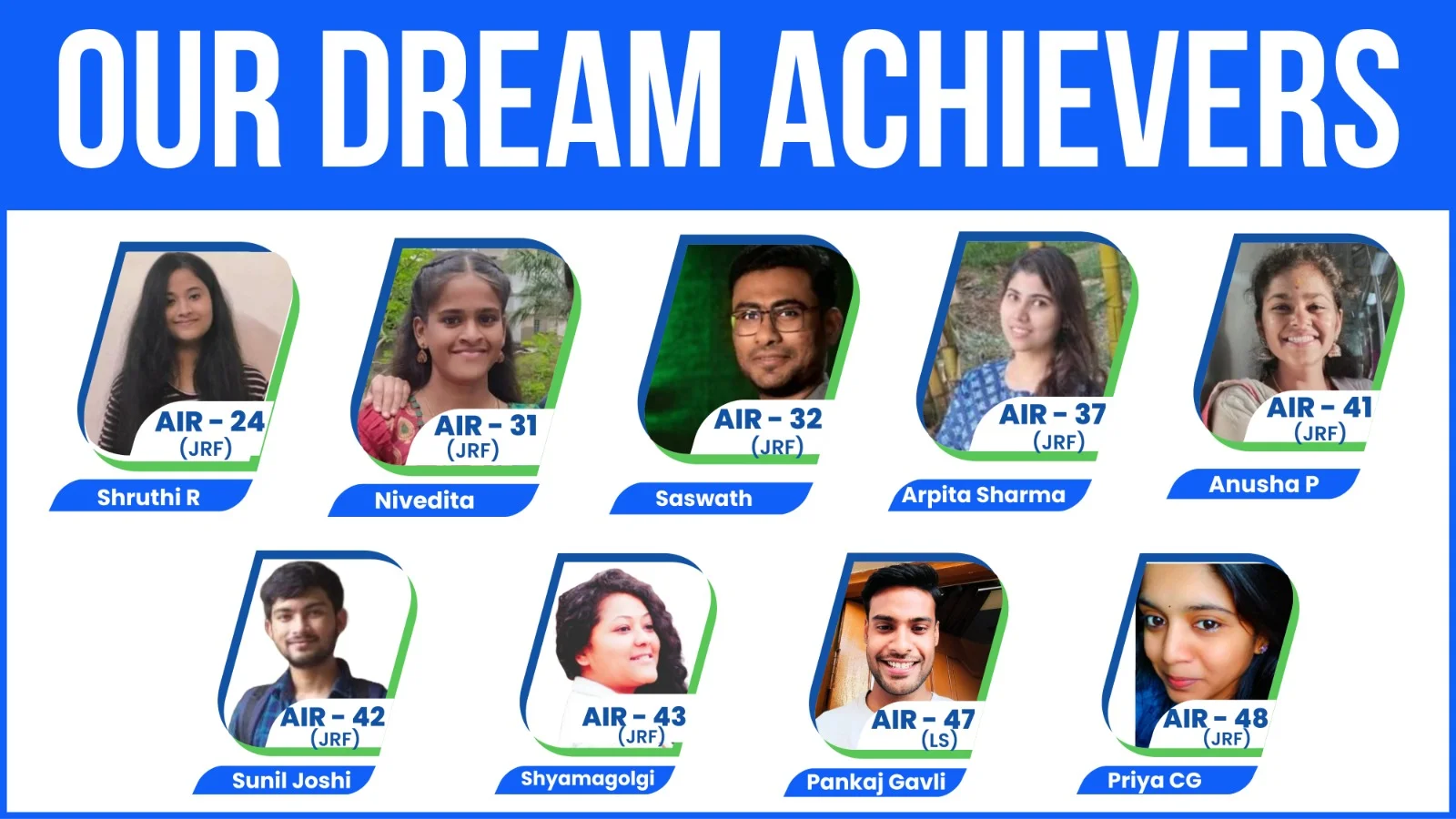
Chandu Biology Classes — IIT JAM BT 2027 Batch Details
For students looking for structured guidance alongside self-study, Chandu Biology Classes offers one of the most focused coaching programs for IIT JAM Biotechnology preparation. Their IIT JAM BT 2027 batch is specifically designed for students who want expert faculty support, structured study material, and regular mock test series.
Chandu Biology Classes is known for its strong emphasis on Biology and Biochemistry — the highest-weightage sections of the JAM BT paper. Their faculty brings deep subject expertise, and the batch structure aligns closely with the month-by-month preparation timeline you need for 2027.
What makes Chandu Biology Classes suitable for JAM BT 2027 aspirants:
- Subject-wise classes covering the entire JAM BT syllabus
- Regular topic-wise tests and full-length mock tests
- Dedicated doubt-clearing sessions
- Study material curated specifically for JAM BT pattern
- Focus on PYQ analysis and high-weightage topic mastery
- Online batch options for students outside major cities
If you are looking for coaching support to complement your self-study, connecting with Chandu Biology Classes for their IIT JAM BT 2027 batch details is worth exploring.
Frequently Asked Questions (FAQs)
Q1. How many months of preparation is enough for IIT JAM Biotechnology 2027? Ideally, 8 to 10 months of serious, structured preparation is sufficient to crack IIT JAM BT with a good rank. Students who begin in June/July 2026 and follow a disciplined month-by-month plan have consistently performed well. However, quality of preparation matters far more than the number of months.
Q2. Is IIT JAM Biotechnology difficult for PCB students without a Maths background? Many students preparing for JAM BT come from a PCB background (Physics, Chemistry, Biology) and may feel apprehensive about Mathematics and Physics. The good news is that the Maths and Physics portions in IIT JAM BT are largely at the Class 11 and 12 level and are highly predictable. With 2–3 months of focused preparation, PCB students can comfortably handle these sections. Start with NCERT and be consistent.
Q3. What is the minimum score required to get into an IIT through JAM BT? The cutoff score varies every year depending on the difficulty of the paper, the number of candidates, and the specific IIT and category. Generally, scoring above 45–50 marks puts you in a competitive position, and scoring 60+ marks with a good rank opens doors to top IITs. Always check the official JAM website for the latest cutoff data.
Q4. Should I study all four subjects equally for IIT JAM BT? No. Biology carries approximately 44–50% of the total marks and should receive the most time and attention — at least 50–55% of your study hours. Chemistry is next at 20–25%, followed by Physics at 15–18% and Mathematics at 12–16%. Allocate study time proportionately to maximize your marks.
Q5. How important are analytical techniques for IIT JAM BT 2027? Extremely important. Techniques like PCR, gel electrophoresis, chromatography types, centrifugation methods, and spectroscopy appear almost every year and fetch 4–6 marks consistently. These are also relatively easy to study and score from, making them high-return topics for your IIT JAM Biotechnology 2027 study plan.
Q6. Can I crack IIT JAM BT through self-study alone, without coaching? Yes, absolutely. Many successful JAM BT qualifiers have cleared the exam through self-study using the right books and a structured plan. However, coaching — especially from a focused program like Chandu Biology Classes — adds value through structured timelines, regular tests, and doubt-clearing support. The choice depends on your self-discipline, access to resources, and learning style.
Q7. When should I start attempting mock tests for IIT JAM BT 2027? Do not start full-length mock tests before completing at least 70–80% of the syllabus. This typically means beginning full mocks around Month 6 (November/December 2026). Starting too early with an incomplete syllabus leads to demoralizing scores and misleading feedback. Topic-wise tests, however, should begin as early as Month 2.
Q8. Are MSQs (Multiple Select Questions) harder than MCQs in JAM BT? Yes, MSQs are significantly more challenging because you must identify ALL correct options to receive marks — a partially correct answer scores zero. However, there is no negative marking in MSQs, so you should always attempt them. The key to MSQ success is deep conceptual clarity, not superficial reading.
Q9. Is the IIT JAM Biotechnology paper the same every year in terms of pattern? The basic structure (Sections A, B, C) has remained consistent for several years. However, the difficulty level, the emphasis on certain topics, and the style of questions can vary depending on the conducting IIT. This is exactly why following past year trends, analyzing multiple years of PYQs, and staying updated with the latest official notifications is essential.
Q10. What is the best daily study schedule for IIT JAM BT 2027 preparation? A practical daily schedule for dedicated aspirants: 2 hours of Biology or Biochemistry in the morning, 1.5 hours of Chemistry or Physics after a break, 1 hour of Mathematics or analytical techniques in the evening, and 30 minutes of revision or PYQ practice before sleeping. That totals approximately 5–6 hours of focused daily study — which, maintained consistently over 8 months, is more than enough to crack IIT JAM BT 2027.
Final Thoughts
IIT JAM Biotechnology 2027 is a challenging but absolutely crackable exam. The students who crack it are not necessarily the most talented — they are the most consistent. They started early, followed a plan, did not skip revision, and practiced under real exam conditions.
Your IIT JAM Biotechnology 2027 study plan starts today — not tomorrow, not next week. Open your syllabus, pick up Lehninger, and begin. Eight months from now, when you see your name on the IIT JAM results list, it will all have been worth it.
Stay consistent. Stay focused. IIT is waiting.
Disclaimer: All information provided in this article, including exam pattern details, subject weightage percentages, book recommendations, cutoff estimates, and preparation strategies, has been compiled from publicly available internet sources, educational forums, and general knowledge for informational purposes only. This article is not officially affiliated with IIT JAM, any IIT, or the National Testing Agency (NTA). Exam patterns, syllabus, and official cutoffs are subject to change — candidates are strongly advised to verify all details from the official IIT JAM website before making any preparation decisions. The mention of Chandu Biology Classes is for informational purposes only and does not constitute a paid endorsement. The author and publisher of this article assume no responsibility for any decisions made based on the information presented here.
