
What Makes TSSET Cutoff the Most Searched Topic Among Telangana’s Teaching Aspirants?
Every year, thousands of students from across Telangana sit with one burning question after their exam — “Did I clear the cutoff?” The Telangana State Eligibility Test, commonly known as TSSET or TG SET, is one of the most competitive state-level examinations in India for candidates aspiring to become Assistant Professors or Lecturers in universities and colleges across Telangana. Conducted by Osmania University, Hyderabad, this exam carries enormous career significance, and nothing matters more to an aspirant after writing the paper than understanding the TSSET previous year cut off trends.
If you have been searching for a detailed, honest, and student-friendly breakdown of TSSET cutoff patterns, what they mean, how they change year to year, and how you should use them to plan your preparation — you have landed in exactly the right place. This article gives you a 360-degree understanding of everything connected to TSSET cut offs — from historical data and subject-wise patterns to category-specific relaxations and smart preparation strategies.
What Is TSSET and Why Does the Cutoff Matter So Much?
Before diving deep into the TSSET previous year cut off trends, let us first briefly understand the exam itself.
TSSET (Telangana State Eligibility Test), now also referred to as TG SET, is a state-level eligibility exam conducted by Osmania University under the authority of the Government of Telangana. The exam is designed to test the subject knowledge and teaching aptitude of candidates who wish to serve as Assistant Professors in government and private degree colleges and universities within Telangana state.
The exam consists of two papers:
Paper I — This tests teaching and research aptitude, reasoning ability, comprehension, and general awareness. It consists of 50 questions carrying 100 marks.
Paper II — This is subject-specific. It consists of 100 questions carrying 200 marks in the candidate’s chosen subject.
The total marks of the exam are 300, and the cutoff is calculated on the aggregate of both papers combined.
Clearing the TSSET cutoff is not just about qualifying — it directly determines whether you will be eligible to apply for Assistant Professor positions across Telangana. This is why the TSSET previous year cut off trends become an essential reference point during every preparation cycle.
TSSET Minimum Qualifying Marks: The Baseline You Must Know
Before studying the cutoff trends, aspirants must understand the minimum qualifying criteria set by Osmania University:
For Unreserved / General Category Candidates: A candidate must score a minimum of 40% aggregate marks in both Paper I and Paper II combined.
For Reserved Category Candidates (SC, ST, BC, PwD, Women): The minimum qualifying percentage is 35% aggregate marks across both papers combined.
These are the absolute minimum benchmarks set by the university. However, it is important to note that the actual subject-wise cutoff released after the exam is often different — and in many subjects, notably higher — than this bare minimum. This is where studying TSSET previous year cut off trends becomes critical, because the actual cutoff is determined by the competitive performance of all candidates who appeared for that specific subject.
How TSSET Cutoff Is Determined — The Factors You Need to Understand
The cutoff is never arbitrary. Osmania University considers multiple variables before finalizing the subject-wise and category-wise cut off marks. Here is a clear breakdown:
1. Total Number of Candidates Appearing When more candidates appear for a subject, competition increases, and the cutoff tends to rise accordingly. Subjects like Life Sciences, Commerce, Economics, and Political Science consistently attract large numbers of aspirants.
2. Difficulty Level of the Exam If a particular year’s paper is found to be tougher — with more conceptual or tricky questions — the overall average performance drops, which tends to pull the cutoff down. Conversely, an easier paper usually pushes the cutoff upward.
3. Average Performance of All Candidates The aggregate performance of everyone appearing for the same subject is closely factored in. If candidates collectively score well, the bar rises.
4. Number of Available Positions While TSSET itself is an eligibility test (not a recruitment exam), the cut off indirectly reflects the university’s intent to maintain a competitive standard. Fewer qualified positions in a domain can lead to a tighter cutoff.
5. Previous Year Cutoff Patterns The university generally maintains a consistent pattern year over year. This is precisely why studying and analyzing TSSET previous year cut off trends gives candidates such a powerful advantage in target-setting.
6. Reservation and Category Policy Government reservation policies ensure differential cutoffs for SC, ST, BC-A, BC-B, BC-C, BC-D, OBC, EWS, PwD, and Women candidates. Reserved category candidates benefit from a 5% relaxation in minimum qualifying marks compared to the general category.
TSSET Previous Year Cut Off Trends: Year-Wise Analysis (2018 to 2024)
Let us now look at the actual historical data and what it reveals about how the TSSET cutoff has behaved over the years. The TSSET previous year cut off trends from 2018 to 2024 reveal some very important patterns that every serious aspirant should absorb.
Overall Qualification Rates — A Revealing Picture
One of the most important data points when studying TSSET previous year cut off trends is the overall qualification rate. In the 2024 edition of TSSET (also called TGSET 2024), out of 33,494 registered candidates, 26,294 appeared for the exam. Of these, only 1,884 candidates ultimately qualified — representing an overall qualification rate of just 7.17%. Additionally, 17,730 candidates cleared Step I (Paper I), reflecting just how steep the elimination is at the combined paper stage.
This singular statistic tells you everything — TSSET is not an exam where you can afford to aim “just above the minimum.” You need to be consistently well-prepared and significantly above the cutoff to qualify with confidence.
Category-Wise Cutoff Breakdown (General Pattern Across Years)
Based on historical cutoff data from 2018 to 2024 across subjects, the general pattern of category-wise cutoffs has looked like this:
| Category | Approximate Cutoff % (Aggregate) |
|---|---|
| General / Unreserved (OC) | 40% – 55% (subject-dependent) |
| BC-A / BC-B / BC-C / BC-D | 35% – 50% |
| SC | 35% – 45% |
| ST | 35% – 42% |
| PwD (Persons with Disabilities) | 35% – 40% |
| Women (Reserved) | 35% – 48% |
Note: These ranges vary significantly by subject. Highly competitive subjects like Life Sciences, Commerce, and English tend to sit at the higher end of the range. Less-populated subjects may have cutoffs closer to the minimum qualifying marks.
Subject-Wise Cutoff Patterns — Key Observations
Across the years from 2018 to 2024, certain subjects have consistently shown elevated cutoffs, while others remain more accessible. Here are the key insights from the TSSET previous year cut off trends data:
Life Sciences — This is one of the most competitive subjects in TSSET. The General category cutoff for Life Sciences has historically ranged between 48% and 58% of total marks across different years. The large candidate pool and relatively well-prepared aspirant base drive this cutoff consistently high. This is a subject where detailed coaching makes a measurable difference.
Commerce — Another heavily competitive subject. General category cutoffs here typically range between 45% and 55%, with reserved category cutoffs ranging from 38% to 48%.
Economics — A subject with consistently moderate to high cutoffs, generally between 44% and 54% for General category candidates.
Political Science — Moderate cutoffs on average, typically between 42% and 52% for General category.
English — One of the subjects with a sizeable applicant base. Cutoffs have ranged from 44% to 53% for General category candidates.
Physical Sciences / Chemistry / Mathematics — These subjects tend to have fewer candidates compared to the social sciences and life sciences. As a result, their cutoffs are sometimes closer to the minimum qualifying marks, though highly contested years can push them higher.
Computer Science and Applications — A growing subject with increasing competition. Cutoffs have shown an upward trend in recent years due to more qualified candidates appearing in this domain.
Year-Wise Trend Highlights
2018: The first year of systematic TSSET data post-bifurcation. Cutoffs were moderately set across most subjects. The exam was still gaining momentum among Telangana candidates, and competition, while significant, had not yet peaked.
2019: A noticeable increase in competition was observed in several subjects. Life Sciences, Commerce, and Economics all saw higher cutoffs compared to 2018, reflecting the growing aspirant base.
2020–2021: The COVID-19 pandemic disrupted exam schedules significantly. The 2020 TSSET was delayed, and many aspirants used the additional time to prepare more thoroughly. This resulted in better average scores across subjects when the exam was eventually held, pushing some cutoffs slightly higher.
2022: A significant year in TSSET history. The 2022 exam saw a substantially larger number of candidates appearing, leading to higher cutoffs in most popular subjects. Life Sciences and Commerce both recorded some of their highest cutoffs in recent memory during this cycle.
2023: The cutoffs saw a slight stabilization in most subjects compared to 2022, though they remained elevated in high-competition domains. The 2023 cycle maintained the competitive intensity set by 2022.
2024 (TGSET 2024): As noted earlier, only 7.17% of appearing candidates qualified overall — signaling one of the most competitive editions in recent years. Subject-specific cutoffs across the 29 subjects covered in the exam varied widely, and the university’s official cutoff PDF released at telanganaset.org remains the definitive reference for subject-by-subject data.
What TSSET Previous Year Cut Off Trends Tell Us About 2025 and 2026
Studying TSSET previous year cut off trends is not merely an academic exercise — it is a strategic tool. Here is what the historical data collectively tells us about what to expect going forward:
The cutoff is not going down. Year after year, the candidate pool has grown. More aspirants are now aware of TSSET, better prepared, and accessing quality coaching. This fundamentally keeps the competitive cutoff elevated.
Subject-wise variation will continue. Life Sciences, Commerce, and Political Science will continue to have higher cutoffs than smaller or more technical subjects. This is a structural trend, not an anomaly.
Reserved categories still face real competition. The 5% relaxation in qualifying marks is helpful, but within reserved categories, competition is also rising. Do not assume that a relaxed cutoff means easy qualification.
Difficulty level adjustments will influence individual year cutoffs. If you find the paper particularly tough in any given year, the cutoff will adjust downward — but only moderately. The fundamental competitive pressure remains.
Candidates scoring 50%+ in aggregate are significantly safer. Based on the trends, General category candidates who cross 50% of 300 marks (i.e., 150 out of 300) across both papers are in a reasonably safe qualifying zone for most subjects. Reserved category candidates crossing 45% (135 out of 300) are similarly positioned, though subject-specific differences always apply.
How to Effectively Use TSSET Cutoff Data in Your Preparation
Understanding the numbers is only useful if you translate them into action. Here is how smart aspirants use the TSSET previous year cut off trends to sharpen their preparation:
Set a realistic target score. If the Life Sciences General category cutoff has historically been around 48–55%, do not aim for 40%. Set your personal target at 55–60% to ensure a comfortable buffer. This mindset — of aiming well above the cutoff, not just at it — is one of the most important shifts a serious aspirant can make.
Prioritize high-weightage topics in Paper II. The subject paper carries 200 marks out of 300. Your performance here is the single biggest determinant of your total score. Focus relentlessly on high-yield topics within your subject.
Do not neglect Paper I. Many candidates treat Paper I as secondary, but it carries 100 marks. Consistent scores of 65–70+ in Paper I are absolutely achievable with regular practice and can be the difference between qualifying and missing the cutoff.
Solve previous years’ papers. The exam pattern and question style in TSSET are reasonably consistent across years. Solving 5–6 years of papers gives you a powerful feel for what the exam actually demands.
Analyze your mistakes, not just your scores. Understanding why you got something wrong is more valuable than knowing your total score on a mock test.
Chandu Biology Classes: A Trusted Name for TSSET Life Sciences Preparation
For candidates appearing in TSSET with Life Sciences as their subject, serious preparation requires structured guidance — and this is where Chandu Biology Classes has built a well-earned reputation among Telangana aspirants.
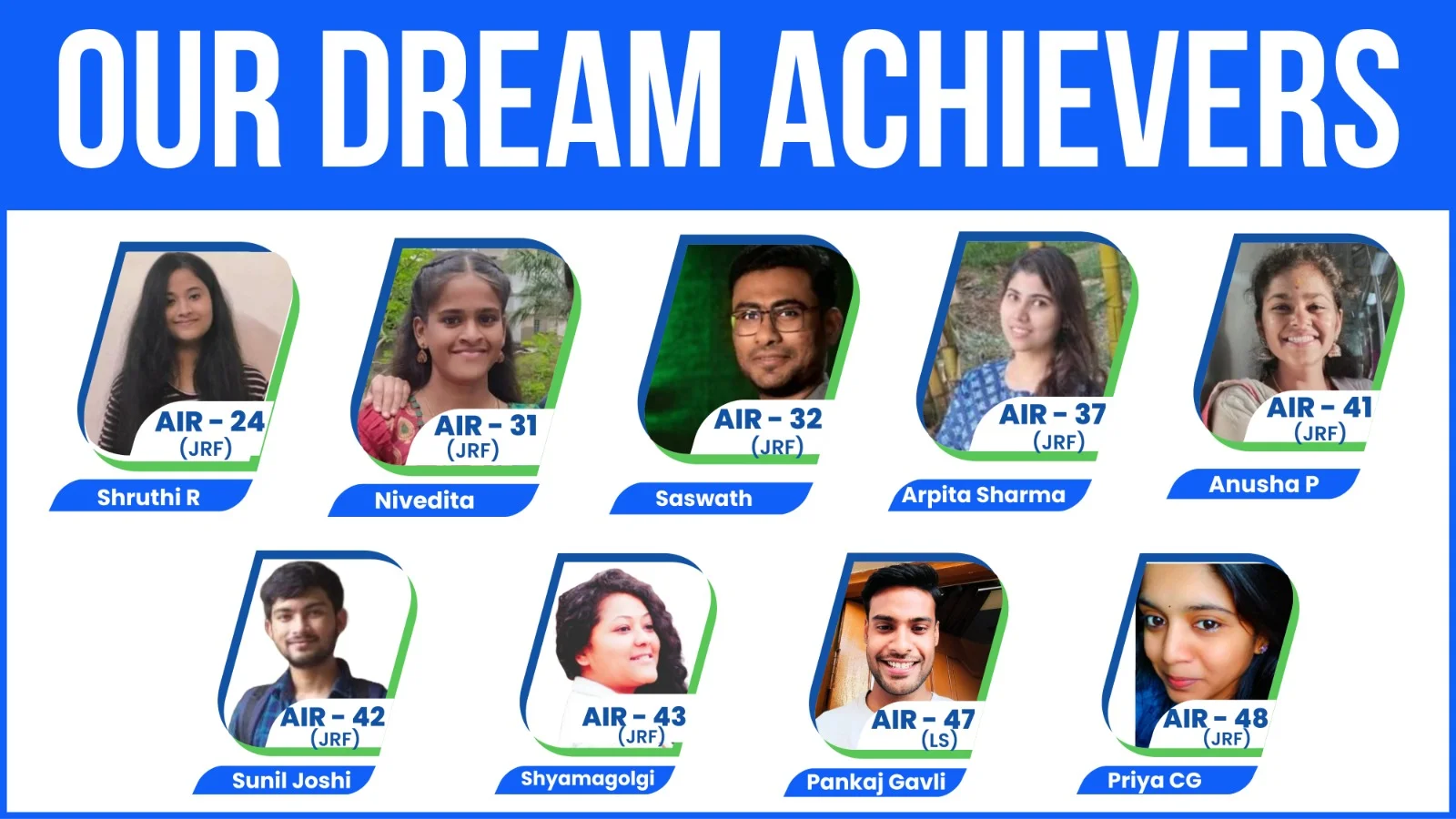
Chandu Biology Classes is recognized as a leading coaching institute for Life Sciences competitive exams including TSSET / TGSET, CSIR NET, GATE, IIT JAM, CUET PG, and GAT-B. The institute has helped numerous students not just clear the TSSET cutoff but comfortably qualify with strong margins — including candidates who have gone on to secure AIR rankings in CSIR NET as well.
What makes Chandu Biology Classes genuinely effective is the combination of deep subject-matter expertise, structured curriculum design, regular test series, and personalized mentoring that covers both Paper I and Paper II comprehensively.
Fee Structure at Chandu Biology Classes:
For candidates looking to join, the fee structure is clear and straightforward:
- Online Coaching: ₹25,000/-
- Offline Coaching (Classroom): ₹30,000/-
Both modes cover the complete syllabus for TSSET / TGSET Life Sciences preparation, including mock tests, previous year paper analysis, doubt-clearing sessions, and study material. There are no hidden fees beyond what is listed above.
Whether you are a fresh postgraduate student appearing for TSSET for the first time or a working professional preparing alongside your job, the flexible online and offline options at Chandu Biology Classes are designed to fit different learning environments and schedules.
For detailed information about batches, schedules, and enrollment, you can visit the official website of Chandu Biology Classes at chandubiologyclasses.com.
Common Mistakes Students Make When Interpreting TSSET Cutoffs
Even after understanding the TSSET previous year cut off trends, many aspirants fall into predictable traps. Here are the most common errors to avoid:
Mistake 1: Treating the minimum qualifying marks as the target. The official minimum is 35–40%. But the actual subject-wise cutoff is almost always higher. Always research the actual cutoff for your specific subject.
Mistake 2: Ignoring subject-wise variation. Comparing your target for Life Sciences with the cutoff data for Sanskrit or Philosophy will give you a completely wrong picture. Always filter by your subject.
Mistake 3: Relying on a single year’s data. One year can be an outlier — particularly a year affected by a delayed exam, an unusually tough paper, or a sudden spike in registrations. Always analyze at least 3–5 years of data.
Mistake 4: Assuming reserved category relaxation is significant. The 5% relaxation matters, but the actual category-wise cutoff in your specific subject may still require a score well above your comfort zone.
Mistake 5: Not tracking the official website. Always monitor telanganaset.org for official cutoff releases. Third-party sources (including this article) offer guidance and estimates — but the official document from Osmania University is the definitive record.
TSSET Exam Pattern 2025 — A Quick Recap
For those newer to TSSET preparation, here is a quick overview of the exam structure relevant to understanding cutoffs:
| Parameter | Paper I | Paper II |
|---|---|---|
| Number of Questions | 50 | 100 |
| Total Marks | 100 | 200 |
| Type | MCQ (Teaching Aptitude, General Awareness) | MCQ (Subject-specific) |
| Duration | 1 hour | 2 hours |
| Negative Marking | No | No |
The exam is conducted in offline (OMR-based) mode, and there is no negative marking — meaning you should attempt all questions without hesitation.
Smart Study Plan for TSSET Based on Cutoff Analysis
Now that you have a thorough understanding of TSSET previous year cut off trends, here is a practical study framework:
Month 1 — Foundation Building Focus on covering the complete Paper II syllabus of your chosen subject. For Life Sciences candidates, this means covering all major topics across Cell Biology, Genetics, Molecular Biology, Ecology, Evolution, Biochemistry, and Physiology. Do not rush — understand concepts deeply.
Month 2 — Strengthening and Note-Making Revisit weak areas identified during Month 1. Start making concise notes and flashcards. Begin Paper I practice — cover teaching aptitude, research methodology, communication, ICT, and reasoning topics.
Month 3 — Mock Tests and Previous Year Papers Start solving full-length mock tests under timed conditions. Analyze each test — not just the score, but the pattern of errors. Solve at least the last 5 years of TSSET question papers for your subject. This is the phase where the gap between aspirants who qualify and those who don’t is usually determined.
Final Month — Revision and Targeted Practice Revise notes. Focus exclusively on high-yield areas. Solve mock tests every alternate day. Ensure your Paper I score is consistently above 65 out of 100.
Frequently Asked Questions (FAQs) on TSSET Previous Year Cut Off Trends
These are the exact questions students across Telangana are actively searching for in 2025 and 2026:
Q1. What is the TSSET cutoff for 2024?
The TSSET 2024 (TGSET 2024) official cutoff has been released at telanganaset.org. The qualification rate was 7.17% of appearing candidates. The exact subject-wise and category-wise cutoff is available in the official PDF on the Osmania University website. For General category candidates, the minimum qualifying aggregate is 40%, but actual cutoffs vary significantly by subject and are higher in competitive subjects like Life Sciences and Commerce.
Q2. What is the minimum marks to qualify TSSET?
The minimum qualifying aggregate marks for TSSET are 40% for General/OC category candidates and 35% for SC, ST, BC, PwD, and Women candidates across both papers combined. However, in competitive subjects, the actual cutoff released after the result is typically higher than this minimum. Always check the official subject-wise cutoff to know the realistic target for your subject.
Q3. Is TSSET cutoff same every year?
No, the TSSET cutoff changes every year based on multiple factors including the difficulty level of the exam, total number of candidates appearing, average performance, and number of available positions. The TSSET previous year cut off trends show that while there is a broad pattern, individual year cutoffs can differ by 3–8 percentage points depending on the exam conditions that year.
Q4. Which subject has the highest TSSET cutoff?
Based on historical data, Life Sciences, Commerce, and Economics consistently record some of the highest cutoffs among the 29 subjects covered under TSSET. This is primarily due to the large number of candidates appearing in these subjects every year, which intensifies competition and drives the cutoff upward.
Q5. How can I calculate my TSSET expected cutoff for 2025?
To estimate your expected score relative to the cutoff, calculate your aggregate marks in Paper I and Paper II together. Divide by 300 and multiply by 100 to get your percentage. Then compare this percentage with the TSSET previous year cut off trends for your specific subject and category. If your estimated percentage is 5–10 points above the historical average cutoff for your subject, you are in a strong qualifying position.
Q6. What happens if I don’t clear the TSSET cutoff?
If you do not clear the cutoff, you are not eligible for the current year’s merit list and will not qualify for Assistant Professor recruitment in Telangana through that TSSET cycle. However, you can re-appear for the next TSSET exam. Many successful candidates have qualified on their second or third attempt after refining their preparation strategy.
Q7. Is there any negative marking in TSSET?
No, TSSET does not have negative marking in either Paper I or Paper II. You should attempt all questions without fear of penalty for wrong answers. This structure means that attempting all 150 questions is always the right strategy.
Q8. Is TSSET and TG SET the same exam?
Yes. TSSET (Telangana State Eligibility Test) and TG SET (Telangana State Eligibility Test) refer to the same examination conducted by Osmania University, Hyderabad. The name TGSET has been more commonly used in recent years, while TSSET remains the familiar abbreviation among aspirants and coaching circles.
Q9. How many subjects are covered under TSSET?
TSSET currently covers 29 subjects across various disciplines including Life Sciences, Commerce, Economics, Political Science, English, History, Telugu, Urdu, Chemistry, Physics, Mathematics, Computer Science, Geography, Psychology, Education, and others.
Q10. Which coaching is best for TSSET Life Sciences in Telangana?
For Life Sciences specifically, Chandu Biology Classes is one of the most reputed coaching institutes with a strong track record in TSSET and other competitive biology exams. With online coaching available at ₹25,000 and offline classroom coaching at ₹30,000, the institute provides comprehensive coverage of both papers with expert guidance.
Q11. What percentage should I score to be safe in TSSET?
For most subjects in the General category, aiming for 50% and above (150+ out of 300) gives you a reasonable buffer above the historical cutoffs. For Life Sciences, aiming for 52–56% is advisable given the consistently high competition. Reserved category candidates targeting 45–48% across subjects are typically in a safe zone, though always cross-check with your subject’s specific historical cutoff.
Q12. Are TSSET cutoff marks different for Paper I and Paper II separately?
The official qualifying criterion is based on the aggregate of both papers combined, not separately. You cannot fail Paper I alone and pass overall — both papers contribute to the aggregate percentage used for cutoff comparison. However, for Step I qualification (Paper I alone), a separate minimum is assessed before the combined aggregate is calculated for Step II.
Final Thoughts: How to Make TSSET Previous Year Cut Off Trends Work For You
The data is clear, the patterns are consistent, and the lesson is simple: the TSSET is a genuinely competitive exam, and aspiring to just barely cross the minimum qualifying mark is a preparation strategy that will lead to failure more often than success.
Students who qualify consistently are those who treat the TSSET previous year cut off trends not as a passive data point but as an active benchmark — something they compare their weekly mock test performance against, something that tells them whether their preparation trajectory is on track or needs to accelerate.
Combine this data-driven approach with high-quality coaching guidance from trusted institutions like Chandu Biology Classes — which offers online coaching at ₹25,000 and offline coaching at ₹30,000 — and you have a preparation plan that is both smart and actionable.
The path to an Assistant Professor position in Telangana runs directly through TSSET, and the path to clearing TSSET runs directly through consistent, strategic, and well-informed preparation. Let every data point in this article serve as your compass.
Start early. Aim above the cutoff. Qualify with confidence.
All the best to every TSSET aspirant from Telangana and beyond. Your hard work, combined with the right guidance, will take you exactly where you want to be.
Disclaimer: All information shared in this article regarding TSSET cutoff trends, qualifying marks, exam patterns, and historical data has been compiled from publicly available sources on the internet, including official websites, educational portals, and coaching institute blogs. While every effort has been made to ensure accuracy and relevance, readers are strongly advised to verify all exam-related details directly from the official website of Osmania University at www.telanganaset.org before making any academic or career decisions. This article is intended solely for informational and educational purposes.
