
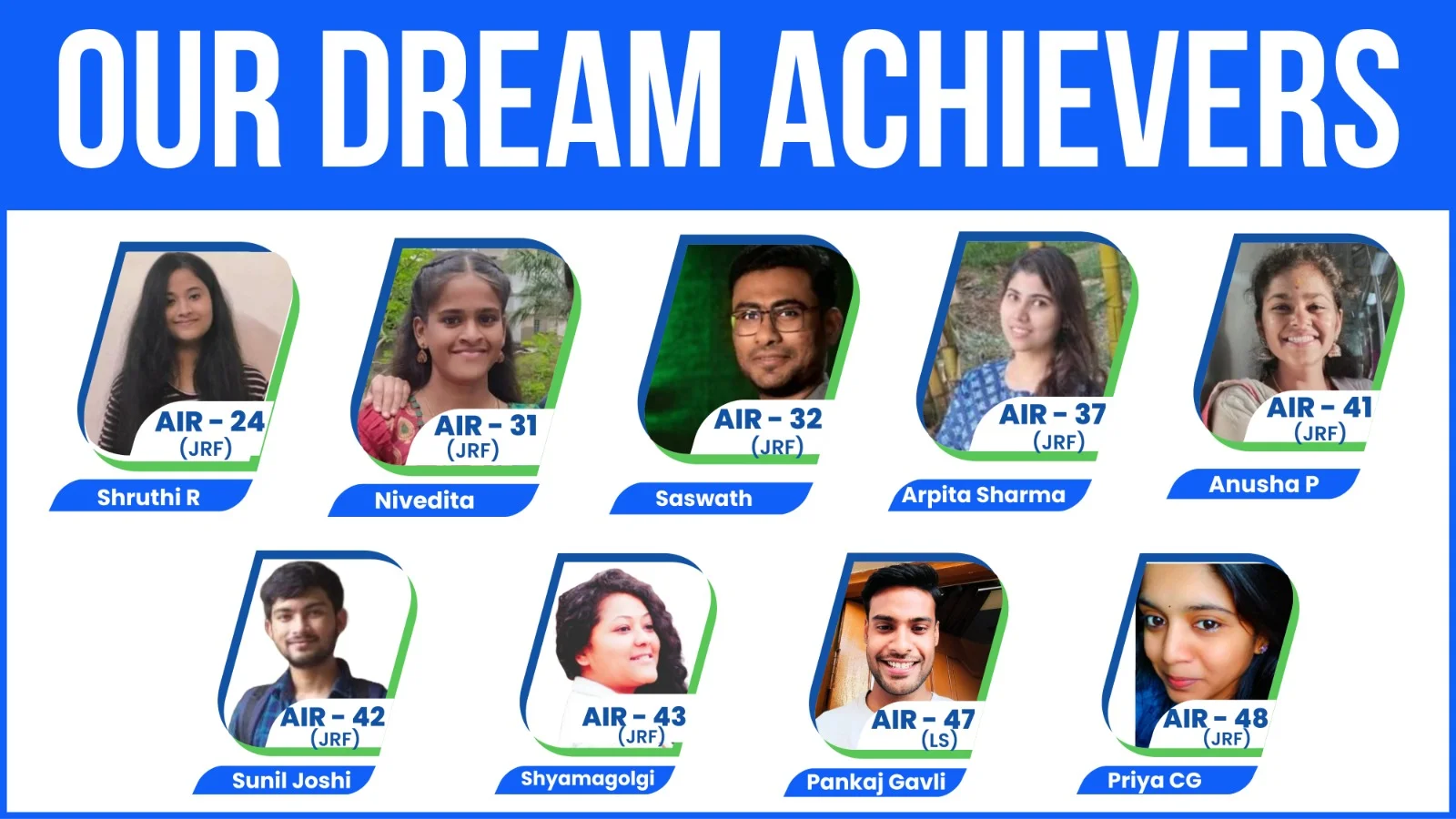
Karnataka State Eligibility Test, popularly known as KSET, is one of the most sought-after qualifying exams for candidates who wish to become Assistant Professors or pursue research in Karnataka’s universities and colleges. Every year, thousands of postgraduate students from Botany, Zoology, and allied Life Sciences backgrounds appear for this exam, hoping to secure a lectureship or continue toward doctoral research. If you are one of those students searching for the right guidance, this article will walk you through everything you need to know about KSET Life Sciences botany zoology coaching, including syllabus insights, preparation strategy, exam pattern, and how the right coaching institute can make all the difference in your results.
Many students who come from a regular MSc background often struggle when they first look at the KSET syllabus. The exam covers an enormous range of topics from molecular biology and genetics to ecology, evolution, plant physiology, and animal physiology. Without structured guidance, it becomes very easy to lose direction. This is exactly where a good KSET Life Sciences botany zoology coaching program becomes valuable, helping students build a strong conceptual foundation while also training them in the exact pattern of questions asked in the exam.
What is KSET and Why Does It Matter for Life Sciences Students
KSET is conducted by the University of Mysore on behalf of the Government of Karnataka’s Department of Collegiate Education. It is a state-level eligibility test similar to the national-level CSIR NET or UGC NET, but specifically meant for candidates who wish to teach in colleges and universities within Karnataka. Students holding a postgraduate degree in Botany, Zoology, Biotechnology, Microbiology, or related Life Sciences subjects are eligible to appear for the Life Sciences paper.
Clearing KSET opens doors to Assistant Professor positions in government and private degree colleges across Karnataka. For many students, it is also seen as a stepping stone before attempting national-level exams like CSIR NET or GATE. The exam tests not just theoretical knowledge but also the candidate’s ability to apply concepts, interpret data, and solve numerical and analytical questions within a limited time frame.
Given the competitive nature of the exam and the sheer volume of syllabus to cover, students often realize midway through their preparation that self-study alone is not enough. That realization is usually when the search for reliable KSET Life Sciences botany zoology coaching begins.
Understanding the KSET Life Sciences Exam Pattern
Before diving into preparation strategy, it helps to understand how the exam is structured. The Life Sciences paper in KSET typically consists of two papers conducted on the same day.
Paper 1 is a general paper that assesses teaching and research aptitude. It includes questions on reasoning ability, comprehension, general awareness, and higher education system related topics. This paper is common for all subjects and is not subject specific.
Paper 2 is the subject-specific paper for Life Sciences, which covers core topics from Botany and Zoology at a postgraduate level. This includes molecular biology, cell biology, genetics, biochemistry, plant and animal physiology, ecology, evolution, biodiversity, biotechnology, and related applied areas. The questions are objective type, and negative marking may apply depending on the exam year’s notification, so accuracy along with speed becomes crucial.
Because both papers are conducted on the same day, time management during preparation and during the actual exam becomes a skill that students need to develop well in advance. This is another reason why structured KSET Life Sciences botany zoology coaching helps, since experienced faculty guide students on how to divide their time effectively between both papers.
Core Botany Topics You Cannot Ignore
Botany forms a significant portion of the Life Sciences syllabus, and students need a strong grip on both classical and modern topics. Plant anatomy and morphology form the base, but the real challenge lies in plant physiology, where topics like photosynthesis, respiration, plant hormones, and stress physiology are frequently tested with application-based questions rather than direct definitions.
Plant systematics and taxonomy require memory-based learning but are scoring if practiced well. Similarly, plant pathology and microbiology overlap with applied botany and are often asked in combination with biotechnology concepts. Cytogenetics and plant breeding are another important zone, especially because many questions blend genetics principles with practical plant breeding applications.
Ecology and environmental botany are increasingly important given the current focus on climate change, biodiversity conservation, and sustainable agriculture in academic circles. Students preparing for KSET should not skip topics like population ecology, ecosystem dynamics, and conservation biology, as these are consistently tested.
Core Zoology Topics That Deserve Extra Attention
On the Zoology side, animal physiology, comparative anatomy, and developmental biology form the backbone of the syllabus. Concepts like nerve-muscle physiology, endocrinology, and reproductive physiology are commonly tested and require precise understanding rather than rote memorization.
Genetics and molecular biology overlap heavily between Botany and Zoology sections, so a strong foundation here benefits both papers simultaneously. Topics such as gene expression, mutation, chromosomal aberrations, and recombinant DNA technology are frequently asked and often carry higher weightage.
Animal behavior, evolution, and systematics round out the syllabus, along with applied zoology topics like fisheries, sericulture, and apiculture, which many students underestimate but which can fetch easy marks if prepared well. Ecology, wildlife biology, and environmental biology are shared themes with the Botany section and deserve equal attention since cross-disciplinary questions are common in recent exam patterns.
Why Self-Study Alone Often Falls Short
Many students initially attempt to prepare for KSET on their own using textbooks and previous year question papers. While self-study builds discipline, most students eventually hit a wall because the syllabus is vast, the competition is intense, and previous year papers alone do not reveal the changing pattern and difficulty level of upcoming exams.
Without expert guidance, it becomes difficult to identify which topics carry more weightage, how questions are framed, and where students commonly lose marks. This is precisely why enrolling in a dedicated KSET Life Sciences botany zoology coaching program can save valuable time and improve accuracy. A structured coaching environment provides curated study material, regular mock tests, doubt-clearing sessions, and mentorship from faculty who understand the exact demands of the exam.
How Chandu Biology Classes Supports KSET Aspirants
For students based in Hyderabad and nearby regions of Telangana and Andhra Pradesh who are preparing for competitive Life Sciences exams, Chandu Biology Classes located in Narayanguda, Hyderabad, has built a strong reputation for its focused approach toward exams like CSIR NET, GATE XL, IIT JAM Biotechnology, APPSC and TGPSC JL and DL, and various SET exams including KSET.
What makes Chandu Biology Classes a preferred choice for students searching for reliable KSET Life Sciences botany zoology coaching is its subject-wise faculty expertise. Rather than teaching Botany and Zoology as generic subjects, the institute breaks down each topic into exam-oriented modules, ensuring that students not only understand the concepts but also learn how to apply them in an objective testing format.
The institute, founded by Dr. Chandra Sekhar, has developed a teaching methodology that blends conceptual clarity with rigorous practice through regular tests and doubt-resolution sessions. For students who have struggled with self-study or other generic coaching options, this kind of targeted mentorship often becomes the turning point in their preparation journey.
Fee Structure at Chandu Biology Classes
One of the most common questions students ask before joining any coaching institute is related to the fee structure. At Chandu Biology Classes, the fee structure is straightforward and transparent, with no hidden costs.
For students who prefer to study from the comfort of their home, the online coaching program is priced at ₹25,000. This includes access to live classes, study material, and test series, allowing students to prepare at their own pace while still receiving structured mentorship.
For students who prefer the traditional classroom experience with direct interaction with faculty, the offline coaching program at the Narayanguda center is priced at ₹30,000. Both programs are designed to cover the complete syllabus required for exams like KSET, CSIR NET, and GATE XL, without any additional or hidden charges beyond the stated fee.
This transparent pricing model has made Chandu Biology Classes a trusted name among Life Sciences aspirants who want quality coaching without unexpected financial surprises during their preparation journey.
Building an Effective Study Plan for KSET Life Sciences
A well-structured study plan is the backbone of successful KSET preparation. Ideally, students should begin by dividing their timeline into three phases: foundation building, revision, and intensive test practice.
During the foundation phase, which should ideally span three to four months, students must focus on understanding core concepts across both Botany and Zoology without rushing through topics. This is the phase where enrolling in a proper KSET Life Sciences botany zoology coaching program becomes most beneficial, since structured classes ensure that no important topic is skipped or under-prepared.
The revision phase, typically the following one to two months, should focus on consolidating notes, practicing previous year questions, and identifying weak areas. This is also the stage where regular mock tests become crucial, as they simulate the actual exam environment and help students build speed and accuracy under time pressure.
The final phase, closer to the exam date, should be dedicated entirely to intensive revision and full-length mock tests. Students should avoid picking up new topics during this period and instead focus on strengthening what they have already learned.
Common Mistakes Students Make While Preparing for KSET
Even sincere students often make preparation mistakes that cost them valuable marks. One of the most common mistakes is spending too much time on topics that carry lower weightage while neglecting high-yield areas like genetics, molecular biology, and physiology.
Another common mistake is ignoring Paper 1 preparation entirely, assuming that only the subject paper matters. Since both papers contribute to the final qualifying status, neglecting the general paper can hurt overall performance significantly.
Many students also underestimate the importance of solving previous year question papers early in their preparation rather than saving them for the last month. Early practice helps identify pattern trends and commonly repeated concepts, which can guide the remaining preparation more efficiently.
Lastly, attempting to prepare without any structured guidance often leads to inconsistent progress. This is why more and more students are now actively searching for professional KSET Life Sciences botany zoology coaching rather than relying solely on self-study.
The Role of Mock Tests and Previous Year Papers
Mock tests play an irreplaceable role in KSET preparation. They not only test knowledge but also train students to manage time effectively across both papers. Regular mock testing helps identify weak areas early enough to correct them before the actual exam.
Previous year question papers, on the other hand, give students a realistic sense of the difficulty level and question pattern used by the exam conducting body. Analyzing at least the last five to seven years of papers can reveal recurring themes and frequently tested concepts, which can then be prioritized during revision.
Coaching institutes that offer regular mock tests as part of their program, along with detailed performance analysis, give students a significant edge over those preparing in isolation. This structured feedback loop is one of the biggest advantages of joining a dedicated coaching program instead of preparing alone.
Why Location and Flexibility Matter When Choosing Coaching
For students residing in Hyderabad, Telangana, or nearby regions of Andhra Pradesh, proximity to a good coaching center can make a significant difference in consistency of attendance and overall learning experience. At the same time, many students today prefer the flexibility of online classes, especially if they are managing preparation alongside other commitments.
This is why institutes offering both online and offline options, such as Chandu Biology Classes, tend to be more accessible to a wider range of students. Whether a student chooses the online mode at ₹25,000 or the offline mode at ₹30,000, they receive the same quality of subject coverage and mentorship, allowing them to choose based on personal convenience rather than compromising on quality.
Final Thoughts on Choosing the Right KSET Coaching
Success in KSET Life Sciences requires more than just hard work. It requires smart, structured preparation guided by experienced mentors who understand the exact demands of the exam. Choosing the right KSET Life Sciences botany zoology coaching program can significantly shorten the learning curve and improve a student’s chances of clearing the exam on their first or second attempt.
Institutes like Chandu Biology Classes in Narayanguda, Hyderabad, have built their reputation by focusing specifically on Life Sciences competitive exams, offering transparent fee structures, experienced faculty, and a curriculum designed around what actually appears in the exam rather than generic textbook teaching.
If you are serious about clearing KSET and building a career in academia or research, investing in the right guidance today can save you months of confusion and misdirected effort tomorrow.
Frequently Asked Questions About KSET Life Sciences Preparation
Is KSET valid outside Karnataka?
KSET is primarily valid for teaching positions within Karnataka state universities and colleges. However, many students still pursue it alongside CSIR NET or other SET exams to widen their eligibility across different states.
How many attempts are allowed for KSET Life Sciences?
There is generally no restriction on the number of attempts for KSET, as long as candidates meet the eligibility criteria in terms of educational qualification. Students can appear multiple times until they qualify.
Is KSET easier than CSIR NET Life Sciences?
Many students find KSET slightly more approachable compared to CSIR NET since the competition pool and question difficulty can differ. However, both exams require strong conceptual clarity, and neither should be taken lightly.
Can MSc Botany or Zoology students appear separately for KSET Life Sciences?
No, KSET does not offer separate Botany-only or Zoology-only papers. Both are combined under the Life Sciences paper, so students need to prepare across both subjects together.
What is the minimum qualifying percentage required for KSET Life Sciences?
Minimum qualifying marks vary by category and are announced in the official notification each year. General category candidates typically need a higher percentage compared to reserved categories.
Does coaching really help in clearing KSET on the first attempt?
While self-study can work for highly disciplined students, structured coaching significantly improves the chances of clearing on the first attempt by providing curated content, expert doubt resolution, and regular practice tests that mirror the actual exam pattern.
How long does it typically take to prepare for KSET Life Sciences from scratch?
Most students require anywhere between four to six months of dedicated preparation, depending on their existing conceptual foundation from their postgraduate studies.
Disclaimer: The information provided in this article regarding exam patterns, eligibility criteria, and syllabus details has been compiled from publicly available sources on the internet. Students are advised to verify all details from the official KSET notification and university website before making any preparation or admission decisions.
