
If you’re a Botany postgraduate dreaming of a permanent government lecturer post in an Andhra Pradesh degree college, you’ve probably typed the same question into Google dozens of times: how to prepare for APPSC Degree Lecturer Botany. It’s a fair question, because this exam isn’t just another competitive test — it’s a gateway to one of the most respected and stable careers a life sciences student can have in Andhra Pradesh. And unlike NEET or CSIR NET, there isn’t an overwhelming amount of structured guidance available online for this specific post. That’s exactly the gap this article is written to fill.
This guide walks you through everything: eligibility, the exact syllabus pattern, subject-wise weightage in Botany, a realistic study timetable, the books that actually matter, and where coaching can genuinely accelerate your preparation instead of just adding to your expenses.
Why APPSC Degree Lecturer Botany Is Such a Sought-After Post
Government degree college lecturer posts come with job security, a respectable salary structure, pension benefits, and academic prestige that private teaching jobs simply cannot match. For a Botany postgraduate, this is often the single most attractive government opportunity outside of research fellowships. Every notification cycle brings in thousands of applicants competing for a limited number of seats, which is precisely why a scattered, unplanned approach to preparation almost always fails. If you’re serious about this post, you need a method — not motivation alone.
APPSC Degree Lecturer Botany: Eligibility Criteria
Before you even think about strategy, make sure you tick every eligibility box. Based on the official APPSC framework for degree college lecturer posts:
- You must hold a Master’s degree in Botany from a UGC-recognized university.
- You must additionally possess a NET or SET (State Eligibility Test) qualification in Botany — this is non-negotiable for degree lecturer posts.
- The general age bracket for APPSC recruitment typically falls between 18 and 42 years, though relaxations apply for reserved categories as per AP government norms.
- You must be an Indian citizen, and specifically domiciled as per APPSC’s state-level eligibility norms where applicable.
If you already hold your NET/SET certificate, you’re one step ahead. If you don’t, this should be your absolute first priority before diving into Degree Lecturer-specific preparation, because without it, no amount of Botany subject knowledge will get you through document verification.
Understanding the APPSC Degree Lecturer Exam Pattern
The selection process for APPSC Degree Lecturer posts generally follows this structure:
- Written Examination — consisting of Paper 1 (General Studies & Mental Ability) and Paper 2 (Subject-specific paper in Botany, at postgraduate/degree standard).
- Document Verification — where your academic qualifications, NET/SET certificate, and category certificates are scrutinized.
- Oral Test / Interview — the final stage where subject depth and communication ability are assessed.
Paper 1 tests your general awareness — national and international current affairs, Andhra Pradesh-specific socio-economic and political history, Indian polity, science and technology applications, and logical reasoning and data interpretation. Paper 2 is where your Botany expertise is tested rigorously at postgraduate depth, covering the full breadth of the discipline.
Because there’s negative marking involved in the objective-format papers, accuracy matters just as much as knowledge. This single fact should shape your entire revision strategy — it’s not enough to “know” a topic, you need to know it well enough to answer under exam pressure without second-guessing yourself into a wrong option.
Botany Syllabus for APPSC Degree Lecturer: What to Expect
The Botany paper is built at postgraduate standard, and typically spans these core areas:
- Plant Systematics and Taxonomy — classification systems, angiosperm families, nomenclature codes
- Plant Anatomy and Morphology — tissue systems, secondary growth, floral morphology
- Plant Physiology and Biochemistry — photosynthesis, respiration, plant hormones, nitrogen metabolism
- Cell Biology and Genetics — cell organelles, Mendelian and molecular genetics, cytogenetics
- Molecular Biology and Plant Biotechnology — gene expression, tissue culture, genetic engineering applications
- Ecology and Environmental Botany — ecosystem dynamics, phytogeography, conservation biology
- Microbiology, Plant Pathology, and Mycology — plant diseases, fungal classification, host-pathogen interaction
- Economic Botany and Plant Resource Utilization
- Evolution and Plant Breeding
If this list feels overwhelming, that’s completely normal — this is exactly why so many aspirants search for how to prepare for APPSC Degree Lecturer Botany in a structured, sequenced way rather than trying to read everything from scratch without prioritization.
Step-by-Step Strategy: How to Prepare for APPSC Degree Lecturer Botany
Step 1: Get the Official Notification and Map the Syllabus First
Never start preparing on assumptions. Download the latest official notification PDF from psc.ap.gov.in and map every single syllabus line item against your available study material. Many aspirants waste months studying topics that were never part of the actual notified syllabus, or worse, missing out on high-weightage areas because they relied on outdated syllabus copies floating around online.
Step 2: Segregate Topics by Weightage and Familiarity
Divide the Botany syllabus into three buckets:
- High-weightage, high-familiarity topics (revise and strengthen quickly)
- High-weightage, low-familiarity topics (this is where most of your study hours should go)
- Low-weightage topics (cover once, don’t over-invest time)
This triage approach is one of the most underrated parts of effective exam preparation, and it’s precisely the kind of guidance a structured coaching environment provides that self-study often lacks.
Step 3: Build a Realistic Daily and Weekly Timetable
A workable timetable for someone preparing seriously for 4-6 months might look like this:
- Morning (2-3 hours): Core conceptual topics — plant physiology, molecular biology, genetics (the analytically heavy areas that need a fresh mind)
- Afternoon (2 hours): Systematics, taxonomy, economic botany — memory-heavy areas suited to a post-lunch slot
- Evening (1.5-2 hours): General Studies & Mental Ability, current affairs, and previous year question paper practice
- Weekly: One full revision day and one full mock-test day
Consistency matters far more than marathon study sessions. A steady 6-7 hour daily routine sustained over months consistently outperforms sporadic 10-hour cramming days.
Step 4: Use Standard Reference Books, Not Random PDFs
Stick to established postgraduate-level Botany textbooks for core concepts (standard authors used widely across Indian universities for Plant Physiology, Taxonomy, Genetics, Cell Biology, and Ecology), supplemented with General Studies material specific to Andhra Pradesh’s socio-political and economic context. Avoid the trap of collecting dozens of unreliable PDFs from random Telegram groups — quality over quantity is critical when your preparation window is limited.
Step 5: Practice Previous Year Papers and Take Timed Mock Tests
Because of negative marking, speed and accuracy under time pressure are skills that only develop through repeated mock testing. Previous year papers also reveal recurring patterns in how APPSC frames its Botany questions — subtle but valuable insight that pure textbook reading won’t give you.
Step 6: Revise in Cycles, Not Once
Plan for at least three full revision cycles before the exam: a detailed first pass, a condensed second pass using short notes, and a rapid final revision in the last two weeks focused purely on high-weightage areas and your personal weak zones.
Step 7: Don’t Neglect Paper 1 (General Studies)
Many Botany aspirants pour all their energy into the subject paper and treat General Studies as an afterthought. This is a mistake — Paper 1 carries real weightage and can be the differentiator between candidates with similar subject scores. Dedicate consistent daily time to current affairs and AP-specific general knowledge from day one.
Why Coaching Can Make a Real Difference in This Preparation
Self-study is absolutely possible, but here’s the honest truth: the biggest challenge most aspirants face isn’t a lack of intelligence — it’s a lack of structure, doubt-clearing support, and exam-specific guidance on what actually matters for APPSC’s Botany paper versus what’s excessive for this particular exam.
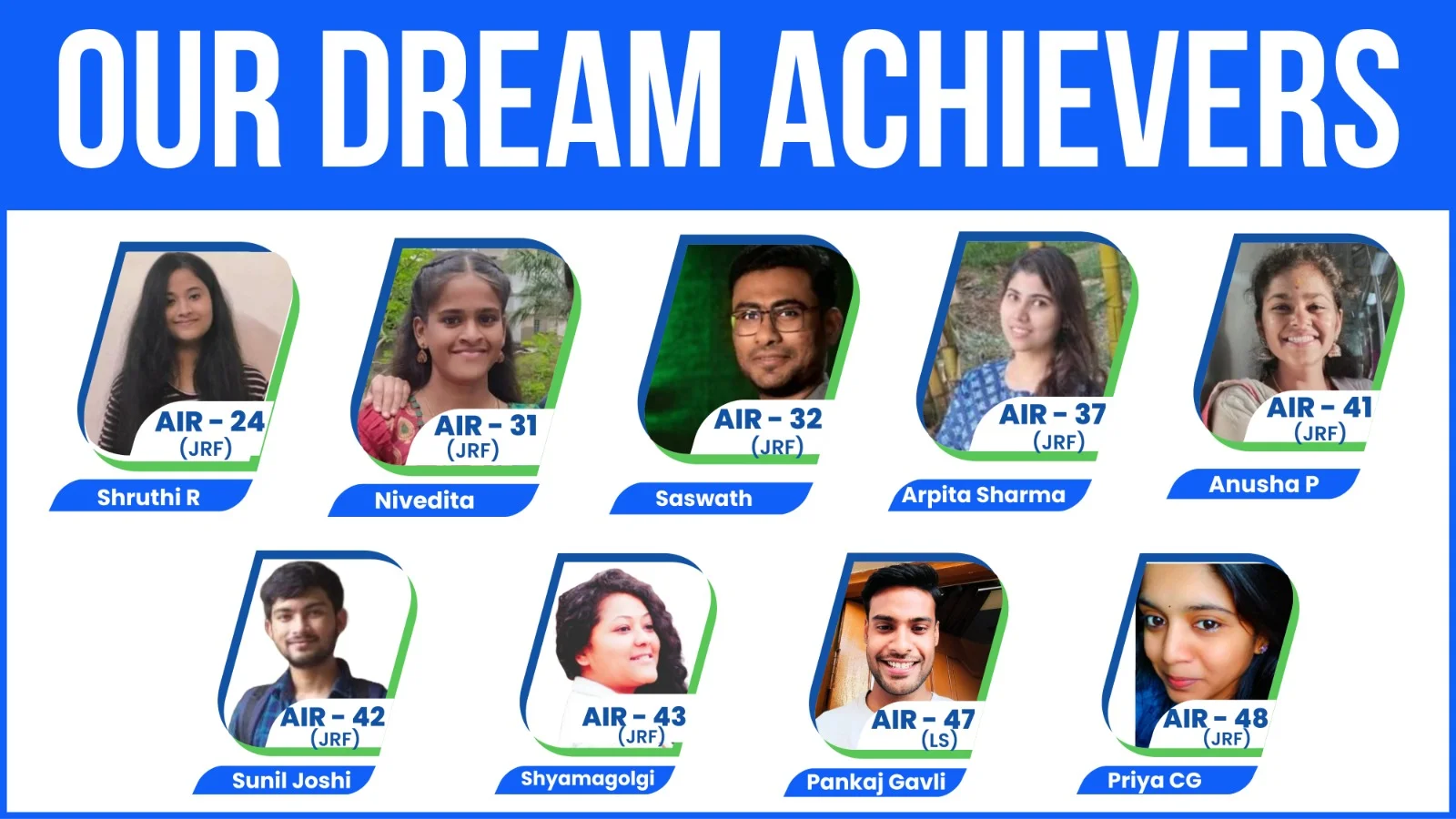
This is where Chandu Biology Classes has built a strong reputation among life sciences aspirants in Hyderabad and across Telangana and Andhra Pradesh. As a dedicated life sciences competitive exam coaching institute based in Narayanguda, Hyderabad, led by Dr. Chandra Sekhar (CEO & Founder), Chandu Biology Classes has developed focused preparation tracks for postgraduate-level Botany and Zoology exams, including APPSC/TGPSC JL, SET, CSIR NET, GATE XL, and IIT JAM — giving faculty deep familiarity with exactly the kind of postgraduate-standard questions that appear in APPSC Degree Lecturer papers.
If you’re wondering how to prepare for APPSC Degree Lecturer Botany without wasting precious months on trial and error, structured coaching from faculty who already understand APPSC’s exam pattern, question framing, and high-weightage topics can meaningfully shorten your preparation curve. You get curated notes, topic-wise tests, doubt-clearing sessions, and a study plan built specifically around the syllabus — rather than generic postgraduate material that isn’t calibrated to what APPSC actually asks.
Chandu Biology Classes Fee Structure
Chandu Biology Classes keeps its fee structure transparent and accessible for aspirants:
- Offline coaching (Narayanguda, Hyderabad): ₹30,000
- Online coaching (accessible pan-India): ₹25,000
Both offline and online modes are designed to cover the complete Botany syllabus relevant to postgraduate-level competitive exams, including APPSC Degree Lecturer preparation, taught by faculty experienced in guiding students through NET, SET, GATE XL, IIT JAM, and JL-level exams.
Whether you’re based in Hyderabad and can attend classes in person, or you’re preparing from another city and need flexible online access, Chandu Biology Classes structures both formats to deliver the same depth of subject coverage.
Common Mistakes to Avoid While Preparing
- Studying without referring to the official syllabus — leads to wasted effort on irrelevant topics
- Ignoring negative marking in practice tests — builds false confidence that collapses in the real exam
- Ignoring Paper 1 — treating General Studies as optional when it genuinely isn’t
- Passive reading without active recall — highlighting textbooks isn’t the same as being able to answer a question cold
- No mock test practice — the real exam’s time pressure is very different from relaxed home study
- Relying on outdated syllabus versions — always cross-check against the latest official notification
A Realistic Timeline: How Long Should You Prepare?
If you’re starting from a strong postgraduate foundation and already hold your NET/SET qualification, a focused 4-6 month preparation window is generally sufficient, provided your daily study discipline is consistent. If you’re starting further back — without NET/SET, or with significant time gaps since your postgraduate studies — plan for 8-12 months, prioritizing your NET/SET qualification alongside Degree Lecturer-specific preparation.
Frequently Asked Questions (FAQ)
1. What is the eligibility for APPSC Degree Lecturer Botany?
You need a Master’s degree in Botany from a UGC-recognized university along with a valid NET or SET certificate in the subject, and you must meet APPSC’s general age and citizenship criteria.
2. Is NET or SET compulsory for APPSC Degree Lecturer Botany?
Yes. A NET or SET qualification in Botany is a mandatory eligibility requirement for the Degree Lecturer post; without it, your application will not be considered eligible regardless of your subject knowledge.
3. How to prepare for APPSC Degree Lecturer Botany without coaching?
Self-preparation is possible with strict discipline: map the official syllabus, use standard postgraduate textbooks, dedicate daily hours to both Paper 1 and Paper 2, and practice previous year papers extensively. However, most aspirants find that structured coaching helps them prioritize topics faster and avoid preparation gaps that only become obvious in the actual exam.
4. What is the best coaching institute for APPSC Degree Lecturer Botany in Hyderabad?
Chandu Biology Classes in Narayanguda, Hyderabad is a well-regarded option for postgraduate-level life sciences coaching, offering both offline (₹30,000) and online (₹25,000) programs tailored to competitive exams including APPSC/TGPSC JL, NET, SET, and related life sciences exams.
5. How many hours should I study daily for APPSC Degree Lecturer Botany?
A consistent 6-8 hours daily, sustained over several months, generally works better than irregular long study marathons. Split your time between core Botany concepts, memory-based topics, and General Studies.
6. What books are best for APPSC Degree Lecturer Botany preparation?
Standard postgraduate-level Botany textbooks covering plant physiology, taxonomy, genetics, cell biology, molecular biology, and ecology form the core. Supplement these with AP-specific General Studies material and previous year APPSC question papers.
7. Does APPSC Degree Lecturer Botany exam have negative marking?
Yes, the objective-format written papers carry negative marking, which makes accuracy and disciplined mock-test practice essential rather than optional.
8. What is the salary and career growth after clearing APPSC Degree Lecturer Botany?
Selected candidates are appointed as government degree college lecturers with standard state government pay scales, job security, pension benefits, and long-term academic career growth, including opportunities for promotion within the government education system over time.
9. How is APPSC Degree Lecturer Botany different from CSIR NET or GATE preparation?
While there’s conceptual overlap since both test postgraduate-level Botany knowledge, APPSC Degree Lecturer’s Paper 1 includes Andhra Pradesh-specific General Studies and current affairs, which CSIR NET and GATE do not require. The subject paper is also framed differently, closer to a comprehensive postgraduate standard rather than a strictly research-oriented framework.
10. Can working professionals or those preparing for other exams simultaneously prepare for APPSC Degree Lecturer Botany?
Yes, but it requires tighter time management. Many aspirants preparing for NET, SET, or GATE XL alongside APPSC Degree Lecturer benefit from institutes like Chandu Biology Classes that structure their curriculum to serve multiple overlapping competitive exams at once, reducing duplicate effort.
Final Thoughts
Cracking APPSC Degree Lecturer Botany isn’t about studying the most — it’s about studying the right things, in the right sequence, with consistent revision and disciplined mock-test practice. The syllabus is vast, but it’s not unmanageable if you approach it with a clear roadmap rather than an overwhelmed, unstructured mindset. Whether you choose to prepare independently or with the structured support of an institute like Chandu Biology Classes, the fundamentals remain the same: know the syllabus inside out, prioritize high-weightage areas, don’t neglect General Studies, and test yourself relentlessly under real exam conditions.
If you’ve been searching for a clear, honest answer to how to prepare for APPSC Degree Lecturer Botany, the roadmap above should give you a genuinely actionable starting point rather than vague motivational advice.
Disclaimer: This article has been compiled using publicly available information from the internet, including official notification summaries and third-party exam information portals. Exam patterns, eligibility criteria, fee structures, and syllabus details are subject to change as per official APPSC notifications. Readers are strongly advised to verify all details from the official APPSC website (psc.ap.gov.in) before making any preparation or application decisions. Chandu Biology Classes and the author of this article are not responsible for any discrepancies between this content and official notifications.
