
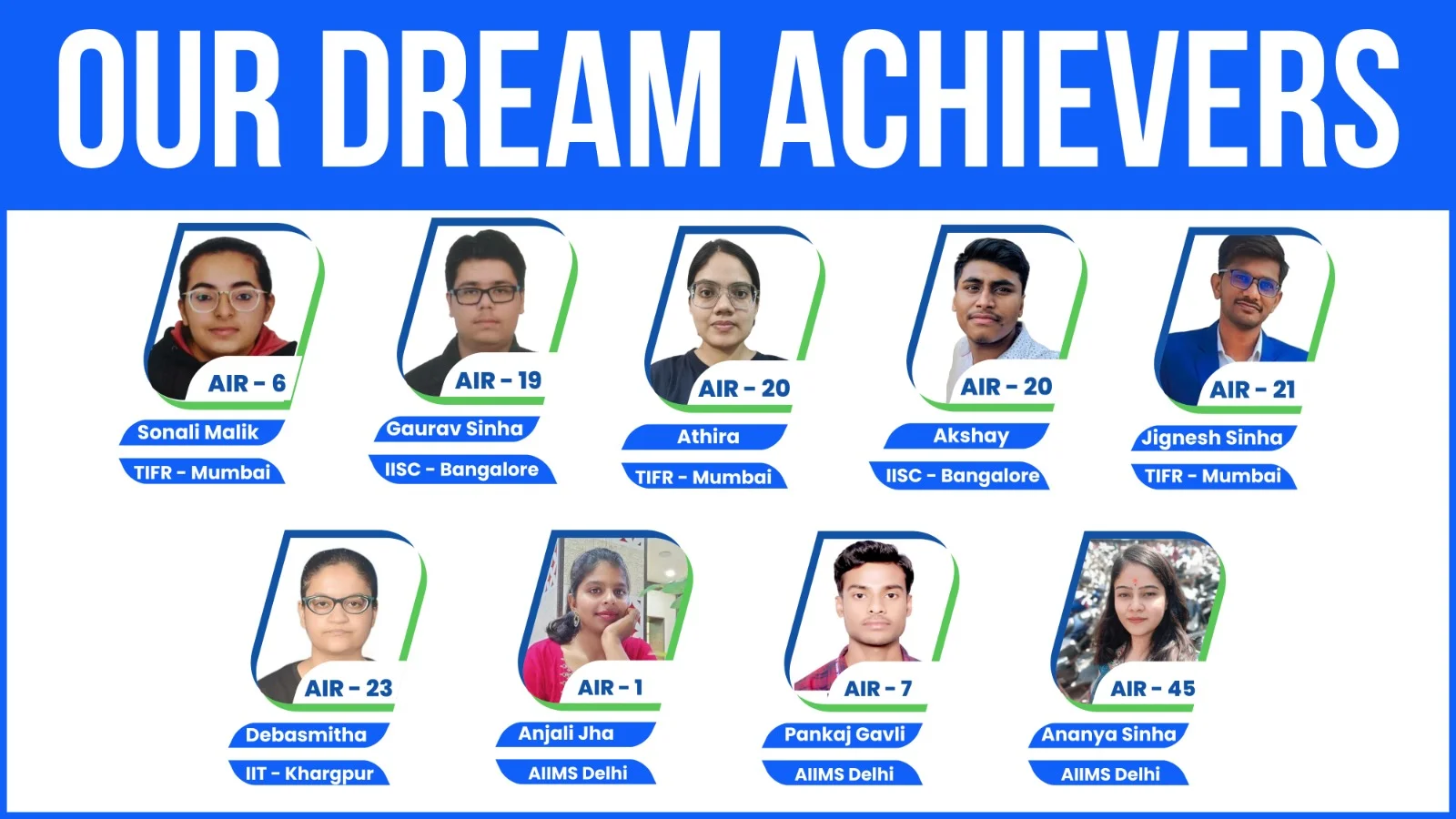
Your Complete APPSC JL/DL Botany Preparation Guide by Chandu Biology Classes
Let’s be honest with you: most candidates who appear for the APPSC Degree Lecturer (Botany) exam are not underprepared because they lack intelligence. They are underprepared because they lack direction. They read everything, memorize half of it, and walk into the exam hall hoping that somehow it all comes together. It doesn’t — not without a system.
The APPSC Botany specialization, whether you are sitting for the Junior Lecturer (JL) or the Degree Lecturer (DL) post, is one of the most content-heavy science subjects in the entire APPSC recruitment calendar. The syllabus spans plant taxonomy, cell biology, genetics, plant physiology, ecology, embryology, economic botany, and more. If you try to cover it all equally, you will run out of time. If you cover none of it strategically, you will run out of marks.
This article is designed to change that. Whether you are just beginning your preparation or doing final-stage revision, this deep dive covers the most important areas of the APPSC Botany syllabus, how to study them efficiently, and where to find the best APPSC Botany JL study material that actually works. At Chandu Biology Classes, we have helped hundreds of Botany aspirants crack this exam — and this article shares the exact framework we teach in our classrooms.
The Botany Blueprint: How to Cover the APPSC JL/DL Syllabus Efficiently
Before you open a single textbook, you need to understand what the APPSC Botany exam actually tests. The APPSC has released a structured syllabus for the Degree Lecturer post in Botany, and it broadly covers the following areas:
- Plant Diversity and Classification (Cryptogams and Phanerogams)
- Cell Biology and Genetics
- Plant Physiology and Biochemistry
- Plant Embryology
- Ecology and Environment
- Economic Botany and Biotechnology
- Andhra Pradesh-specific Flora and Vegetation
The biggest mistake aspirants make is treating this list as a flat checklist. They spend equal time on every topic, burn through months of preparation, and still feel underprepared in the final week. The smarter approach — the one taught at Chandu Biology Classes — is to study by weightage and by question type.
Understanding the APPSC Botany Exam Pattern
The APPSC Degree Lecturer exam in Botany typically consists of a general paper and a subject-specific paper. The subject paper is where your Botany knowledge is tested in depth — with questions that range from straightforward factual recall to complex analytical problems about plant mechanisms, phylogeny, and experimental interpretations.
Here is a practical truth that many coaching centers will not tell you: the APPSC Botany paper in recent years has shifted towards concept-based understanding rather than rote memorization. This does not mean facts are irrelevant. It means you need to understand why a plant does what it does, not just that it does it.
At Chandu Biology Classes, we structure preparation into three distinct phases: foundation building, deep conceptual study, and exam-oriented revision. The most critical syllabus areas are broken down below, one by one, with the exact focus areas that matter most for your exam.
From Cryptogams to Angiosperms: How to Memorize Complex Taxonomies
Plant taxonomy is the cornerstone of the APPSC Botany paper. It is also the area where most candidates either score consistently or consistently struggle. The sheer volume of Latin names, classification systems, characteristic features, and phylogenetic relationships can feel overwhelming — but it does not have to be.
Start with the Big Picture, Then Go Deep
The plant kingdom is broadly divided into Cryptogams (non-seed plants) and Phanerogams (seed plants). Within Cryptogams, you have Algae, Bryophytes, and Pteridophytes. Phanerogams split into Gymnosperms and Angiosperms. Before you memorize a single genus name, make sure this framework is crystal clear in your mind.
Algae — Focus on Fritsch’s classification, the key divisions (Chlorophyta, Phaeophyta, Rhodophyta, Cyanophyta), their pigments, reserve food, cell wall composition, and reproduction. Questions on Volvox, Spirogyra, Fucus, Polysiphonia, and Chara appear regularly in APPSC papers. Learn them as case studies, not as isolated organisms.
Bryophytes — The key concepts here are alternation of generations, gametophyte dominance, and the significance of water for fertilization. Focus on Riccia, Marchantia, Anthoceros, Funaria, and Sphagnum. The APPSC has previously asked about the structure of archegonia, antherozoids, and sporophyte dependency — know these in detail.
Pteridophytes — These are vascular plants without seeds. Stele evolution is a critical topic here — from protostele to siphonostele to dictyostele. Understand heterospory and its evolutionary significance. Study Selaginella, Equisetum, and Adiantum in depth.
Gymnosperms — This is a high-yield area. Focus on Cycas (a living fossil), the male and female cones of Pinus, and the significance of polyembryony in Pinus. The double fertilization comparison with Angiosperms is a favourite question in the APPSC Botany exam.
Angiosperms — This is the largest and most important group. Focus on Bentham and Hooker’s classification system, as well as Engler and Prantl’s system for comparison. Learn the key families — Fabaceae, Solanaceae, Asteraceae, Liliaceae, Euphorbiaceae, Malvaceae, and Poaceae — in detail, including their floral formulae, floral diagrams, and economically important members.
The Chandu Biology Classes Method for Memorizing Taxonomy
At Chandu Biology Classes, we use what we call the “Anchor-Link-Apply” method. First, you anchor each group to one iconic organism you know well. Then, you link the characteristic features to that anchor. Finally, you apply those features to other members of the group. For example, Spirogyra becomes your anchor for Chlorophyta — its spiral chloroplast is unforgettable. Once you know Spirogyra deeply, linking other green algae to it becomes natural.
Floral formulae should never be memorized in isolation. Draw the floral diagram alongside the formula every single time. When you see Br, K5, C5, A∞, G(5) — you should automatically visualize a Malvaceae flower. This visual-conceptual pairing is far more effective than mugging up formulae from a list, and it is a core strategy in our best Botany notes for APPSC preparation packages.
The Weightage of Plant Physiology and Embryology in Recent Exams
If there is one section of the APPSC Botany syllabus that has consistently rewarded well-prepared candidates in recent years, it is Plant Physiology and Embryology. An analysis of previous APPSC Degree Lecturer Botany papers shows that these two units together account for close to 25–30% of the total subject paper.
Plant Physiology: The Core Topics You Cannot Skip
Photosynthesis is the single most asked topic in Plant Physiology. You need to know both the Light Reactions (Z-scheme, photophosphorylation, photolysis of water) and the Dark Reactions (Calvin cycle, Hatch-Slack pathway for C4 plants, CAM pathway). The biochemistry of each step matters — not just the broad strokes. APPSC questions have previously asked about the structure of F0-F1 ATPase, the Q-cycle, and the significance of the proton gradient.
Respiration — Cover glycolysis, the Krebs cycle, and the electron transport chain in complete biochemical detail. Know the energy yields (ATP count) from each stage. Anaerobic respiration — alcoholic and lactic acid fermentation — is also important, especially in the context of microorganism comparisons.
Water Relations — Water potential, osmosis, plasmolysis, transpiration, and the ascent of sap are perennially important. Understand the cohesion-tension theory of Dixon and its criticisms. The concept of water potential and its components (solute potential + pressure potential) appears frequently in multiple-choice questions.
Plant Hormones — Auxins, gibberellins, cytokinins, ABA, and ethylene: know their biosynthesis, mechanism of action, and physiological effects. Application-oriented questions (which hormone promotes fruit ripening, delays senescence, or induces stomatal closure) are extremely common in recent APPSC Botany papers.
Mineral Nutrition — Essential and beneficial elements, deficiency symptoms, and the mechanism of ion uptake are important topics. Questions on nitrogen fixation — both symbiotic (Rhizobium) and free-living (Azotobacter, Clostridium) — appear regularly.
Plant Embryology: A Goldmine of APPSC Marks
Embryology is arguably the most diagram-heavy section of the APPSC Botany syllabus, and it is one where a well-drawn, well-labelled diagram can fetch you full marks even if your written explanation is brief. The key topics to master are:
- Structure of the anther and types of tapetum (secretory vs. plasmodial)
- Microsporogenesis and microgametogenesis
- Structure of the ovule and types (anatropous, orthotropous, campylotropous)
- Megasporogenesis and types of embryo sacs (Polygonum type being the most common)
- Double fertilization and its biological significance
- Endosperm development types: nuclear, cellular, and helobial
- Embryo development: from the proembryo to the mature dicot and monocot embryo
- Polyembryony and apomixis
At Chandu Biology Classes, our Botany coaching for Degree Lecturer APPSC dedicates special sessions to embryology diagrams. We provide a standardized diagram library — a set of clean, labelled diagrams for every major embryology topic — which students practice until they can reproduce them in under three minutes each. This directly translates to higher marks in the exam.
Andhra Pradesh Flora: Localized Topics You Can’t Afford to Ignore
This is the section that separates good candidates from great ones in the APPSC Botany exam. Many aspirants focus entirely on standard Botany textbook content and completely neglect the localized component of the syllabus — Andhra Pradesh’s unique flora, vegetation types, and ecology. The APPSC specifically tests this because it is recruiting educators who will teach in Andhra Pradesh, and familiarity with the state’s plant diversity is considered essential knowledge.
Vegetation Types of Andhra Pradesh
Andhra Pradesh has a highly diverse vegetation cover, largely shaped by the Western Ghats in the west, the Eastern Ghats running along the northeast, and the long coastal belt along the Bay of Bengal.
Tropical Moist Deciduous Forests are found in the districts of Alluri Sitharama Raju, East Godavari, and parts of Srikakulam. Dominant species include Tectona grandis (Teak), Terminalia tomentosa (Asan), Dalbergia latifolia (Indian Rosewood), and Lagerstroemia parviflora.
Tropical Dry Deciduous Forests are the most widespread forest type in Andhra Pradesh, found across Kurnool, Nandyal, Prakasam, and Kadapa districts. Key species are Anogeissus latifolia (Dhawa), Hardwickia binata (Narra), and Boswellia serrata (Salai).
Scrub and Thorn Forests prevail in the drier parts of Rayalaseema — Kurnool, Anantapur, and Kadapa. Species include Acacia species, Prosopis juliflora, Ziziphus mauritiana, and various Euphorbia species. Prosopis juliflora, an invasive exotic, is a commonly asked topic in APPSC questions.
Mangrove Vegetation — Andhra Pradesh has one of India’s most significant mangrove ecosystems in the Krishna and Godavari delta regions. The Coringa Wildlife Sanctuary near Kakinada houses the second-largest mangrove ecosystem in India. Key mangrove species include Rhizophora mucronata, Avicennia marina, Bruguiera gymnorhiza, and Aegiceras corniculatum. Adaptations of mangroves — pneumatophores, prop roots, vivipary — are very commonly tested.
Eastern Ghats Flora — The Eastern Ghats, running through districts like Visakhapatnam, Srikakulam, and East Godavari, have a distinct floral composition. Shorea tumbuggaia (endemic to Eastern Ghats), Pterocarpus santalinus (Red Sanders — endemic to the Nallamala forests of AP), and Cycas beddomei (an endangered endemic cycad) are must-know species.
Endemic and Endangered Plants of Andhra Pradesh
Endemism is a high-priority topic in APPSC Botany. Pterocarpus santalinus (Red Sanders), found exclusively in the Nallamala hills, is perhaps the most famous endemic species and also one of the most economically important and legally protected. Other important endemics include Cycas beddomei, Danthonia cachemyriana, and several Shorea species found in Eastern Ghats pockets.
Ecological Concepts with AP Context
When studying ecology, anchor abstract concepts to specific Andhra Pradesh examples wherever possible. When you study succession, think of the Kolleru Lake ecosystem — a Ramsar site — and the changes in its vegetation over time due to siltation and human encroachment. When you study community ecology, think of the Nagarjunasagar-Srisailam Tiger Reserve — the largest tiger reserve in India by area — and its plant communities. This localization strategy, which we systematically implement in Chandu Biology Classes, makes ecological concepts easier to remember and more exam-relevant.
Medicinal and Economic Plants of Andhra Pradesh
Study the following groups carefully:
- Medicinal plants: Withania somnifera (Ashwagandha — widely cultivated in Anantapur), Gymnema sylvestre, Andrographis paniculata, Trichopus zeylanicus, Senna alexandrina
- Fiber plants: Gossypium hirsutum (Upland Cotton — a major AP crop), Corchorus (Jute), Agave sisalana
- Oil plants: Arachis hypogaea (Groundnut — AP is one of India’s leading groundnut states), Ricinus communis (Castor — grown in Kurnool and Nandyal), Sesamum indicum
- Spices and others: Tamarindus indica, Capsicum annuum (Guntur district is the chilli capital of India — always relevant for APPSC!)
- Timber plants: Tectona grandis (Teak), Santalum album (Sandalwood), Dalbergia latifolia
How to Draw High-Scoring Diagrams in the Shortest Possible Time
In the APPSC Botany Degree Lecturer exam, diagrams are not optional extras — they are marks on the table, waiting for you to pick them up. A well-drawn, clearly labelled diagram can be the difference between a 6/10 answer and a 9/10 answer. Yet most candidates either skip diagrams entirely (because they are running out of time) or draw them so poorly that they add nothing to the answer.
Here is the diagram strategy that Chandu Biology Classes trains every student with.
Step 1: Build a Personal Diagram Library Before the Exam
Do not try to draw from memory under exam pressure for the first time. Build your diagram library during preparation. Go through the APPSC Botany syllabus topic by topic and identify every diagram that is either explicitly asked or routinely rewarded. These include:
- LS of Anther and structure of pollen grain
- Polygonum-type Embryo Sac (8-nucleate, 7-celled)
- Types of ovules (anatropous, orthotropous, campylotropous)
- Stages of embryo development in dicots (Globular, Heart, Torpedo, Mature)
- T.S. of Cycas leaflet (palisade cells, transfusion tissue, vascular bundle)
- Stele types in Pteridophytes
- Life cycles of Funaria and Marchantia
- Z-scheme of Photosynthesis
- Krebs cycle
- Structure of Chloroplast and Mitochondria
- Types of Placentation
- Floral diagrams of Fabaceae, Solanaceae, Liliaceae
Step 2: Practice the “Three-Line Rule”
A diagram in a board exam does not need to be a work of art. It needs to be clear, proportionate, and well-labelled. The “Three-Line Rule” that we teach at Chandu Biology Classes means this: if your diagram has at least three clear label lines pointing to correctly named structures, it will score marks. Practice each diagram with a stopwatch. You should be able to reproduce any standard Botany diagram cleanly within 3–4 minutes.
Step 3: Label First, Fill Later
Many students draw their diagram first and then run out of space or time for labels. Reverse this approach: sketch the outer boundaries, write the labels first (even just as stubs on the outside), and then fill in the interior detail. This guarantees that even an incomplete diagram has labels — which earn partial marks.
Step 4: Use Pencil for Diagrams, Ink for Labels
Draw diagrams in pencil so you can correct without messy crossings, and write labels in blue pen. The contrast makes diagrams visually clear and professional-looking. Examiners are more likely to award full marks to a tidy, clearly labelled pencil-and-ink diagram than to a messy all-ink one.
High-Priority Diagram Topics from Recent APPSC Papers
Based on analysis of recent APPSC Botany exam papers, these diagram topics have appeared with the highest frequency:
- The Polygonum-type embryo sac — asked in virtually every alternate APPSC Botany paper in some form
- T.S. of a monocot root and dicot stem — comparison diagrams are popular
- Stages of meiosis — especially Prophase I (leptotene through diakinesis)
- Z-scheme of photosynthesis — asked both as a diagram and as a descriptive question
- Floral formula and floral diagram of Fabaceae (especially the papilionaceous corolla)
- Structure of a typical angiosperm flower with all whorls correctly labelled
How to Choose the Right APPSC Botany JL Study Material
The market is flooded with study material for APPSC Botany — generic textbooks, photocopied notes, YouTube playlists, and PDF bundles of questionable quality. Choosing the wrong material is not just a waste of money; it is a waste of the one resource you cannot replace: time.
The best APPSC Botany JL study material shares certain common characteristics. It is syllabus-specific, meaning it is mapped to the exact APPSC Degree Lecturer Botany syllabus rather than repurposed from a general M.Sc. textbook. It includes previous year questions integrated with relevant topics so you always know the exam context. It includes solved examples for diagram-based and descriptive questions. And critically, it gives appropriate weightage to Andhra Pradesh-specific content.
At Chandu Biology Classes, our study material is built from the ground up for APPSC Botany aspirants. Our notes are not photocopied textbook pages. They are structured, topic-wise, point-based notes that incorporate previous year question patterns, expected question areas for upcoming exams, and high-quality diagram references for all major topics. Students who have used our APPSC Botany JL study material consistently report that it covers everything they needed — and nothing they did not.
Standard Reference Books That Remain Valuable
While Chandu Biology Classes materials are designed to be self-sufficient for APPSC preparation, certain standard reference books provide valuable conceptual depth:
- Introductory Mycology by Alexopoulos and Mims — for fungal biology
- Plant Taxonomy by A.C. Dutta — for classification systems
- Plant Physiology by Taiz and Zeiger — for in-depth physiology (focus on selected chapters)
- A Textbook of Botany by P.C. Vashishtha — comprehensive coverage of most APPSC topics
- Economic Botany by P.C. Trivedi and S. Shukla — for the Economic Botany section
Use these as reference books, not as primary reading material. Your Chandu Biology Classes notes are your core preparation resource; these books provide additional depth when needed.
Exam Strategy: The Last 30 Days Before APPSC Botany
No preparation guide would be complete without a practical exam strategy for the final stretch. The last 30 days before the exam are the most critical — and the most frequently mismanaged.
Days 1–10: Topic-Wise Rapid Revision
Go through your notes topic by topic at a fast pace. Do not read deeply — read to recognize. Your goal in this phase is to ensure that no topic is completely blank in your mind. If you hit a topic that feels shaky, mark it and return to it later. During this phase, revise all your diagrams once — draw each one from memory and check it against your reference.
Days 11–20: Previous Year Questions Practice
Get hold of at least 10 years of APPSC Botany previous year papers and work through them systematically. Do not just read the questions and answers — actually write out your answers to descriptive questions under timed conditions. This is non-negotiable. Writing practice is what converts theoretical knowledge into exam performance. At Chandu Biology Classes, our Botany coaching for Degree Lecturer APPSC includes structured previous year question sessions for this exact purpose.
Days 21–28: Targeted Weak Area Revision
Revisit the topics you marked as shaky in Days 1–10. Be ruthless about prioritization. Focus on topics that are both likely to appear in the exam (based on previous year patterns) and currently weak for you. Let topics that are both unlikely to appear and currently weak fall to the bottom of the list — there is no point studying a low-frequency topic when you have strong topics that can be reinforced and made excellent.
Days 29–30: Light Revision and Mental Preparation
The day before the exam is not for learning new things. It is for glancing through your key points, floral formulae, diagram labels, and important lists. Sleep well. Eat well. Go into the exam hall with the confidence of someone who has prepared systematically — because you have.
Why Chandu Biology Classes Is the Preferred Choice for APPSC Botany Preparation
There are many coaching options available for APPSC Botany preparation, but Chandu Biology Classes has built a specific reputation among serious APPSC Botany aspirants across Andhra Pradesh. Here is why:
Syllabus-aligned teaching — Every session at Chandu Biology Classes is mapped to the APPSC Botany syllabus. There is no time wasted on topics outside the exam scope. Students get structured, efficient coverage of everything that matters.
AP-specific content — Dedicated sessions are given to Andhra Pradesh flora, ecology, and economic plants — the localized content that most generic coaching institutes skip entirely. This is often the deciding factor between candidates who just pass and those who rank well.
Diagram practice sessions — Our classroom sessions include regular timed diagram practice with feedback. By the time our students sit for the APPSC exam, they have drawn every major diagram dozens of times and can reproduce them quickly and accurately.
Previous year question analysis — We maintain a detailed database of APPSC Botany previous year questions, categorized by topic and weightage. This analysis directly informs our teaching focus and is shared with students so they always understand the exam context of what they are studying.
Best Botany notes for APPSC — Our study materials are designed to be complete, concise, and exam-focused. Students do not need to supplement our notes with multiple textbooks unless they want additional conceptual depth. Everything needed to score well in the APPSC Botany exam is within our notes.
Our students have successfully cleared APPSC Degree Lecturer and Junior Lecturer examinations, and the consistent feedback we receive is that our preparation strategy, combined with our study material, gave them both the knowledge and the confidence to perform on exam day.
Final Words: Your APPSC Botany Success Starts with the Right System
The APPSC Botany Degree Lecturer and Junior Lecturer exams are challenging — but they are absolutely crackable with the right approach. The candidates who clear these exams are not necessarily the ones who read the most. They are the ones who read the right things, in the right order, with the right practice.
Understand your syllabus deeply. Build your taxonomy knowledge from the foundation up. Give extra attention to Plant Physiology and Embryology. Never ignore the AP-specific content. Practice your diagrams until they become automatic. And use study material that is designed specifically for the APPSC Botany exam — not repurposed from other exams or general university textbooks.
At Chandu Biology Classes, we are committed to helping every APPSC Botany aspirant in Andhra Pradesh achieve their goal of becoming a Degree Lecturer or Junior Lecturer. Our classroom coaching, our APPSC Botany JL study material, and our exam strategy sessions are all built around one objective: your success in this exam.
The plant kingdom has been here for over 400 million years. It has evolved, adapted, and thrived against every challenge. Your preparation can do the same — with the right blueprint, the right guidance, and the determination to see it through.
Start today. Stay consistent. Walk into that exam hall ready.
