
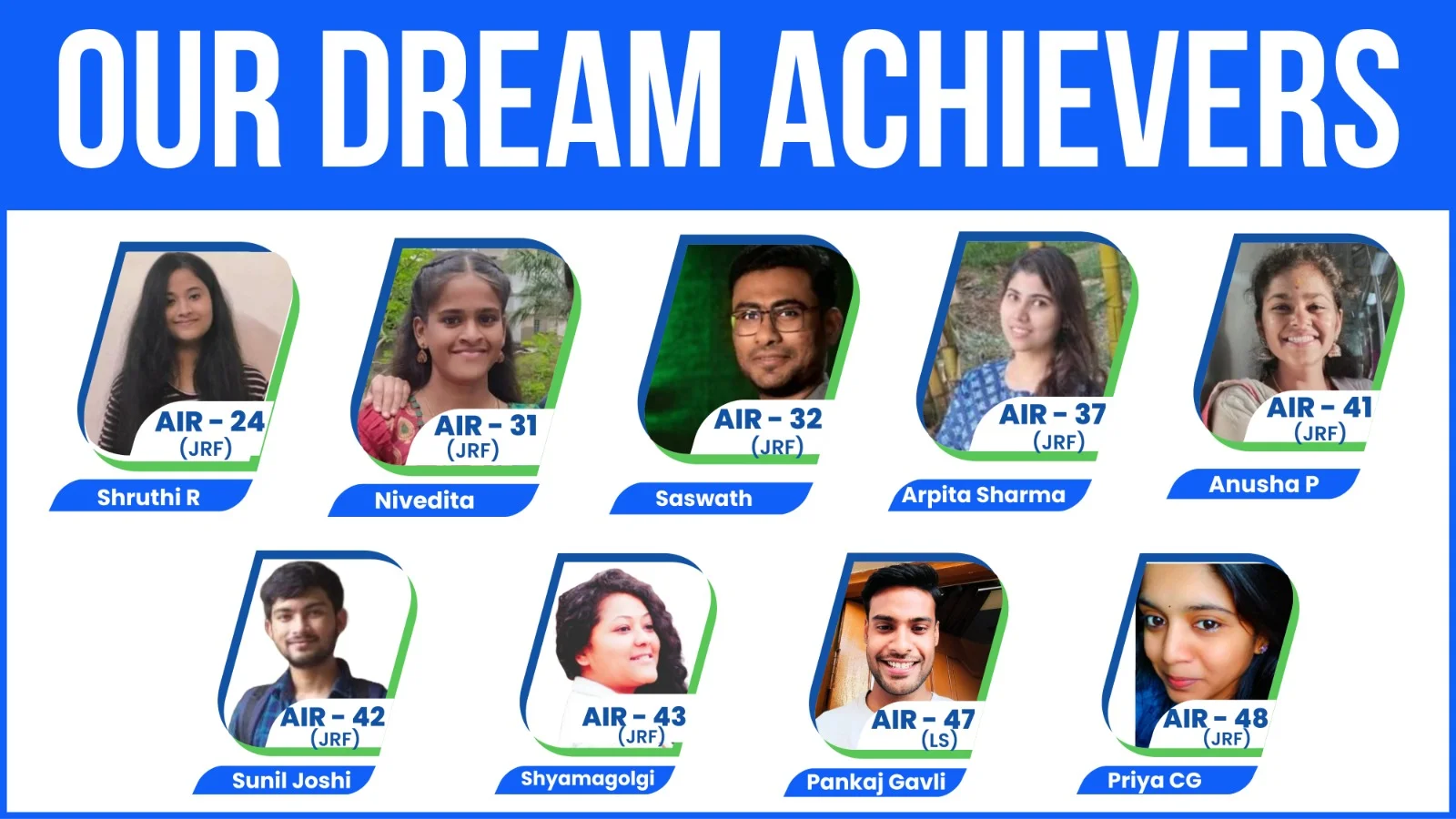
If you’re a biology postgraduate in Andhra Pradesh dreaming of becoming an Assistant Professor or Lecturer, understanding the APSET Life Sciences eligibility criteria is the very first step of your journey. Every year, thousands of MSc Life Sciences, Botany, Zoology, Biochemistry, and Biotechnology graduates apply for APSET without fully understanding whether they qualify, what marks they need, or what documents are required. This confusion often leads to rejected applications, wasted exam fees, and missed opportunities.
In this detailed guide, we’ll break down everything you need to know about the APSET Life Sciences eligibility criteria, including educational qualifications, category-wise marks requirements, age limits, final-year candidate provisions, and much more. We’ll also discuss how proper coaching can make the difference between clearing this competitive exam and falling short.
What is APSET and Why Does Eligibility Matter So Much?
The Andhra Pradesh State Eligibility Test (APSET) is a state-level examination conducted by Andhra University, Visakhapatnam, on behalf of the Government of Andhra Pradesh. It determines whether a candidate is eligible to be appointed as an Assistant Professor or Lecturer in universities and degree colleges across Andhra Pradesh. Unlike a recruitment exam, APSET is purely a qualifying test — it certifies your eligibility, but the actual hiring depends on separate recruitment processes conducted by individual institutions.
Because APSET is a qualifying exam and not a ranking exam, understanding the exact eligibility requirements is critical. Many aspiring candidates in the biology stream, particularly those preparing under the Life Sciences subject code, waste an entire academic year simply because they didn’t check whether they met the minimum qualifying criteria before applying.
This is exactly why so many students search for terms like APSET Life Sciences eligibility criteria before they even think about syllabus or exam pattern — because if you don’t meet the basic eligibility, no amount of preparation will help you.
APSET Life Sciences Eligibility Criteria: Educational Qualification
The foundation of the APSET Life Sciences eligibility criteria rests on your postgraduate qualification. Here’s what you need:
- You must hold a Master’s Degree in a relevant Biology subject — this includes Life Sciences, Botany, Zoology, Biochemistry, Microbiology, Biotechnology, or an equivalent discipline recognized by the University Grants Commission (UGC).
- The degree must be from a university or institution recognized by the UGC. Degrees from unrecognized or non-accredited institutions will not be considered valid.
- Candidates must be Indian citizens to apply for APSET.
- There is no upper age limit for appearing in APSET, which means graduates of any age — whether fresh postgraduates or those returning to academics after years — can apply without worrying about an age cut-off.
This flexibility around age is one of the most attractive aspects of APSET compared to many other competitive exams, and it’s a major reason so many working professionals and career-switchers also attempt this test alongside younger aspirants.
Minimum Marks Required Under APSET Life Sciences Eligibility Criteria
One of the most searched aspects of the APSET Life Sciences eligibility criteria is the minimum percentage requirement in your postgraduate degree. Based on official notification patterns:
- General/Unreserved/General-EWS category candidates need a minimum of 55% aggregate marks in their Master’s degree or equivalent examination from a recognized university.
- OBC/SC/ST/PwD/Transgender category candidates need a minimum of 50% marks (without any rounding off) in their Master’s degree.
This 5% relaxation for reserved categories is a standard provision seen across most state-level eligibility tests, and APSET follows the same principle. It’s important to note that this relaxation is not rounded off — meaning if a reserved category candidate scores 49.6%, it will not be rounded up to 50%, and they may be considered ineligible unless the official notification states otherwise.
Additionally, candidates holding a Ph.D. degree, provided their Master’s degree was completed by a specified earlier cut-off date, may be eligible for an additional relaxation in the aggregate marks requirement. This is a lesser-known provision under the broader eligibility framework and is worth checking carefully in the official notification if it applies to you.
Can Final-Year MSc Students Apply Under APSET Life Sciences Eligibility Criteria?
This is one of the most frequently asked questions by biology students preparing for competitive exams, and thankfully, the answer is encouraging. Yes — final-year Master’s degree students, or those whose results are awaited, are permitted to apply for APSET provisionally.
However, there’s a catch built into the APSET Life Sciences eligibility criteria for such candidates:
- You must complete your Master’s degree with the prescribed minimum percentage within a stipulated period (generally within two years) from the date the APSET result is declared.
- If you fail to complete your degree with the required percentage within this window, your APSET qualification will be disqualified, even if you cleared the written exam.
- At the time of certificate verification, you will need to submit proof of your provisional eligibility, and later, proof of final qualification once your degree is conferred.
This provision is extremely helpful for students who want to start their APSET preparation during their final semester rather than waiting an entire year after graduation, giving them a head start in a highly competitive field.
Subject Selection Under Life Sciences: What Biology Students Should Know
The APSET exam covers Paper I (common for all candidates, testing teaching and research aptitude) and Paper II (subject-specific, based on the subject the candidate selects). For biology postgraduates, the subject selection is closely tied to your MSc specialization.
Most biology students appear under Life Sciences, Botany, or Zoology, and the choice generally depends on which subject aligns most closely with your postgraduate degree. Life Sciences is considered the most comprehensive option because it spans a broader range of topics — including molecular biology, genetics, ecology, cell biology, biochemistry, and physiology — making it suitable for candidates who don’t want to be restricted to a narrow subject area. Botany and Zoology, on the other hand, are more specialized and tend to attract candidates whose postgraduate coursework was heavily focused on plant or animal sciences specifically.
Understanding which subject code fits your background is a crucial part of meeting the APSET Life Sciences eligibility criteria correctly, because applying under the wrong subject can lead to your application being rejected during verification, even if your marks and degree otherwise qualify.
Reservation and Relaxation Categories Explained
The APSET eligibility framework follows the reservation policies set by the Government of Andhra Pradesh, and this affects how the eligibility criteria apply to different candidates:
- General category: No relaxation in marks; the standard 55% requirement applies strictly.
- SC/ST/OBC candidates: 5% relaxation, bringing the requirement down to 50%.
- PwD (Persons with Disabilities) candidates: Also eligible for the same 50% relaxation, along with additional provisions such as extended exam time depending on the nature and extent of disability.
- Transgender candidates: Given the same relaxation in fee, age, and qualifying marks as available to SC/ST/PwD categories.
It’s worth remembering that these relaxations apply specifically to the minimum percentage requirement in your qualifying degree — they do not change other aspects of the APSET Life Sciences eligibility criteria, such as the requirement for the degree to be from a recognized university or the subject-matching requirement.
Documents Required to Prove Your Eligibility
Once you clear the written examination, meeting the eligibility criteria on paper isn’t enough — you’ll need to prove it with documentation during certificate verification. Commonly required documents include:
- Educational certificates (Master’s degree marksheet and provisional/degree certificate)
- Category certificates, if applying under a reserved category
- Proof of domicile or residency, depending on the specific notification requirements
- Valid photo identification
- Provisional eligibility proof, for final-year candidates awaiting results
Keeping these documents ready well in advance saves a lot of last-minute stress, especially since verification windows are often short and strict.
Why the APSET Life Sciences Eligibility Criteria Trip Up So Many Candidates
Despite being fairly straightforward on paper, a surprising number of biology aspirants make eligibility-related mistakes every year. The most common ones include:
- Applying under the wrong subject code — choosing Life Sciences when their degree specialization more accurately falls under Botany or Zoology, or vice versa.
- Miscalculating aggregate percentage — especially candidates from universities using a CGPA system who don’t correctly convert it to a percentage as per UGC norms.
- Assuming rounding off is allowed for reserved categories — leading to unpleasant surprises during verification when a borderline percentage is deemed ineligible.
- Missing the degree completion deadline for final-year candidates who applied provisionally.
- Applying with a degree from an institution not recognized by the UGC, which instantly disqualifies the application regardless of marks.
These aren’t rare mistakes — they happen every single admission cycle, which is exactly why expert guidance matters so much when navigating the APSET Life Sciences eligibility criteria.
The Role of Proper Coaching in Meeting Eligibility and Clearing APSET
Meeting the eligibility criteria is only half the battle. Once you’re eligible, the real challenge is preparing for two structured papers within a limited timeframe, against thousands of competing biology postgraduates across the state. This is where structured, exam-focused coaching becomes invaluable.
Chandu Biology Classes, based in Narayanguda, Hyderabad, has built a strong reputation for guiding biology postgraduates through competitive exams including APSET, CSIR NET, GATE XL, IIT JAM Biotechnology, and other life sciences eligibility tests. What sets Chandu Biology Classes apart is a faculty team that understands not just the subject matter, but the exact structure, tricky eligibility rules, and evolving pattern of exams like APSET.
Students preparing under Chandu Biology Classes benefit from:
- Clarity on eligibility documentation and subject selection before they even begin serious preparation, preventing costly application mistakes
- Structured coverage of the Life Sciences syllabus mapped directly to the actual exam pattern
- Regular mock tests designed to simulate the real APSET exam environment
- Doubt-clearing sessions focused specifically on high-weightage topics like molecular biology, genetics, ecology, and cell biology
- Guidance for both Paper I (teaching and research aptitude) and Paper II (subject-specific Life Sciences content)
For students who want the flexibility of studying from home, Chandu Biology Classes offers online coaching at a fee of ₹25,000, giving access to structured lectures, study material, and mock tests without needing to relocate. For students who prefer in-person, classroom-style learning with direct faculty interaction, the offline coaching program is available at ₹30,000, offered at their Narayanguda, Hyderabad center. Both programs are specifically designed around the demands of biology postgraduates preparing for exams like APSET, CSIR NET, and GATE Life Sciences.
Given how many students confuse eligibility rules, subject codes, and marks calculations every year, having a mentor who has already guided hundreds of students through the exact same APSET Life Sciences eligibility criteria can save you months of confusion and multiple wasted attempts.
Step-by-Step: How to Confirm You Meet APSET Life Sciences Eligibility Criteria
Before you fill out your application form, run through this checklist:
- Confirm your degree subject aligns with Life Sciences, Botany, Zoology, or a closely related biology discipline recognized under APSET’s subject list.
- Calculate your aggregate percentage correctly — combine all semesters/years as required, and convert CGPA using the official conversion formula if applicable.
- Check your category-based minimum requirement — 55% for general, 50% for SC/ST/OBC/PwD/Transgender.
- Verify your university’s UGC recognition status if you’re unsure, through official UGC listings.
- If you’re in your final year, confirm the exact deadline by which you must complete your degree post-result declaration.
- Gather all required documents in advance, including category certificates if applicable.
- Double check citizenship requirements — only Indian citizens are eligible to apply.
Going through this checklist carefully before applying can save you from the heartbreak of a rejected application after months of preparation.
Common Mistakes to Avoid While Applying
Beyond the eligibility criteria itself, many students make procedural errors during the actual application process that can jeopardize their candidature:
- Uploading blurry or incorrectly sized photographs and signatures
- Selecting the wrong exam center due to last-minute rush
- Missing the application deadline due to payment gateway issues
- Not saving/printing the confirmation page after submission
- Providing inconsistent information between the application form and educational certificates
While these aren’t strictly part of the APSET Life Sciences eligibility criteria, they’re closely tied to it — because even eligible candidates can face rejection due to procedural errors during document verification.
Frequently Asked Questions on APSET Life Sciences Eligibility Criteria
Q1. What is the minimum percentage required under APSET Life Sciences eligibility criteria for general category students?
General category candidates need a minimum of 55% aggregate marks in their Master’s degree or equivalent examination from a UGC-recognized university.
Q2. Is there any relaxation in APSET Life Sciences eligibility criteria for reserved categories?
Yes, SC/ST/OBC/PwD/Transgender candidates get a 5% relaxation, requiring only 50% aggregate marks in their postgraduate degree.
Q3. Can final-year MSc students apply for APSET under Life Sciences?
Yes, final-year students or those awaiting results can apply provisionally, but they must complete their degree with the required percentage within the prescribed period after the result declaration, or risk disqualification.
Q4. Is there an age limit under APSET eligibility criteria?
No, there is no upper age limit for APSET, making it accessible to candidates of all ages who meet the educational qualification.
Q5. Which subject should biology students choose — Life Sciences, Botany, or Zoology?
This depends on your MSc specialization. Life Sciences is the broadest and most commonly chosen option, while Botany and Zoology suit candidates with more focused specializations in plant or animal sciences respectively.
Q6. Is a degree from a private or distance-mode university valid for APSET eligibility?
Only degrees from institutions recognized by the UGC are considered valid. It’s essential to verify your university’s recognition status before applying.
Q7. What happens if a reserved category candidate scores 49.8%? Will it be rounded to 50%?
Generally, no. Most notifications specify that marks should not be rounded off, meaning a candidate scoring below 50% may not meet the eligibility requirement, even if very close to the threshold.
Q8. Does APSET certificate expire?
No, once qualified, the APSET certificate has lifetime validity and does not need to be renewed.
Q9. Is APSET valid outside Andhra Pradesh?
No, APSET eligibility is valid specifically for teaching positions within Andhra Pradesh. For eligibility across India or at central institutions, candidates need to qualify UGC NET instead.
Q10. How many attempts are allowed for APSET?
There is no restriction on the number of attempts. Candidates can appear for APSET multiple times until they qualify.
Q11. Do I need to submit category certificates during eligibility verification?
Yes, candidates applying under reserved categories must submit valid category certificates along with their educational documents during the verification process.
Final Thoughts
Understanding the APSET Life Sciences eligibility criteria thoroughly before you begin your preparation journey isn’t just a formality — it’s the foundation on which your entire candidature rests. From confirming your minimum percentage and subject alignment to understanding provisions for final-year students and reserved categories, every detail matters when it comes to avoiding rejection at the verification stage.
Once you’ve confirmed your eligibility, the next step is disciplined, structured preparation — and this is where expert mentorship truly makes a difference. Whether you choose the online coaching program at ₹25,000 or the offline classroom program at ₹30,000 offered by Chandu Biology Classes in Narayanguda, Hyderabad, having experienced faculty guide you through both eligibility nuances and subject preparation can significantly improve your chances of qualifying on your first attempt.
APSET is a gateway to a stable academic career in Andhra Pradesh’s higher education system, and getting your eligibility right is the first — and most important — step toward that goal.
Disclaimer: This article has been compiled using information available on the internet, including official notifications and third-party educational sources, for general informational purposes only. While every effort has been made to keep the details accurate and up to date, eligibility criteria, marks requirements, and other exam-related details are subject to change as per official APSET notifications. Readers are strongly advised to verify all information directly from the official APSET website (apset.net.in) before making any academic or financial decisions. The mention of Chandu Biology Classes and its fee structure is based on information available at the time of writing and may be subject to change. The author and publisher are not responsible for any discrepancies or decisions made based on this content.
