
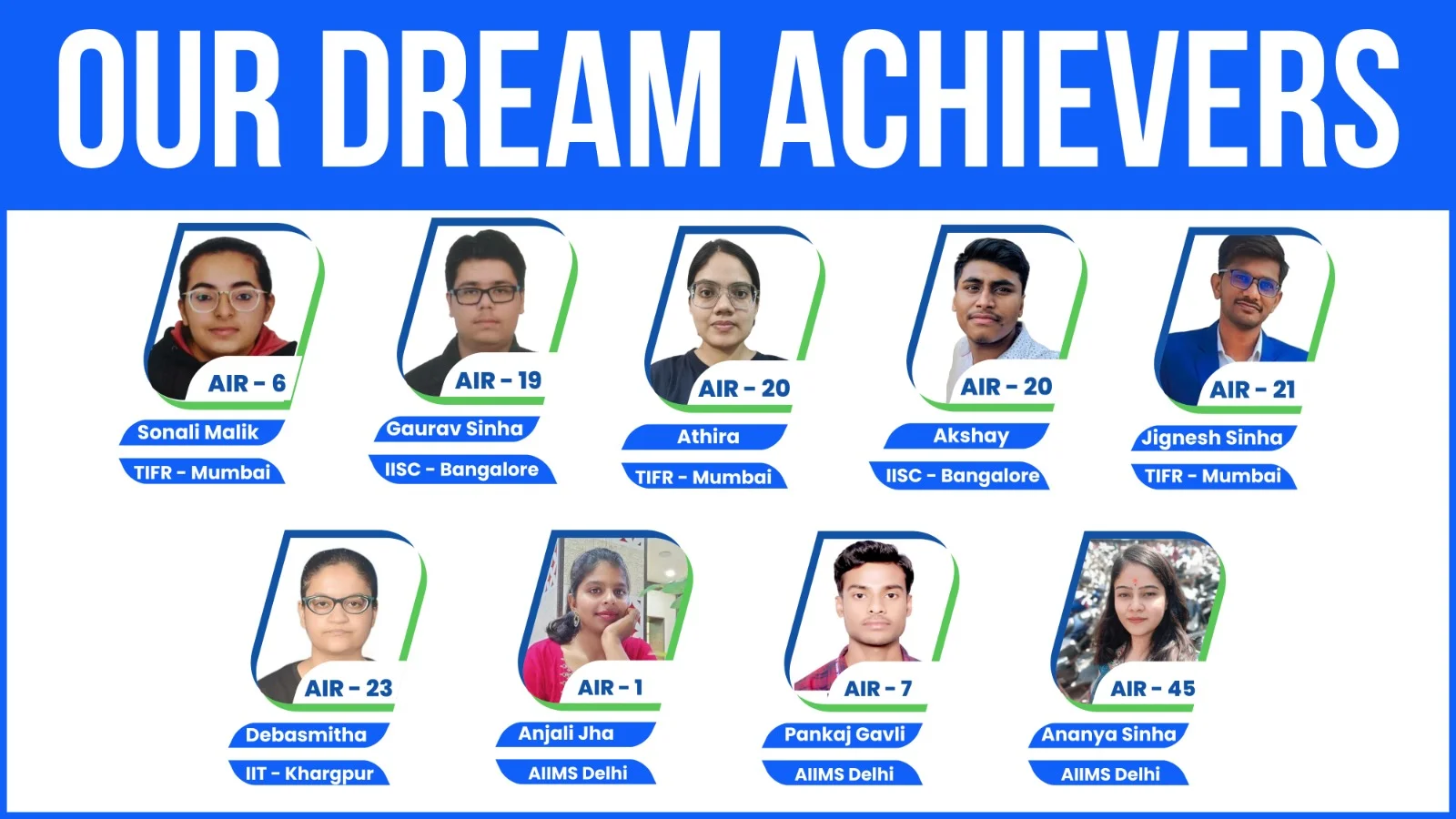
If you are a life science student preparing for competitive exams like CSIR NET, GATE Life Sciences, DBT JRF, or ICMR JRF, then you already know one painful truth: Part A is where dreams die silently. Most students spend 90% of their time mastering biological concepts — genetics, biochemistry, cell biology — and completely neglect the General Aptitude section. Then, on exam day, they fall short of the cutoff by just a few marks. Those lost marks? Almost always from Part A.
This article is your definitive guide to understanding why General Aptitude (Part A) coaching for life science exams matters more than most students realize, what topics it covers, how to prepare smartly, and — most importantly — where to find the best structured coaching that will actually move the needle.
What Is General Aptitude (Part A) in Life Science Competitive Exams?
Before diving into preparation strategies, let’s be absolutely clear about what Part A actually tests.
In exams like CSIR NET Life Sciences, Part A carries 30 marks out of the total 200, with 20 questions (each of 2 marks, with a 0.5 negative marking). While this might sound like a small portion, it is the great equalizer. Hundreds of candidates who are excellent in life science subjects fail to clear the exam purely because they underperform in Part A.
Part A, commonly referred to as the General Aptitude section, tests the following broad areas:
Graphical Analysis and Data Interpretation — Reading charts, bar graphs, pie charts, line graphs, and tables. You must extract data, identify trends, and answer questions quickly and accurately. These questions are deceptively simple but require practice to solve within the time limit.
Mathematical Aptitude and Reasoning — Number series, percentages, ratios and proportions, averages, profit and loss, simple and compound interest, time-speed-distance, and basic algebra. Many biology students haven’t touched these topics since Class 10, which is exactly why they lose marks here.
Logical Reasoning — Syllogisms, blood relations, direction sense, seating arrangements, coding-decoding, analogies, series completion, odd one out, and statement-conclusion type problems. These are pure reasoning questions that have nothing to do with biology but require sharp analytical thinking.
Language Skills — Reading comprehension passages, sentence completion, vocabulary questions, basic grammar, and error spotting. The passages are usually from scientific literature, so having a scientific reading habit is helpful here.
Data Sufficiency and Problem-Solving — You are given a problem and two or three statements. You must decide whether the given data is sufficient to answer the question. These are tricky and time-consuming without proper practice.
Mental Ability — Visual reasoning, pattern recognition, figure-based questions, and spatial intelligence. These are often the most neglected by students coming from a pure science background.
The key insight here is simple: none of these topics require biology knowledge. They are entirely separate skills. And that is precisely why dedicated General Aptitude (Part A) coaching for life science students is not optional — it is essential.
Why Life Science Students Struggle With Part A
This is a question worth addressing honestly, because understanding the problem helps you solve it.
Life science students at the postgraduate level have spent years building expertise in a highly specialized domain. Their brains are trained to think in biological processes, molecular pathways, taxonomic hierarchies, and experimental interpretations. Aptitude questions require a fundamentally different cognitive mode — quick mental arithmetic, abstract pattern recognition, and logical deduction under time pressure.
Here are the five most common reasons life science students underperform in Part A:
1. They treat it as an afterthought. Most students begin Part A preparation two or three weeks before the exam, after “finishing” the life science portion. By then, there isn’t enough time to build the speed and accuracy that Part A demands.
2. They lack exposure to quantitative reasoning. After Class 12, most biology students step entirely away from mathematics. Percentages, ratios, number series — these topics feel unfamiliar and uncomfortable years later.
3. They have no structured approach. Students often practice random questions without understanding the underlying patterns. They might get a question right by luck but can’t replicate the process when a slightly different version appears.
4. Time management is poor during the exam. Without practice under timed conditions, students either spend too long on difficult aptitude questions or rush through them and make careless errors.
5. They don’t know which question types to skip and which to attempt. Part A has a significant negative marking component. Attempting all 20 questions without being sure is actually worse than leaving some blank. Knowing which question types you’re strong in — and which to leave — is a strategic skill that only comes from coaching and mock test practice.
All of these problems have solutions. And the most efficient path to all those solutions is enrolling in proper General Aptitude (Part A) coaching for life science from an institution that understands the unique challenges of biology students.
Chandu Biology Classes: The Trusted Name in Life Science Exam Coaching
When it comes to General Aptitude (Part A) coaching for life science in India, one name has consistently stood out among serious aspirants — Chandu Biology Classes.
Chandu Biology Classes was founded with a singular mission: to provide life science students with world-class coaching that covers every component of competitive exams, including the General Aptitude section that most coaching institutes either ignore or treat as secondary. The institute has built a strong reputation for producing CSIR NET, GATE, and DBT JRF qualifiers who don’t just pass the life science portion but dominate the entire paper — including Part A.
What makes Chandu Biology Classes genuinely different from the dozens of other coaching institutes out there?
Dedicated Part A Curriculum
Unlike institutes that focus exclusively on life science content and throw in a few aptitude practice sets as an afterthought, Chandu Biology Classes has a structured, dedicated curriculum for General Aptitude. Each topic area — mathematical reasoning, data interpretation, logical reasoning, language skills — is taught systematically, from foundational concepts to exam-level difficulty.
The faculty understands that life science students need aptitude skills explained from first principles, without assuming any prior mathematics background beyond basic high school level. The teaching approach is progressive: simple concepts first, then increasing complexity, then timed practice under exam conditions.
Weekly Mock Tests and Performance Analytics
One of the most valuable components of the Chandu Biology Classes program is the regular mock test series specifically designed to simulate real exam conditions. These are not just question banks — they are full-length, timed tests that mirror the exact pattern and difficulty of CSIR NET, GATE, and DBT JRF papers.
After every mock test, students receive detailed performance analytics that break down their performance by topic, identify weak areas, and suggest targeted practice. This data-driven approach ensures that students spend their preparation time efficiently — strengthening real weaknesses instead of practicing topics they’ve already mastered.
Expert Faculty With a Life Science Background
The faculty at Chandu Biology Classes understands life science students from the inside. Many of the teachers themselves have cleared competitive exams like CSIR NET and GATE, and they know firsthand what it feels like to be a biology student staring at a logical reasoning question with no idea where to begin. This empathy translates into a teaching style that is patient, systematic, and highly practical.
Comprehensive Study Material
Students receive carefully designed study material that covers every General Aptitude topic tested in life science competitive exams. The material is written specifically for biology students — not adapted from generic MBA entrance coaching material. The examples used are often drawn from scientific contexts, making the content feel more natural and relevant to the students’ background.
Fees Structure at Chandu Biology Classes
One of the most common questions students ask before enrolling in coaching is about the cost. Here is the complete, transparent fees structure at Chandu Biology Classes:
| Mode | Fees |
|---|---|
| Online Program | ₹25,000 |
| Offline Program | ₹30,000 |
The online program at ₹25,000 gives students access to live classes, recorded video lectures, study materials, mock tests, and doubt-clearing sessions — all accessible from anywhere in India. This is ideal for students in cities where offline centers may not be available, or for those who prefer the flexibility of self-paced learning alongside guided instruction.
The offline program at ₹30,000 provides the complete in-person classroom experience with face-to-face interaction with faculty, physical study materials, and access to the institute’s resources. For students who thrive in a structured classroom environment and benefit from peer learning, the offline mode offers an immersive experience.
Both modes cover the complete syllabus, including General Aptitude (Part A) in full depth, along with the Life Sciences content for Parts B and C. There are no hidden fees, no separate charges for study material, and no additional costs for mock tests.
A Topic-by-Topic Preparation Strategy for Part A
Whether you’re enrolling in coaching or supplementing your preparation independently, here is a smart, structured approach to each major topic area in General Aptitude for life science exams.
Graphical Analysis and Data Interpretation
This is one of the highest-scoring areas in Part A if you practice consistently. The key skill is reading data accurately and quickly.
Begin by practicing with simple graphs and tables. Learn to identify what type of data is being shown — absolute values, percentages, growth rates, comparisons. Then practice extracting specific data points, calculating percentage changes, comparing multiple data sets, and identifying trends or anomalies.
Speed is critical here. Time yourself when practicing. Aim to answer each DI question in 60 to 90 seconds. The more you practice, the faster your brain processes visual data.
Mathematical Aptitude
Start with percentages — they appear in DI questions as well as standalone problems. Then move to ratios and proportions, averages, and basic algebra. After these foundations, progress to time-speed-distance and work-time problems.
The golden rule for math aptitude: never memorize formulas without understanding the logic behind them. Life science students who try to rote-learn aptitude formulas almost always make sign errors or apply the wrong formula under exam pressure. Understanding the “why” behind each formula makes it stick and makes it adaptable.
Practice at least 15-20 math aptitude questions every day during your preparation period. Consistency matters more than volume.
Logical Reasoning
Logical reasoning is the most diverse section in terms of question types. Blood relations, coding-decoding, syllogisms, seating arrangements, analogies — each requires a slightly different approach.
The most important skill here is not getting emotional about a question. Many students spend 5-7 minutes on a single seating arrangement problem and lose the time they needed for the rest of the paper. If a reasoning question is not yielding to your efforts within 2-3 minutes, mark it and move on. Come back if time permits.
For syllogisms specifically: learn to use Venn diagrams. Drawing a quick Venn diagram is almost always faster and more reliable than trying to solve syllogisms purely through verbal reasoning.
Language Skills
Reading comprehension in CSIR NET is often based on passages from scientific literature. Practice reading scientific papers, review articles, and science journalism regularly. This trains you to extract the main argument of a passage quickly and understand the author’s intent.
For vocabulary and grammar questions, read widely and keep a vocabulary journal. Note down unfamiliar words and their meanings. Review them weekly.
Mental Ability and Spatial Reasoning
These questions — figure series, pattern completion, folding and unfolding of figures — are either very easy or very confusing, depending on how much practice you’ve had. The trick is to practice with actual printed or drawn figures, not just by reading question descriptions. Visual questions require visual practice.
Building a 90-Day Part A Preparation Plan
If your exam is three months away, here is a realistic schedule that balances Part A preparation with Life Sciences study:
Month 1: Foundation Building Spend 45 minutes every day on Part A. Cover mathematical aptitude basics (weeks 1-2) and logical reasoning fundamentals (weeks 3-4). Complete all foundational topic modules at Chandu Biology Classes during this phase.
Month 2: Practice and Diversification Increase Part A practice to 60 minutes per day. Cover data interpretation, language skills, and mental ability. Begin attempting mixed question sets that combine all topic areas. Take your first full-length timed Part A mock test at the end of this month.
Month 3: Mock Tests and Revision Reduce new topic introduction to zero. Focus entirely on timed practice and mock tests. Take at least two full mock tests per week. Analyze your performance after each test and spend targeted practice time on weak areas. In the final two weeks, focus on speed drilling — solving easier question types as fast as possible to maximize marks within the time limit.
Common Mistakes to Avoid in Part A
Attempting all 20 questions blindly. With 0.5 negative marking per wrong answer, attempting questions you’re unsure about is a risky strategy. A more disciplined approach — attempting only questions where you’re 70% or more confident — often yields better scores.
Not reading the question carefully. Many Part A questions have small but critical qualifiers — “except,” “not,” “always,” “never.” Missing these words leads to answering the wrong question correctly.
Spending too long on a single question. Part A has 20 questions in about 30-35 minutes of allocated time. That’s roughly 90 seconds per question. Any question consuming more than 2 minutes should be skipped immediately.
Ignoring data interpretation practice. Students who consider themselves “not math people” often completely skip DI practice. This is a huge strategic mistake. DI questions are among the most predictable and learnable in all of Part A. With practice, even students who struggle with abstract math can consistently score well on DI.
Underestimating language skills. Reading comprehension passages can be long and dense. Students who skip language practice often find themselves rushing through passages on exam day and misinterpreting questions. Consistent reading practice throughout your preparation period is the most effective way to build this skill.
Why Enrolling in Coaching Outperforms Self-Study for Part A
Self-study for Part A is entirely possible, but it has significant disadvantages compared to structured coaching — especially for students who have been away from quantitative topics for several years.
The biggest advantage of coaching is accountability and structure. When you’re part of a program with a set schedule, regular assignments, and mock tests with performance review, it is much harder to procrastinate on topics you find difficult. Self-study allows you to unconsciously focus on comfortable topics and avoid your weak areas.
The second major advantage is expert guidance on strategy. An experienced faculty member can tell you — based on your specific performance pattern — which question types you should attempt first in the exam, which to skip, and where your biggest point leakage is happening. This kind of strategic, personalized feedback is impossible to get from studying alone.
The third advantage is peer learning and motivation. In a coaching environment — both online and offline — you are surrounded by other students working toward the same goal. This creates a learning culture that sustains motivation through what is often a long and challenging preparation journey.
For all these reasons, enrolling in General Aptitude (Part A) coaching for life science from a reputable institute like Chandu Biology Classes is one of the highest-leverage investments a serious aspirant can make.
Frequently Asked Questions (FAQ)
Q1: How many questions are there in General Aptitude (Part A) for CSIR NET Life Sciences?
Part A of CSIR NET Life Sciences has 20 questions, of which candidates typically need to attempt all 20. Each correct answer carries 2 marks, and each wrong answer deducts 0.5 marks. The total weight of Part A in the overall exam is 30 marks out of 200.
Q2: What is the best time to start preparing for General Aptitude (Part A)?
Ideally, Part A preparation should begin at least 4-6 months before the exam. Many toppers recommend starting Part A practice from day one of your preparation journey, treating it as a parallel track alongside Life Sciences study rather than something to be addressed later.
Q3: Can arts or commerce background students crack Part A easily compared to science students?
Interestingly, students from commerce or mathematics backgrounds sometimes find Part A easier because they have more recent experience with quantitative and reasoning topics. However, science students who invest structured time in Part A preparation — especially through coaching programs like Chandu Biology Classes — consistently overcome this gap and perform excellently.
Q4: Is General Aptitude (Part A) the same across CSIR NET, GATE Life Sciences, and DBT JRF?
The broad topic areas are similar, but the specific question formats, difficulty levels, and marking schemes differ between exams. CSIR NET Part A is known for its data interpretation and reasoning questions. GATE Life Sciences has a General Aptitude section with a slightly different mix. Chandu Biology Classes covers the relevant aptitude content for all major life science competitive exams.
Q5: How much time should I dedicate to Part A preparation daily?
During the initial foundation phase, 30-45 minutes per day is sufficient. As you approach the exam, increase this to 60-75 minutes per day, incorporating timed mock tests. The quality of practice matters more than raw hours — targeted, focused practice with performance review is far more effective than reading through question banks passively.
Q6: Does Chandu Biology Classes provide separate coaching for Part A or is it integrated?
Chandu Biology Classes provides dedicated, structured coverage of General Aptitude (Part A) as part of both the online (₹25,000) and offline (₹30,000) programs. The aptitude coaching is not a token addition but a full, systematic module taught by experienced faculty with regular assessments and mock tests.
Q7: What is the success rate for students who complete Part A coaching before CSIR NET?
Students who undergo structured General Aptitude coaching consistently report scoring 15 or more marks out of 30 in Part A, compared to the 8-10 marks that unprepared students typically score. Since the cutoff for CSIR NET varies between approximately 65 and 80 marks depending on the category and paper, those 5-7 extra marks from proper Part A preparation can make the difference between qualifying and missing the cutoff.
Q8: Are there any shortcuts or tricks for Part A aptitude questions?
Certain techniques — like using alligation for mixture problems, digital root methods for divisibility checks, or Venn diagram shortcuts for syllogisms — can save significant time. However, these shortcuts work reliably only when you understand the underlying logic. Coaching programs like Chandu Biology Classes teach both the shortcuts and the foundational understanding needed to apply them accurately under exam pressure.
Q9: What happens if I completely skip Part A in my preparation?
Skipping Part A entirely is a high-risk strategy. Given that Part A carries 30 marks and the cutoff typically falls in the 65-80 mark range, failing to score well in Part A means you need to compensate by scoring near-perfect marks in Parts B and C — which are highly competitive and cover vast Life Sciences content. Most CSIR NET qualifiers emphasize that a balanced performance across all three parts is the safest path to clearing the exam.
Q10: Is online coaching for General Aptitude (Part A) as effective as offline?
When backed by live classes, interactive doubt-clearing sessions, and regular mock tests — as offered in the Chandu Biology Classes online program at ₹25,000 — online coaching is absolutely comparable in effectiveness to offline coaching. The key is consistency and engagement: students who attend every live session, complete all assignments, and participate in mock tests perform at the same level as offline students.
Final Thoughts
General Aptitude (Part A) coaching for life science exam aspirants is not a luxury — it is a strategic necessity. In an exam where a handful of marks separate qualifiers from non-qualifiers, leaving Part A to chance or last-minute cramming is simply not an acceptable approach.
The good news is that Part A is one of the most learnable sections in any competitive exam. Unlike the vast, detail-heavy Life Sciences syllabus, General Aptitude topics are finite, well-defined, and highly predictable. With the right coaching, the right strategy, and consistent practice, you can turn Part A from your biggest vulnerability into one of your most reliable score sources.
Chandu Biology Classes stands as one of the most trusted and dedicated institutions for exactly this kind of preparation — offering both online coaching at ₹25,000 and offline coaching at ₹30,000, with full curriculum coverage including a complete and structured General Aptitude module, regular mock tests, and expert faculty who understand the unique challenges faced by life science students.
Your journey to clearing CSIR NET, GATE Life Sciences, or DBT JRF begins with a simple decision: to take every part of the exam seriously. Start your General Aptitude (Part A) coaching for life science today, and walk into your exam hall knowing that Part A is no longer a question mark — it’s your advantage.
