
If you are planning to appear for one of India’s toughest research and lectureship exams, understanding the CSIR UGC NET Life Science eligibility criteria is the very first step before you even think about starting your preparation. Every year, lakhs of Biology, Biotechnology, Microbiology, Zoology, and Botany graduates apply for this exam without properly checking whether they meet the qualifying conditions, and many end up wasting valuable time or facing rejection at the application stage itself. This guide breaks down everything you need to know about the CSIR UGC NET Life Science eligibility criteria, including educational qualification, age limit, relaxations, number of attempts, and category-wise rules, in one place.
Whether you are a final year MSc student, a working professional planning a switch to research, or someone preparing for JRF and Assistant Professor positions, this article will help you understand exactly where you stand and what you need to do next.
What is CSIR UGC NET and Why Eligibility Matters So Much
The CSIR UGC NET (Council of Scientific and Industrial Research, University Grants Commission National Eligibility Test) is a national level exam conducted jointly for determining eligibility for Junior Research Fellowship (JRF) and Lectureship/Assistant Professor positions in Indian universities and colleges. The exam covers five subjects, and Life Sciences is one of the most competitive among them because of the sheer number of candidates from Biology, Biotechnology, Microbiology, Genetics, and allied backgrounds.
Before you fill out the application form, the National Testing Agency (NTA) strictly verifies whether you meet the CSIR UGC NET Life Science eligibility criteria. If your qualification or age does not match the prescribed norms, your candidature can be cancelled even after clearing the exam. That is why coaching institutes like Chandu Biology Classes in Narayanguda, Hyderabad always advise students to double check eligibility before beginning serious preparation, so that time and money are not wasted on an exam attempt that gets rejected on technical grounds.
CSIR UGC NET Life Science Eligibility Criteria: Educational Qualification
The basic academic requirement under the CSIR UGC NET Life Science eligibility criteria is as follows:
- Candidates must have completed or be pursuing their final year of MSc, MSc Tech, MSc Ag, BS-4 years/BE/BTech, BPharma, MBBS, or an integrated BS-MS program in a relevant subject such as Life Sciences, Biotechnology, Biochemistry, Botany, Zoology, Microbiology, Genetics, or Molecular Biology.
- General and OBC (non-creamy layer) category candidates need a minimum of 55% aggregate marks in their qualifying degree.
- SC, ST, PwD (Persons with Disability), and third gender candidates need a minimum of 50% aggregate marks.
- Students in their final year of Master’s degree can also apply provisionally, but they must complete their degree with the required percentage within the validity period given by CSIR, usually within two years from the date of result declaration.
- Candidates holding a BSc (Hons) or equivalent degree along with an MSc are also eligible under certain conditions, provided the subject matches the Life Sciences syllabus.
This qualification requirement is one of the most misunderstood parts of the CSIR UGC NET Life Science eligibility criteria, especially for students from allied branches like Food Technology, Environmental Science, or Agriculture, who often ask whether their degree qualifies. The safest approach is to check the official CSIR notification for the exact list of eligible subjects each cycle, since minor updates do happen.
Age Limit Under CSIR UGC NET Life Science Eligibility Criteria
Age limit is a critical part of the CSIR UGC NET Life Science eligibility criteria, and it differs depending on whether you are applying for JRF or only for Lectureship/Assistant Professor eligibility.
For JRF (NET):
- Maximum age limit is 28 years as of the closing date of the online application.
- Age relaxation of up to 5 years is given to SC, ST, OBC-NCL, PwD, and female candidates, making the effective upper limit 33 years for these categories.
For Lectureship/Assistant Professor only (LS):
- There is no upper age limit.
- Candidates of any age can apply purely for the Assistant Professor eligibility category, though they will not be considered for JRF fellowship benefits.
This distinction is extremely important because many candidates only realize after applying that they were eligible for LS-only but missed out on JRF benefits due to age. Chandu Biology Classes regularly counsels students on choosing the right category (JRF or LS-only) based on their age and career goals, since this decision directly affects fellowship eligibility and future research funding opportunities.
Number of Attempts and Category-wise Relaxation
Unlike some other competitive exams, CSIR UGC NET does not impose a strict cap on the number of attempts for candidates who are within the JRF age limit. As long as you meet the age and qualification requirements, you can attempt the exam multiple times until you cross the JRF age ceiling. After that, you can continue attempting only for the LS category since there is no upper age bar there.
Reservation and relaxation rules under the CSIR UGC NET Life Science eligibility criteria are applied as per Government of India norms:
- SC/ST candidates: 50% marks required, 5 years age relaxation
- OBC-NCL candidates: 55% marks required, 5 years age relaxation
- PwD/Divyang candidates: 50% marks required, 5 years age relaxation
- EWS candidates: 55% marks required, no age relaxation but reservation in seats applies
- Female candidates: 5 years age relaxation regardless of category
These relaxations make the exam more accessible to a wider base of students, but they must be backed with valid certificates at the time of application and document verification.
Documents Required to Prove Eligibility
Once you are sure that you fulfill the CSIR UGC NET Life Science eligibility criteria, the next step is arranging the correct documents. NTA and CSIR usually ask for:
- Marksheets and certificates of qualifying degree (provisional certificate accepted for final year students)
- Category certificate (SC/ST/OBC-NCL/EWS) issued within the validity period
- PwD certificate, if applicable, from a competent medical authority
- Date of birth proof such as 10th certificate or Aadhaar card
- Passport-size photograph and signature in prescribed format
Missing or incorrect documentation is one of the most common reasons students face issues during certificate verification, even after qualifying the exam. Institutes like Chandu Biology Classes help students prepare a document checklist well in advance so there is no last-minute panic during counseling or verification rounds.
Why Understanding Eligibility is Just the First Step
Meeting the CSIR UGC NET Life Science eligibility criteria only gets you a seat at the exam table. The real challenge is clearing the exam itself, which tests candidates across three parts: Part A (general aptitude and research methodology), Part B (subject-specific conceptual questions), and Part C (higher order thinking and application-based questions). Life Sciences as a subject is enormous, covering Molecular Biology, Genetics, Cell Biology, Ecology, Evolution, Systems Physiology, Biochemistry, Microbiology, Immunology, and more.
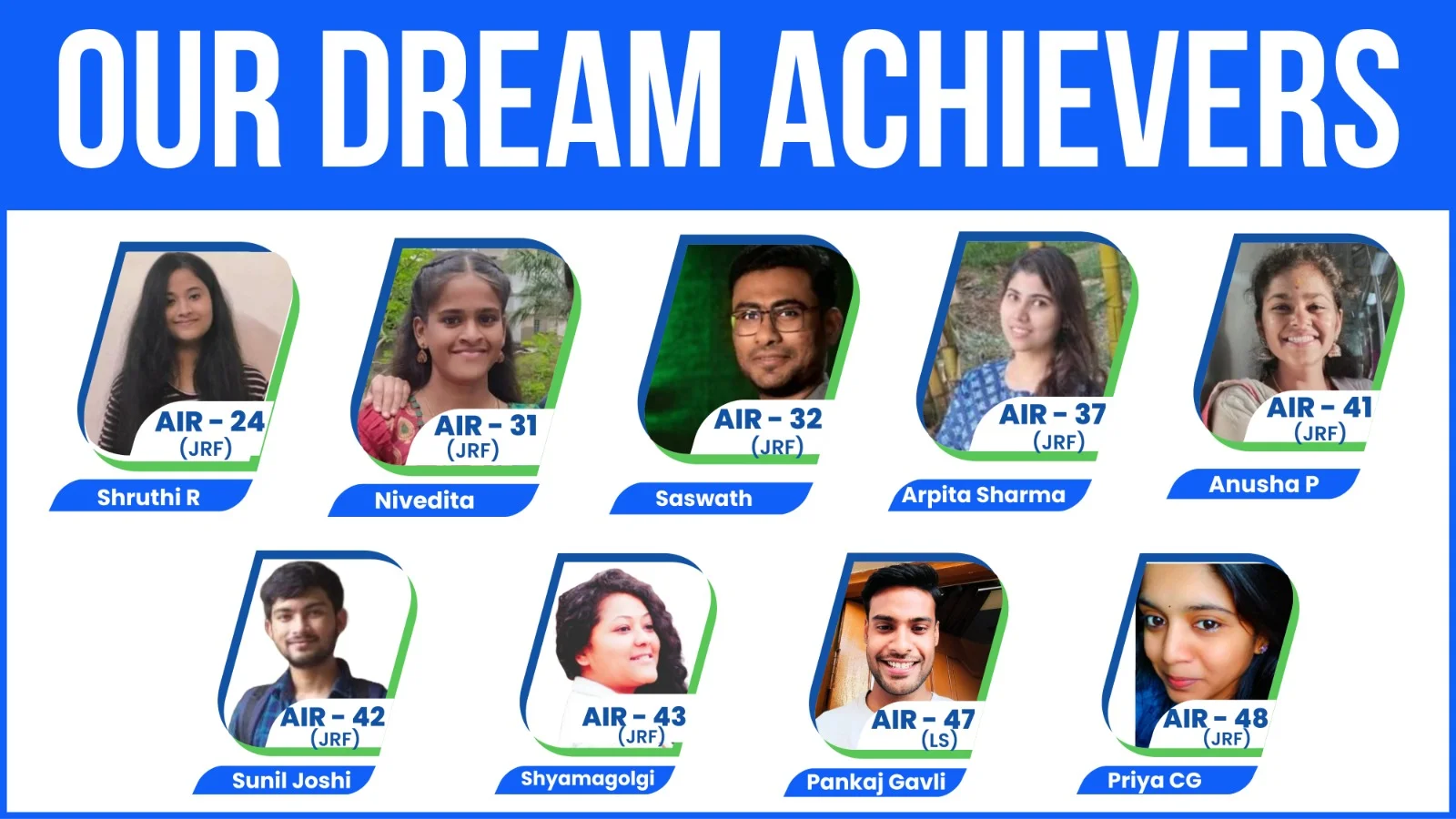
This is exactly where structured coaching makes a real difference. Chandu Biology Classes, founded by Dr. Chandra Sekhar and based in Narayanguda, Hyderabad, has built a strong reputation for CSIR NET Life Sciences coaching, offering both online and offline batches for students preparing for CSIR NET, GATE XL, IIT JAM Biotechnology, GAT-B/BET, and APPSC/TGPSC Junior Lecturer exams. With a student base of over 4,500 learners and consistent JRF qualification results, the institute focuses on unit-wise conceptual clarity, previous year question analysis, and exam-specific strategy for Part C, which is often the toughest section for most aspirants.
For students who are eligible under the CSIR UGC NET Life Science eligibility criteria and are now looking for the right guidance to convert that eligibility into an actual qualification, Chandu Biology Classes offers structured batches at:
- Online coaching fee: ₹25,000
- Offline coaching fee: ₹30,000
The offline batches are conducted at the Narayanguda center in Hyderabad, while online batches allow students from across Telangana, Andhra Pradesh, and other states to access the same faculty and study material remotely.
Common Mistakes Students Make Regarding Eligibility
Many students misunderstand or overlook parts of the CSIR UGC NET Life Science eligibility criteria, leading to avoidable complications. Some frequent mistakes include:
- Applying under the wrong category: Some students apply only for LS thinking they will automatically be considered for JRF too, which is incorrect. The category selected at the time of application matters.
- Ignoring provisional eligibility rules: Final year students often forget that they must complete their degree with the required percentage within the stipulated time, or their NET qualification can be cancelled.
- Not checking subject eligibility: Students from borderline subjects like Food Science or Environmental Biology sometimes apply without verifying whether their degree falls under the accepted subject list for Life Sciences.
- Missing the age relaxation certificate deadline: Category or PwD certificates need to be valid and correctly dated; delays in obtaining these often cause last-minute issues.
- Not tracking notification updates: CSIR occasionally revises minor eligibility clauses, and relying on outdated information from unofficial sources can create confusion.
Getting proper guidance from a coaching institute that stays updated with the latest exam pattern and eligibility norms, such as Chandu Biology Classes, helps students avoid these pitfalls and focus purely on preparation.
How Eligibility Criteria Differs for JRF vs Lectureship
A lot of confusion around the CSIR UGC NET Life Science eligibility criteria stems from not understanding the difference between JRF and Lectureship (Assistant Professor) categories clearly.
| Criteria | JRF Category | LS (Assistant Professor) Category |
|---|---|---|
| Age Limit | Maximum 28 years (33 with relaxation) | No upper age limit |
| Fellowship | Eligible for fellowship and research funding | Not eligible for fellowship |
| Purpose | PhD admission with fellowship support | Eligibility for teaching positions only |
| Validity | 3 years from result declaration | Lifetime validity in most cases |
Candidates who are within the JRF age limit are automatically considered for both categories unless they specifically opt out. This dual consideration gives younger candidates a strategic advantage, which is why many students prefer to attempt the exam as early as possible after completing their MSc.
Preparation Strategy Once You Confirm Your Eligibility
Once eligibility is confirmed, the real work begins. Based on years of mentoring CSIR NET aspirants, here is a broad strategy that Chandu Biology Classes recommends to students:
- Start with NCERT and standard textbooks to build conceptual clarity before moving to advanced reference books
- Focus heavily on high-weightage units like Molecular Biology, Genetics, Ecology, and Cell Biology since these carry maximum questions across Part B and Part C
- Practice previous year question papers extensively to understand the pattern of application-based and graph-based questions in Part C
- Take regular mock tests to build speed and accuracy, since time management is often the biggest challenge in this exam
- Revise short notes closer to the exam date instead of trying to read full textbooks again
Structured coaching with experienced faculty can significantly cut down the trial-and-error phase that many self-preparing students go through, which is why institutes with a track record of results remain a popular choice among serious aspirants.
Frequently Asked Questions on CSIR UGC NET Life Science Eligibility Criteria
1. What is the minimum percentage required under CSIR UGC NET Life Science eligibility criteria?
General and OBC-NCL candidates need a minimum of 55% aggregate marks in their qualifying MSc or equivalent degree, while SC, ST, and PwD candidates need a minimum of 50%.
2. Can final year MSc students apply for CSIR NET Life Sciences?
Yes, final year students can apply provisionally under the CSIR UGC NET Life Science eligibility criteria, but they must complete their degree with the required percentage within the specified validity period after the result.
3. What is the age limit for CSIR NET Life Science JRF category?
The maximum age is 28 years as of the application closing date, with a 5-year relaxation available for SC, ST, OBC-NCL, PwD, and female candidates.
4. Is there any age limit for Lectureship (Assistant Professor) category?
No, there is no upper age limit for candidates applying only for the Lectureship/Assistant Professor eligibility category under CSIR NET Life Sciences.
5. How many times can a candidate attempt CSIR NET Life Sciences?
There is no fixed cap on the number of attempts as long as the candidate meets the JRF age limit; after crossing that age, candidates can still attempt for the LS-only category indefinitely.
6. Are BTech Biotechnology graduates eligible for CSIR NET Life Sciences?
Yes, BE/BTech graduates in relevant streams such as Biotechnology are eligible under the CSIR UGC NET Life Science eligibility criteria, subject to meeting the minimum percentage requirement.
7. Does CSIR NET Life Science eligibility criteria apply differently for EWS candidates?
EWS candidates need a minimum of 55% marks similar to general category, and while there is no age relaxation, reservation benefits apply in seat allocation.
8. Where can I get proper coaching after confirming my CSIR NET Life Science eligibility?
Students often prefer structured coaching from experienced institutes such as Chandu Biology Classes in Narayanguda, Hyderabad, which offers both online and offline batches specifically designed for CSIR NET Life Sciences preparation.
Final Thoughts
Understanding the CSIR UGC NET Life Science eligibility criteria thoroughly before you begin preparation saves you from unnecessary stress, rejected applications, and wasted study time. Once your eligibility is confirmed, whether under the JRF category or the Lectureship-only category, the next and more important step is building a solid preparation strategy backed by the right guidance. Institutes such as Chandu Biology Classes, with their experience in mentoring CSIR NET Life Sciences aspirants across Telangana and Andhra Pradesh through both online (₹25,000) and offline (₹30,000) batches, can help bridge the gap between eligibility and actual exam success.
If you meet the criteria and are serious about qualifying this exam, the smartest move is to combine clear eligibility understanding with disciplined, structured preparation rather than attempting it alone through scattered resources.
Disclaimer: All information mentioned in this article regarding CSIR UGC NET Life Science eligibility criteria, age limits, percentage requirements, and category relaxations has been compiled from information available on the internet and public notifications. Students are strongly advised to verify all details from the official CSIR and NTA websites before making any application or preparation decisions, as rules and notifications may be updated from time to time.
