
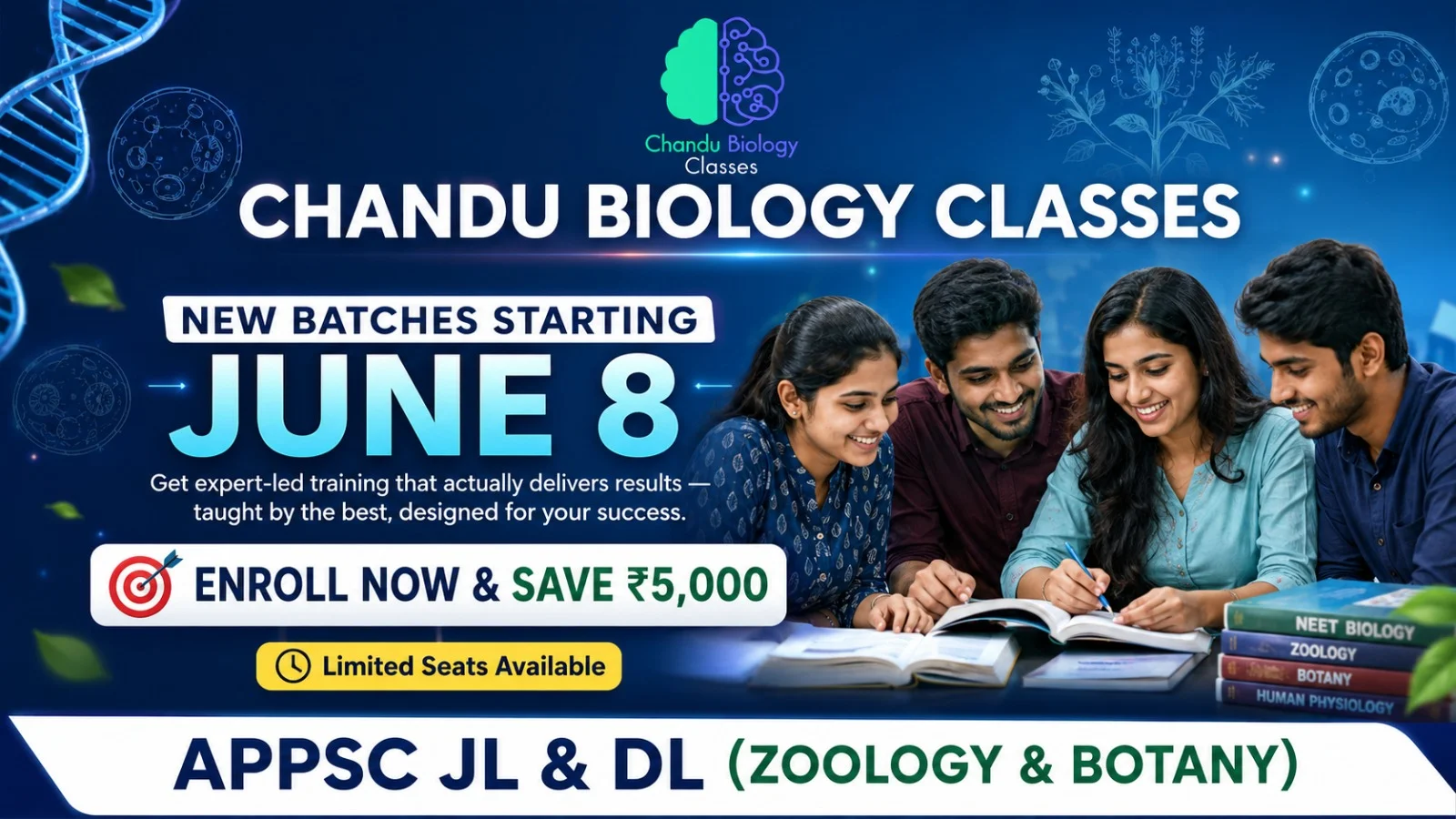
If you’re preparing for the APPSC (Andhra Pradesh Public Service Commission) Biotechnology examination and looking for the most reliable and result-oriented coaching, you’ve landed on the right page. Recombinant DNA technology APPSC Biotechnology DL coaching is one of the most searched and most demanded preparation niches in the competitive exam ecosystem of Andhra Pradesh and Telangana right now — and for very good reason.
This guide is designed not just as an article, but as a complete resource that tells you everything — from what recombinant DNA technology actually is, to how it appears in APPSC exams, to which coaching institute is genuinely producing results for students across the region. Whether you’re a fresh graduate in life sciences or a working professional trying to clear the APPSC Biotechnology paper, this guide is built for you.
Recombinant DNA technology, often abbreviated as rDNA technology, is one of the foundational pillars of modern biotechnology. It refers to the process of combining DNA molecules from two different sources — or even two different species — into a single molecule, creating a new genetic combination that does not exist naturally. This artificially engineered DNA, when introduced into a host organism, allows that organism to express new traits or produce entirely new proteins.
The story of recombinant DNA technology begins in the early 1970s when scientists Stanley Cohen and Herbert Boyer first demonstrated that it was possible to cut and paste genetic material from one organism to another. Their landmark experiment, conducted in 1973, used restriction enzymes to cut DNA at specific sequences and ligases to join those fragments — a process that would forever change the face of biology, medicine, agriculture, and forensic science.
Core Components of Recombinant DNA Technology
Understanding this topic for your APPSC Biotechnology paper means knowing these components inside and out:
1. Restriction Enzymes (Restriction Endonucleases) These are often called the “molecular scissors” of biotechnology. Restriction enzymes recognize specific palindromic sequences in the DNA double helix and cleave the DNA at or near those sites. For example, EcoRI (from Escherichia coli) recognizes the sequence GAATTC and cuts between G and A on both strands, creating sticky ends. There are three types — Type I, Type II, and Type III — of which Type II restriction enzymes are most commonly used in laboratory applications because they cut at predictable, defined sites.
2. Vectors A vector is the vehicle that carries the foreign DNA into a host cell. Without a vector, the recombinant DNA cannot replicate inside the host organism. The most commonly used vectors include:
- Plasmids — small, circular, double-stranded DNA molecules found naturally in bacteria
- Bacteriophages — viruses that infect bacteria, such as lambda phage
- Cosmids — hybrid vectors combining features of plasmids and phages
- BACs (Bacterial Artificial Chromosomes) — used to clone large DNA fragments
- YACs (Yeast Artificial Chromosomes) — capable of carrying very large DNA inserts
For APPSC exams, students are frequently tested on the properties that make a good cloning vector: the presence of an origin of replication (ori), selectable marker genes (such as antibiotic resistance genes), and multiple cloning sites (MCS) or polylinker regions.
3. Host Organisms The recombinant DNA construct must be introduced into a host where it can replicate and express. Common host organisms include:
- Escherichia coli (most frequently used bacterial host)
- Saccharomyces cerevisiae (yeast)
- Mammalian cell lines (for expression of complex eukaryotic proteins)
- Plant cells (for agricultural applications via Agrobacterium tumefaciens)
4. DNA Ligase Often called the “molecular glue,” DNA ligase is responsible for forming phosphodiester bonds between the sticky or blunt ends of DNA fragments after they’ve been cut by restriction enzymes, sealing the recombinant construct together.
5. Selectable Markers and Reporter Genes After transformation, not all host cells will take up the recombinant DNA. Selectable markers (such as antibiotic resistance genes) allow researchers to identify and grow only those cells that have successfully incorporated the foreign DNA. Reporter genes like GFP (Green Fluorescent Protein) or lacZ (which encodes beta-galactosidase) are used to confirm successful expression.
Steps in the Recombinant DNA Technology Process
For the APPSC Biotechnology exam, you will almost certainly encounter questions on the step-by-step process of recombinant DNA technology. Here is the complete workflow:
Step 1: Isolation of the Gene of Interest
The first step is identifying and isolating the specific gene you want to clone or express. This can be done by:
- Constructing a genomic library from total genomic DNA
- Creating a cDNA (complementary DNA) library from mRNA using reverse transcriptase
- Chemically synthesizing the gene using oligonucleotide synthesizers if the sequence is known
Step 2: Cutting with Restriction Enzymes
Both the vector and the gene of interest are treated with the same restriction enzyme. This ensures that both fragments have compatible sticky ends that will join together through complementary base pairing.
Step 3: Ligation
The gene of interest and the cut vector are mixed together in the presence of DNA ligase and ATP. The ligase catalyzes the formation of covalent phosphodiester bonds, joining the insert to the vector and creating the recombinant DNA molecule.
Step 4: Transformation (Introduction into Host)
The recombinant DNA is introduced into the host organism through various techniques:
- Heat shock method (most common for bacterial transformation)
- Electroporation — using brief pulses of high-voltage electricity to create transient pores in the cell membrane
- Microinjection — directly injecting DNA into the nucleus of eukaryotic cells
- Gene gun (Biolistics) — shooting DNA-coated gold or tungsten particles into cells
Step 5: Selection and Screening
After transformation, only those cells that have successfully taken up the recombinant plasmid are selected using antibiotic resistance markers. Blue-white screening (using the lacZ gene) is another technique to identify recombinant colonies — recombinant colonies appear white because the insert disrupts lacZ function, while non-recombinant colonies appear blue.
Step 6: Expression and Verification
The selected recombinant clones are grown, and expression of the inserted gene is verified using techniques like:
- PCR (Polymerase Chain Reaction) to confirm insert presence
- Southern blotting to verify DNA integration
- Northern blotting to confirm mRNA expression
- Western blotting to confirm protein production
Applications of Recombinant DNA Technology: APPSC Exam-Relevant Concepts
This is where the topic becomes both fascinating and exam-critical. Applications of recombinant DNA technology span multiple sectors:
In Medicine and Pharmaceuticals
- Insulin production — Human insulin (Humulin) was the first recombinant DNA-derived drug approved by the FDA in 1982. The human insulin gene was inserted into E. coli, which then produced functional human insulin — replacing pig and cow insulin that caused allergic reactions in many patients.
- Recombinant vaccines — Hepatitis B vaccine is produced by inserting the HBsAg gene into yeast cells
- Erythropoietin (EPO) — used to treat anemia in patients undergoing chemotherapy or with kidney failure
- Human Growth Hormone (HGH) — produced recombinantly to treat growth disorders
- Monoclonal antibodies — used in targeted cancer therapy
- Tissue Plasminogen Activator (tPA) — used to dissolve blood clots in stroke patients
In Agriculture
- Bt crops — genes from Bacillus thuringiensis coding for insecticidal Cry proteins are inserted into crops like cotton (Bt cotton) and maize to confer pest resistance
- Golden Rice — engineered to produce beta-carotene (pro-vitamin A) to address vitamin A deficiency
- Herbicide-resistant crops — such as Roundup Ready soybeans
- Nitrogen-fixing genes — research is ongoing to transfer nif genes into non-leguminous crops
In Forensic Science
- DNA fingerprinting — based on RFLP (Restriction Fragment Length Polymorphism) analysis, the technique pioneered by Sir Alec Jeffreys is used in criminal investigations, paternity testing, and disaster victim identification
In Gene Therapy
- Recombinant viral vectors (retroviruses, adenoviruses, AAVs) are used to deliver therapeutic genes into patients suffering from monogenic diseases like cystic fibrosis, ADA-SCID, and hemophilia
In Research
- Production of recombinant proteins for structural studies
- Creation of knockout and transgenic animal models for disease research
- CRISPR-Cas9 gene editing (a newer form of targeted genetic modification that evolved from the rDNA era)
APPSC Biotechnology Exam Pattern: Where Does Recombinant DNA Technology Appear?
The APPSC Biotechnology examination tests candidates under several papers depending on the post category. Recombinant DNA technology appears prominently in:
- Paper II: Core Biotechnology — This paper covers molecular biology, genetic engineering, and gene expression regulation, making rDNA technology a high-weightage topic
- Paper III: Applied Biotechnology — This paper covers industrial, agricultural, and medical applications where rDNA-derived products are discussed extensively
- Current Affairs in Biotechnology — Questions on recent recombinant biotechnology products and advances are increasingly appearing
Common question types include:
- MCQs on restriction enzymes and their recognition sequences
- Match the following — linking enzymes to their functions
- Long answer questions on the steps of gene cloning
- Application-based questions on the production of specific recombinant products
- Diagram-based questions on vector maps and cloning strategies
Why Coaching Matters for Recombinant DNA Technology APPSC Biotechnology DL Coaching
Recombinant DNA technology is a topic that seems straightforward in textbooks but becomes genuinely complex when exam-level questions are involved. The depth of knowledge required for APPSC — from remembering specific enzyme recognition sequences to understanding complex gene expression vectors — makes quality coaching an absolute necessity rather than a luxury.
This is precisely why Recombinant DNA technology APPSC Biotechnology DL coaching under an experienced and subject-specialized mentor makes such a measurable difference to a student’s rank and score.
Chandu Biology Classes: The Name Students Trust for APPSC Biotechnology Preparation
When it comes to the best coaching for APPSC Biotechnology — especially for complex topics like recombinant DNA technology — Chandu Biology Classes stands out as the most trusted and result-producing coaching institute for aspiring APPSC Biotechnology candidates.
About Chandu Biology Classes
Chandu Biology Classes has earned its reputation through years of dedicated teaching, an uncompromising focus on conceptual clarity, and a deep understanding of what APPSC examiners expect. Students who have enrolled with Chandu Biology Classes consistently report dramatic improvements in their understanding of molecular biology and biotechnology concepts — areas where most self-studying candidates struggle.
The faculty at Chandu Biology Classes understands that recombinant DNA technology is not just a topic to memorize — it is a framework to understand. The teaching methodology involves:
- Concept-first explanations before moving to applications
- Regular diagram practice for vector maps, blotting techniques, and gel electrophoresis patterns
- Exam-oriented question banks designed specifically around APPSC question patterns
- Revision sessions focused on high-yield facts and frequently tested details
- Mock tests that simulate actual APPSC exam difficulty and time pressure
Modes of Coaching Available at Chandu Biology Classes
Online Coaching (Distance Learning — DL) For students who are not located near the institute, or those who prefer to study from the comfort of their home, Chandu Biology Classes offers a comprehensive online coaching program. This program delivers the same quality of instruction through:
- Live interactive classes with real-time doubt resolution
- Recorded video lectures accessible anytime for revision
- Digital study materials covering all APPSC Biotechnology topics
- Online test series with detailed performance analysis
- WhatsApp/Telegram groups for peer learning and faculty interaction
💻 Online Coaching Fees: ₹25,000/-
Offline Coaching (Classroom Program) For students who benefit from face-to-face interaction, classroom learning, and a structured institute environment, Chandu Biology Classes offers a full offline classroom program that includes:
- Daily classroom sessions with experienced faculty
- Printed study materials and notes
- Regular classroom tests and doubt-clearing sessions
- Direct interaction with peers and faculty
- Group discussions and peer teaching sessions
🏫 Offline Coaching Fees: ₹30,000/-
Why Choose Chandu Biology Classes?
- Subject-specialized coaching — focus exclusively on Biology and Biotechnology for APPSC and related competitive exams
- Proven track record — students from Chandu Biology Classes have cleared APPSC Biotechnology examinations with competitive ranks
- Experienced faculty — deep expertise in molecular biology, genetic engineering, biochemistry, and applied biotechnology
- Comprehensive coverage — from basic molecular biology to advanced topics like CRISPR, genomics, and bioinformatics
- Affordable fee structure — transparent pricing with no hidden charges, making quality coaching accessible to all aspirants
Important Subtopics Within Recombinant DNA Technology You Must Master
For students enrolled in Recombinant DNA technology APPSC Biotechnology DL coaching, here is a targeted list of subtopics that must be mastered before the exam:
1. Types and Properties of Restriction Enzymes
Know the differences between Type I, II, and III enzymes. Be able to identify recognition sequences, cleavage patterns, and the resulting end types (sticky/cohesive ends vs blunt ends).
2. Cloning Vectors — Detailed Understanding
- Plasmid vectors: pBR322, pUC19
- Phage vectors: lambda phage, M13
- Expression vectors and promoter systems (T7, lac, tac)
- Shuttle vectors — capable of replicating in two different hosts
3. cDNA Cloning vs Genomic DNA Cloning
Understand why cDNA cloning (using reverse transcriptase to convert mRNA to DNA) is preferred when the goal is expression of eukaryotic genes in prokaryotic hosts (no introns in cDNA).
4. PCR — The Backbone of Modern Molecular Biology
Polymerase Chain Reaction — invented by Kary Mullis in 1983 — is inseparable from recombinant DNA technology. Know the steps (denaturation, annealing, extension), the components (Taq polymerase, primers, dNTPs), and variants (RT-PCR, qPCR, digital PCR).
5. Gel Electrophoresis
Agarose gel electrophoresis is used to separate, visualize, and verify DNA fragments. Understand the principles of molecular sieving, how fragment size inversely correlates with migration distance, and how ethidium bromide (or SYBR Green) is used for visualization.
6. Southern, Northern, and Western Blotting
- Southern blot — DNA detection (named after Edwin Southern)
- Northern blot — RNA detection
- Western blot — Protein detection (using antibodies)
7. DNA Libraries
- Genomic Library — contains fragments of an organism’s entire genome
- cDNA Library — contains only expressed genes (no introns)
- Know how to screen libraries using nucleic acid probes
8. Gene Expression Systems
- Prokaryotic expression systems — E. coli-based, using lac, T7, arabinose promoters
- Eukaryotic expression systems — yeast (Pichia pastoris, S. cerevisiae), insect cells (baculovirus system), mammalian cells (CHO cells)
9. Transgenic Organisms
- Transgenic animals: Dolly the sheep (somatic cell nuclear transfer), transgenic mice with human disease models
- Transgenic plants: Ti plasmid of Agrobacterium tumefaciens, gene gun method
10. CRISPR-Cas9 Gene Editing
As a next-generation tool that evolved from the recombinant DNA era, CRISPR-Cas9 (Clustered Regularly Interspaced Short Palindromic Repeats) is increasingly appearing in APPSC Biotechnology exams. Know the basic mechanism: guide RNA directs Cas9 nuclease to a specific DNA sequence, where it creates a double-strand break, enabling gene knockout or precise editing.
Study Strategy for Recombinant DNA Technology in APPSC Biotechnology
Here’s a structured, week-by-week study approach recommended for students pursuing Recombinant DNA technology APPSC Biotechnology DL coaching:
Week 1 — Foundation Building Focus on restriction enzymes, DNA ligase, types of vectors, and basic principles of gene cloning. Draw vector maps repeatedly until you can reproduce them from memory.
Week 2 — Process Mastery Go through the complete gene cloning workflow step by step. Practice writing out the process in exam-answer format. Solve at least 30 MCQs daily on this section.
Week 3 — Applications Deep Dive Cover pharmaceutical applications (insulin, vaccines, EPO), agricultural applications (Bt crops, Golden Rice), and forensic applications (DNA fingerprinting).
Week 4 — Advanced Topics Cover PCR variants, blotting techniques, gene expression systems, transgenic organisms, and CRISPR-Cas9.
Week 5 — Mock Tests and Revision Full-length mock tests mimicking APPSC exam pattern. Analyze weak areas and revise them intensively. Chandu Biology Classes provides specific mock tests that are highly aligned with actual APPSC paper patterns.
Frequently Asked Questions (FAQ) — Trending Questions Students Are Searching
Q1. What is the best coaching for APPSC Biotechnology recombinant DNA technology in Andhra Pradesh?
A: Chandu Biology Classes is widely recognized as the most trusted and effective coaching institute for APPSC Biotechnology, particularly for advanced molecular biology topics like recombinant DNA technology. With both online and offline options, it caters to students across Andhra Pradesh and Telangana.
Q2. What is the fee for APPSC Biotechnology coaching at Chandu Biology Classes?
A: Chandu Biology Classes offers two modes:
- Online (DL) Coaching: ₹25,000/-
- Offline (Classroom) Coaching: ₹30,000/-
These are transparent, all-inclusive fees with no hidden charges.
Q3. Is online coaching sufficient for APPSC Biotechnology preparation?
A: Yes, absolutely. The online DL program at Chandu Biology Classes includes live interactive sessions, recorded lectures, digital study materials, and a full test series — making it equally effective as offline coaching for disciplined, self-motivated students.
Q4. How many times does recombinant DNA technology appear in the APPSC Biotechnology exam?
A: Recombinant DNA technology is a high-weightage topic that appears in multiple papers of the APPSC Biotechnology exam — directly in Paper II (Core Biotechnology) and indirectly in Paper III (Applied Biotechnology). On average, students can expect 15–25 marks worth of questions directly linked to this topic.
Q5. What are the most important subtopics of recombinant DNA technology for APPSC?
A: The most important subtopics are restriction enzymes, cloning vectors (especially pBR322 and pUC19), gene cloning steps, PCR, blotting techniques (Southern, Northern, Western), DNA libraries, expression systems, transgenic organisms, and CRISPR-Cas9 basics.
Q6. Is Chandu Biology Classes good for APPSC Biotechnology DL coaching?
A: Yes. Chandu Biology Classes specializes in APPSC Biotechnology preparation and provides subject-specific coaching that is aligned with the APPSC examination pattern. The faculty’s deep knowledge of biotechnology and their familiarity with APPSC exam trends make them a top choice for aspirants.
Q7. What is recombinant DNA technology in simple terms for APPSC?
A: Recombinant DNA technology is the science of combining DNA from different sources (organisms or species) to create new genetic combinations. Using tools like restriction enzymes, vectors, and ligases, scientists can insert specific genes into host organisms to produce useful proteins, develop disease-resistant crops, or create gene therapies.
Q8. Which restriction enzyme is most commonly asked in APPSC Biotechnology exams?
A: EcoRI is the most commonly tested restriction enzyme. Students should also know BamHI, HindIII, PstI, SalI, and their recognition sequences for competitive exam purposes.
Q9. How long does it take to prepare recombinant DNA technology for APPSC Biotechnology?
A: With dedicated coaching like Chandu Biology Classes, a student can master the core concepts of recombinant DNA technology in approximately 4 to 6 weeks of consistent study. However, revision and MCQ practice should continue throughout the entire preparation period.
Q10. Can I crack APPSC Biotechnology exam through distance learning (DL) mode coaching?
A: Yes, many students have successfully cleared APPSC Biotechnology exams through DL (Distance Learning) coaching. The key is choosing the right coaching institute — like Chandu Biology Classes — which provides structured content, live interaction, and regular assessment even in online mode.
Q11. What is the difference between cDNA and genomic DNA cloning for APPSC purposes?
A: Genomic DNA cloning involves cloning fragments of the entire genome (including introns), while cDNA cloning involves making DNA copies from mRNA (which has no introns). cDNA is preferred for expressing eukaryotic genes in bacteria because bacteria lack the machinery to remove introns.
Q12. What are the trending biotechnology topics for APPSC 2025-26?
A: Beyond recombinant DNA technology, trending topics include CRISPR-Cas9 gene editing, RNA interference (RNAi), mRNA vaccine technology (post-COVID relevance), single-cell genomics, synthetic biology, and bioinformatics tools for genome analysis.
Final Words: Your APPSC Biotechnology Success Starts Here
Recombinant DNA technology is not just a topic in your APPSC Biotechnology syllabus — it is the cornerstone of modern biotechnology, and mastering it deeply will not only help you score in the exam but will also build your scientific foundation for a lifelong career in the life sciences.
The pathway to success in Recombinant DNA technology APPSC Biotechnology DL coaching is clear: choose the right mentor, follow a structured study plan, practice relentlessly, and review your weak areas with discipline. Chandu Biology Classes offers exactly the kind of guidance, structure, and subject expertise that transforms average preparation into exam-ready excellence.
With online coaching available at ₹25,000 and offline coaching at ₹30,000, Chandu Biology Classes makes world-class APPSC Biotechnology coaching genuinely accessible to every serious aspirant — whether you’re in a city or a remote town, whether you learn best in a classroom or from your home.
The competition is real. The syllabus is deep. But with the right coaching, recombinant DNA technology — and the entire APPSC Biotechnology exam — is entirely within your reach.
Start your preparation today. Master the science. Clear the exam. Build the career you deserve.
Contact Chandu Biology Classes for admissions and batch details for the upcoming APPSC Biotechnology coaching program.
