
If you are preparing for GATE XL and searching for GATE life sciences previous year papers, you have probably already realized one thing. Coaching notes and textbooks can only take you so far. What actually tells you where you stand is solving real exam papers and comparing your score against the real cutoff trends of the last few years. This article is built around exactly that. We have gone through the internet, checked official cutoff data released by IIT Guwahati, compared numbers from multiple exam portals, and put together a single detailed guide that any GATE Life Sciences aspirant can use without jumping between ten different websites.
Whether you are a fresh MSc graduate, a working professional planning a shift into research, or someone repeating the exam after a low score last year, this guide walks you through why GATE life sciences previous year papers are the single most important resource in your preparation, what the real cutoff numbers have looked like over the past several years, how to use old papers section by section, and how proper coaching guidance from an institute that actually specializes in life sciences can change your outcome.
Why GATE Life Sciences Previous Year Papers Are Non Negotiable
Ask any topper of CSIR NET, GATE XL, or IIT JAM Biotechnology what one resource they relied on the most in the final three months, and almost every single one will say the same thing: old question papers. There is a reason for this.
GATE XL is not a random assortment of questions picked from a syllabus. It follows a fixed exam pattern year after year, with a General Aptitude section, a compulsory Chemistry section, and two optional sections chosen from Biochemistry, Botany, Microbiology, Zoology, and Food Technology. When you sit down with GATE life sciences previous year papers, you start noticing patterns almost immediately. Certain topics in metabolism, molecular biology, genetics, ecology, and plant physiology repeat in slightly different forms every single year. The examiners rotate the angle of the question, but the core concept being tested remains the same.
This is exactly why simply reading a textbook is not enough. You need to actually attempt real papers under exam like conditions, check your answers against the official key, understand where you went wrong, and then go back to your notes to fix that specific gap. Students who skip this step and only rely on theory almost always underperform compared to their actual knowledge level, simply because they never practiced answering under time pressure with negative marking in play.
Understanding the GATE XL Exam Pattern Before You Start Solving Papers
Before diving into GATE life sciences previous year papers, it helps to be absolutely clear on how the exam is structured, because this decides how you should be dividing your practice time.
GATE XL consists of a total of 100 marks. The paper has three parts. Part A is General Aptitude, worth 15 marks, and is compulsory for everyone. Part B is Chemistry, worth 25 marks, and is also compulsory. Part C contains five optional sections, Biochemistry, Botany, Microbiology, Zoology, and Food Technology, and candidates must choose exactly two of these five, each carrying 30 marks, for a combined 60 marks in Part C.
The question types include Multiple Choice Questions with negative marking, Multiple Select Questions with no negative marking, and Numerical Answer Type questions where you type in a value with no negative marking either. This mixed format is one more reason why solving old papers matters so much. You need to develop an instinct for which questions are safe to attempt and which ones carry a real risk if you are not fully confident of the answer.
When you go through several years of GATE life sciences previous year papers, you will notice that Chemistry and General Aptitude tend to have a fairly stable difficulty level, while the optional sections can swing quite a bit depending on the year. This is valuable information because it tells you exactly where your practice time should be concentrated.
Real GATE XL Cutoff Trends: What The Data Actually Shows
This is the part most students search for the hardest, and unfortunately most articles online either give vague ranges or numbers that are simply guessed without any basis. Here is the actual qualifying cutoff data for GATE XL Life Sciences from the past several exam cycles, compiled from official releases and verified exam portals.
For the 2022 exam cycle, the General category qualifying cutoff for Life Sciences stood at 33.9 marks, with OBC NCL and EWS candidates needing 30.5 marks, and SC, ST and PwD candidates needing 22.5 marks.
For 2023, the General category cutoff came down slightly to 32.9 marks, OBC NCL and EWS candidates needed 29.6 marks, and SC, ST and PwD candidates needed 21.9 marks.
For 2024, the cutoff dropped further to 29.3 marks for General category candidates, 26.3 marks for OBC NCL and EWS, and 19.5 marks for SC, ST and PwD candidates. This was widely seen as a slightly tougher paper compared to the two years before it.
For 2025, the cutoff moved back up to 31.3 marks for General category, 28.1 marks for OBC NCL and EWS, and 20.8 marks for SC, ST and PwD candidates.
For the 2026 exam cycle, which was conducted in February 2026 and had its qualifying cutoff officially released by IIT Guwahati at the end of March 2026, early estimates and expert projections had suggested a range of around 30 to 36 marks for the General category, with several exam analysis platforms projecting numbers close to 33 to 36 marks based on the moderate difficulty level of that year’s paper and the fact that registration numbers for GATE overall crossed a record high of close to ten lakh candidates. Reserved category cutoffs were expected to sit in the 24 to 33 range depending on the category.
What does this pattern tell you? Over the last four to five years, the General category qualifying cutoff for GATE XL Life Sciences has consistently stayed in a fairly narrow band, roughly between 29 and 34 marks, with occasional years pushing slightly higher when the paper leans moderate rather than tough. This is important context because it tells you the qualifying mark is only the bare minimum to be considered eligible for GATE counselling. It absolutely does not mean you will get a seat at a good institute.
For admission into a strong IIT or IISc program in Biotechnology, Biochemistry, Life Sciences, or related disciplines, you typically need to be scoring well above 55 to 65 marks, and for the most competitive programs the safe score can climb even higher. This is exactly the gap that most students underestimate, and it is precisely why treating the qualifying cutoff as your target is a mistake. Your real target should be scoring comfortably above the admission cutoff of the institutes you actually want to get into, and the only reliable way to gauge where you stand against that target is by solving GATE life sciences previous year papers under strict timed conditions and comparing your raw score against these historical numbers year on year.
It is also worth remembering that GATE cutoffs are calculated using a normalization formula that accounts for the difficulty level of the paper and the average performance of candidates in a given session, and admission cutoffs for individual institutes are published separately and are usually far higher than the qualifying cutoff. So when you check any cutoff data, always separate in your mind the qualifying cutoff from the actual admission cutoff of the institute you are targeting.
How To Use GATE Life Sciences Previous Year Papers The Right Way
Simply downloading a PDF of old papers and glancing through the questions is not enough. Here is a method that actually works and is used by serious aspirants who clear the exam with strong ranks.
Start by solving each year’s paper in one sitting, with a timer running for the full three hours, exactly as it happens on exam day. Do not look up answers while attempting the paper. Once you finish, check your responses against the official answer key released by IIT Guwahati for that year, since these are the most reliable source and are never disputed.
After checking your score, go through every question you got wrong and every question you left unattempted, and classify each one into a category. Was it a concept gap, meaning you simply did not know the topic well enough? Was it a silly mistake, meaning you knew the concept but made a calculation or reading error? Or was it a time management issue, meaning you ran out of time before you could attempt it properly?
This classification is what separates students who improve steadily from those who keep repeating the same mistakes attempt after attempt. Once you know your weak zones, go back to your subject notes or coaching material specifically for those topics, revise them, and then attempt a fresh set of questions on that same topic from a different year’s paper to check if the gap has actually closed.
Repeat this cycle across at least the last eight to ten years of GATE life sciences previous year papers. By the time you finish this exercise properly, you will have an extremely accurate sense of your actual readiness level, far more accurate than any self assessment based on how confident you feel after reading a chapter.
Section Wise Strategy Using Old Papers
Since GATE XL allows you to choose two optional sections out of five, your strategy for using previous year papers should be built around your chosen combination.
If you have picked Biochemistry and Botany, for example, focus your paper solving sessions heavily on questions from these two sections across as many years as you can find, while still keeping a rotation of Chemistry and General Aptitude questions active so those skills do not go rusty. Biochemistry questions in past papers tend to test metabolism pathways, enzyme kinetics, and molecular biology techniques repeatedly, while Botany questions often circle back to plant physiology, plant anatomy, and ecology concepts.
If Microbiology and Zoology are your chosen sections, previous papers show a strong repeated emphasis on microbial genetics, immunology basics, and animal physiology, along with occasional deep dives into developmental biology. Food Technology, chosen less frequently by students, still shows up in previous papers with a fairly application heavy style of questioning, often testing food preservation techniques and processing methods rather than pure theory.
The Chemistry section, being compulsory for everyone regardless of optional choice, deserves consistent daily practice using old papers because this is the section where marks are often lost due to unfamiliarity with organic reaction mechanisms and physical chemistry numericals rather than a genuine lack of preparation.
Common Mistakes Students Make While Practicing Previous Papers
One of the most frequent mistakes is treating old papers as a source of just theory revision rather than a timed test. Reading through a paper leisurely without a clock running does not build the exam temperament you actually need on the day.
Another common error is ignoring the years where the paper felt tougher and only practicing with the years that had an easier difficulty level, which creates a false sense of confidence. You need exposure to both moderate and tough years so you are mentally prepared regardless of how the actual exam turns out.
A third mistake is not tracking your score trend over time. Many students solve ten years of papers but never actually chart whether their score is improving, staying flat, or declining, which means they lose the single most useful piece of feedback the entire exercise was supposed to give them.
Why Coaching Guidance Still Matters Alongside Self Study
Solving GATE life sciences previous year papers on your own is powerful, but without expert guidance to help you interpret your mistakes correctly, many students end up spending months on topics that carry low weightage while neglecting high yield areas. This is exactly where a coaching institute with a genuine track record in life sciences becomes valuable, not as a replacement for self practice, but as a structured layer on top of it.
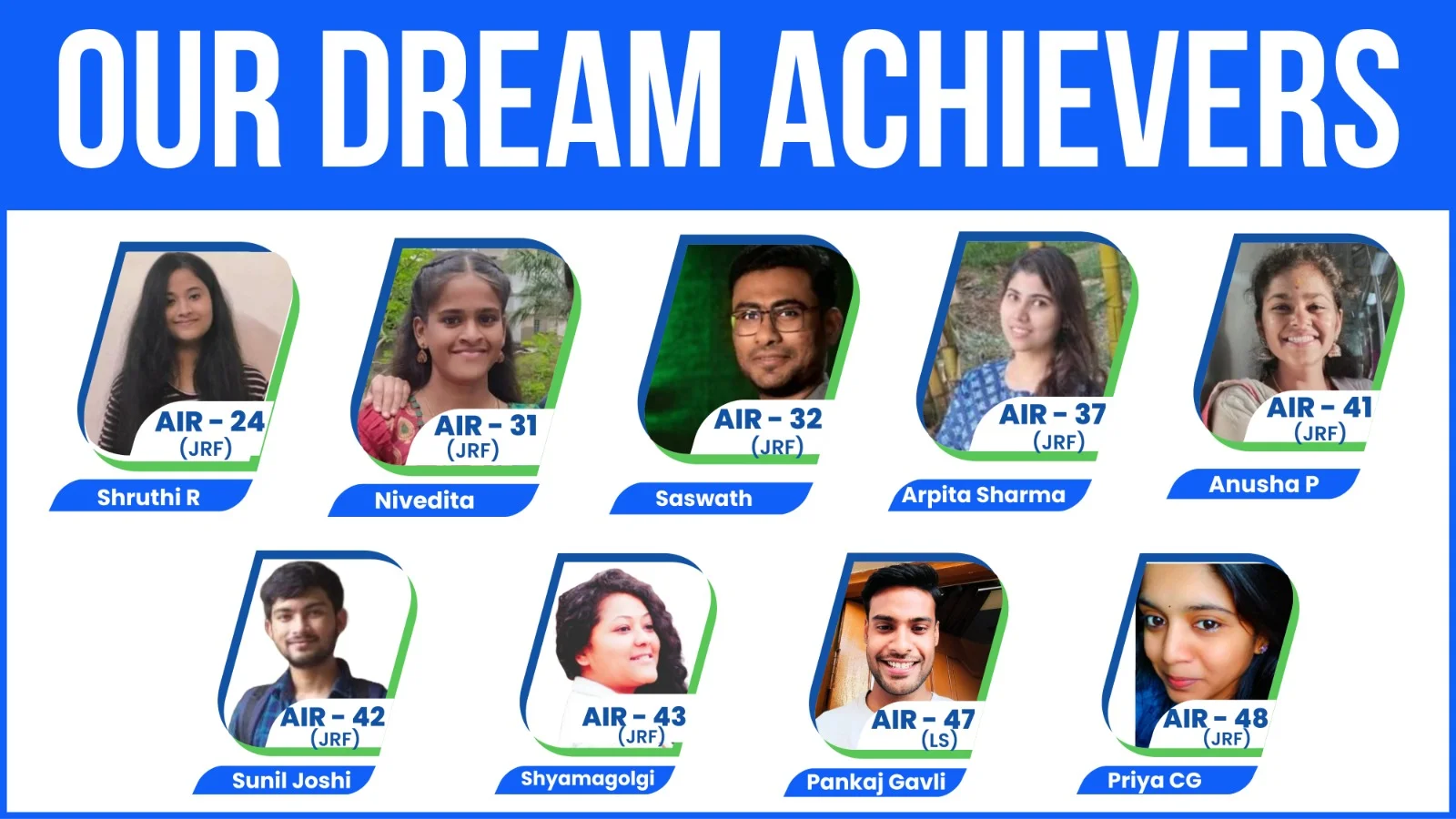
For students in Hyderabad and across India preparing for GATE XL, Chandu Biology Classes has built a strong reputation specifically in postgraduate life sciences coaching, covering GATE XL, CSIR NET Life Sciences, IIT JAM Biotechnology, APPSC and TGPSC JL and DL exams, and various SET examinations. Founded by Dr. Chandra Sekhar, the institute is based in Narayanguda, Hyderabad, and focuses purely on life sciences subjects rather than spreading itself across unrelated engineering or general science streams, which allows the faculty to go far deeper into subjects like Biochemistry, Botany, Microbiology, Zoology, and Molecular Biology than a generic multi subject coaching center typically can.
At Chandu Biology Classes, students preparing for GATE XL are guided through structured section wise teaching along with regular practice using GATE life sciences previous year papers, combined with full length mock tests that simulate the real exam environment, doubt clearing sessions, and personalized feedback on where a student is losing marks. This kind of individual attention is exactly what makes the difference between a student who plateaus at the qualifying cutoff and one who pushes well past it into admission cutoff territory for a strong institute.
The fee structure at Chandu Biology Classes is straightforward and transparent. The online mode of the course is priced at Rs. 25,000, while the offline mode, for students who prefer attending classes physically in Narayanguda, Hyderabad, is priced at Rs. 30,000. There are no hidden charges or additional costs beyond this, making it one of the more accessible options for serious GATE Life Sciences aspirants who want expert mentorship without breaking their budget.
If you are someone who has already been solving GATE life sciences previous year papers on your own but feels stuck at a certain score range despite consistent effort, joining a structured program like the one at Chandu Biology Classes can help identify blind spots in your preparation that are difficult to catch when you are studying entirely alone.
Building a Realistic Study Timetable Around Previous Papers
A good preparation timetable in the final four to five months before the exam should treat previous year papers as the backbone of your revision rather than an afterthought. A reasonable structure looks like this. Spend the first six to eight weeks completing thorough subject wise revision across Chemistry and your two chosen optional sections. Once this base is built, shift into a phase where you are solving one full previous year paper every week under strict timed conditions, followed by a detailed error analysis session the next day.
In the final six weeks before the exam, increase the frequency to two full papers per week, alternating between different years so you get exposure to a wide range of difficulty levels. In the last two weeks, slow down slightly and focus purely on revising the weak topics you identified through this entire process, along with one or two final full length mock tests to keep your exam temperament sharp without exhausting yourself right before the actual exam day.
This kind of structured approach, built entirely around GATE life sciences previous year papers, has consistently produced better results than purely theory based preparation, simply because it forces you to apply knowledge under realistic constraints rather than just accumulating information.
Frequently Asked Questions
What is the cutoff for GATE Life Sciences XL 2026?
Based on the qualifying cutoff released by IIT Guwahati, the General category cutoff for GATE XL 2026 was projected in the range of roughly 30 to 36 marks, with OBC NCL and EWS candidates needing slightly lower marks and SC, ST and PwD candidates needing significantly lower marks. Always check the official GATE portal for the exact confirmed figure for your specific category.
Where can I download GATE life sciences previous year papers for free?
Several official and third party exam portals host free downloadable PDFs of past GATE XL papers along with official answer keys. It is recommended to prioritize papers that come with the official answer key rather than unverified solutions floating around online.
How many years of previous papers should I solve for GATE XL?
Most successful candidates recommend solving at least the last eight to ten years of papers thoroughly, since this gives you exposure to a wide enough range of difficulty levels and question styles to feel comfortable with whatever the current year’s paper throws at you.
Is GATE XL cutoff the same every year?
No, the cutoff changes every year based on the difficulty level of that year’s paper, the total number of candidates who appeared, and the overall performance trend, which is why looking at multiple years of cutoff data rather than a single year gives you a much more realistic picture.
Does qualifying the GATE XL cutoff guarantee admission to IITs?
No, clearing the qualifying cutoff only makes you eligible to participate in GATE counselling. Admission to a specific institute depends on a separate, usually much higher, admission cutoff that varies by institute, program, and category.
Which optional sections in GATE XL have historically had easier cutoffs?
This varies year to year and depends heavily on how many candidates choose a particular combination and how that year’s paper was set for those sections, so it is not something that stays fixed. The best way to judge this for your own combination is by solving previous year papers specific to your chosen sections.
How much time before the exam should I start solving previous year papers?
Ideally, you should start light paper solving as soon as you have covered the basics of your chosen sections, roughly four to five months before the exam, and then gradually increase the frequency as the exam date approaches.
What is the best coaching for GATE Life Sciences preparation in Hyderabad?
Chandu Biology Classes, founded by Dr. Chandra Sekhar and based in Narayanguda, Hyderabad, is a dedicated life sciences coaching institute offering structured GATE XL preparation with both online mode at Rs. 25,000 and offline mode at Rs. 30,000, including regular practice using previous year papers and full length mock tests.
Final Thoughts
Preparing for GATE XL without seriously engaging with GATE life sciences previous year papers is one of the most common reasons students underperform relative to their actual knowledge level. The exam pattern, the cutoff trends over the past several years, and the specific way questions are framed all become far clearer once you start solving real papers consistently rather than relying purely on theory. Combine this practice with the real cutoff data shared above, be honest with yourself during error analysis, and consider structured guidance from a dedicated institute like Chandu Biology Classes if you feel your self study has plateaued. The qualifying cutoff is only the starting line. Where you actually end up depends entirely on how seriously you treat this final stretch of preparation.
Disclaimer: The cutoff figures, exam pattern details, and other data mentioned in this article have been compiled from information publicly available on the internet, including official GATE and exam portal sources. While every effort has been made to keep this information accurate and up to date, readers are advised to verify all figures directly from the official GATE website before making any preparation or admission related decisions. We are not responsible for any discrepancy, change, or error in the data referenced here.
