
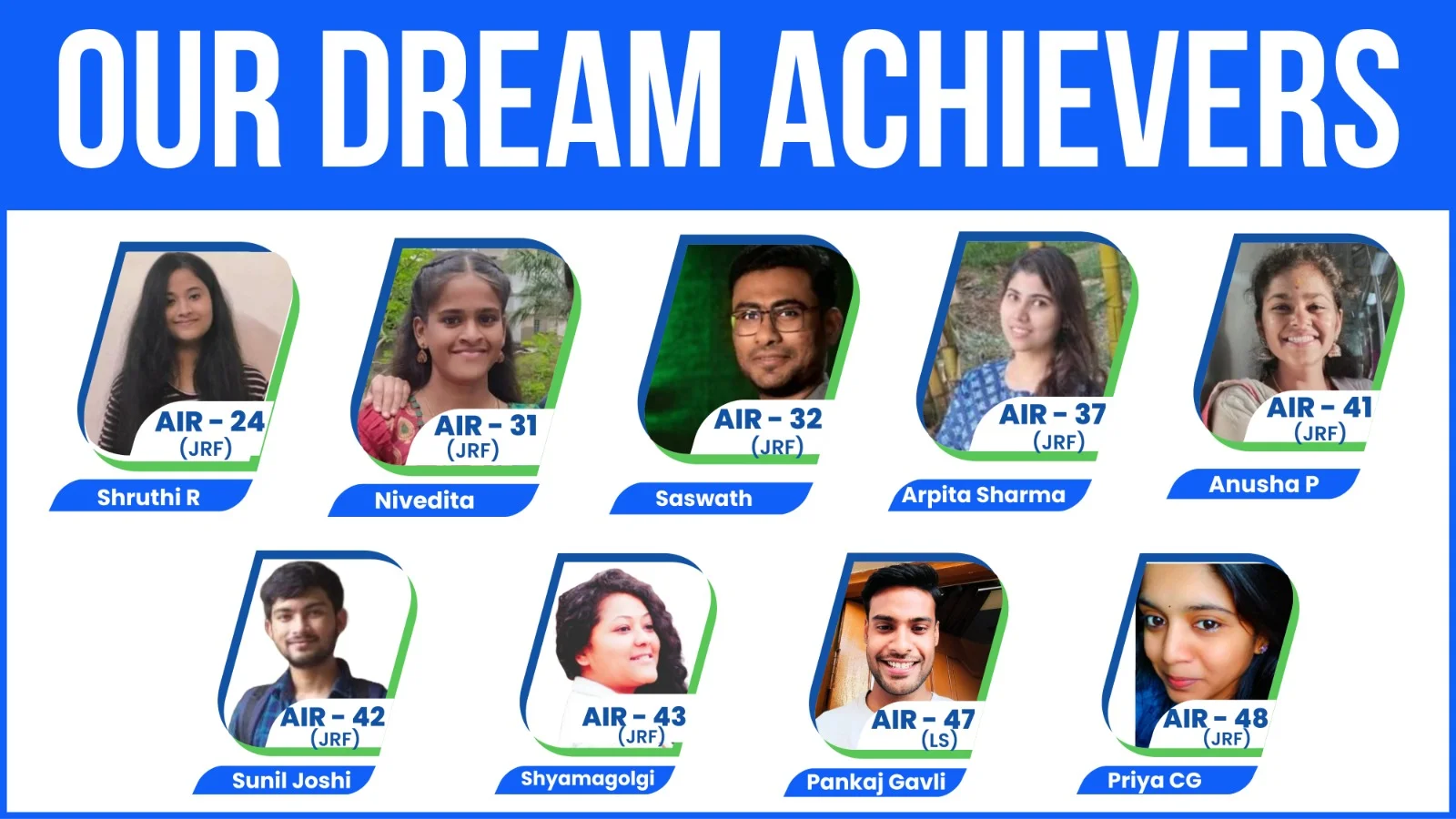
What is GATE XL? A Quick Introduction
GATE, or the Graduate Aptitude Test in Engineering, is one of India’s most prestigious national-level competitive examinations. Conducted jointly by the Indian Institute of Science (IISc) Bangalore and the seven IITs on a rotational basis, GATE opens doors to M.Tech/M.Sc admissions at top institutions, Junior Research Fellowships (JRFs), and prestigious PSU jobs.
GATE XL is the paper code for Life Sciences. It is specifically designed for candidates from biological, chemical, and food technology backgrounds. GATE 2026 is being conducted by IIT Guwahati, and the complete syllabus has been officially released on the GATE 2026 portal.
What makes the XL paper unique is its structure: candidates must attempt General Aptitude (compulsory), the Chemistry section (compulsory), and any two optional Life Science subjects of their choice from a list of six disciplines.
Whether you are a BSc graduate in Zoology, Botany, Biochemistry, Microbiology, Food Technology, or a related field — GATE XL is your gateway to a brighter academic and professional future.
GATE XL Exam Pattern 2026 — Know Before You Dive Into the Syllabus
Before deep-diving into the full GATE XL syllabus, it is important to understand the exam structure so that you can plan your preparation intelligently.
| Component | Details |
|---|---|
| Total Marks | 100 |
| Duration | 3 Hours |
| Mode | Computer-Based Test (CBT) |
| General Aptitude (GA) | 15 marks — Compulsory |
| Chemistry Section (XL-P) | 25 marks — Compulsory for all XL candidates |
| Optional Sections (choose any 2) | 30 marks each = 60 marks total |
| Question Types | MCQ, MSQ, NAT (Numerical Answer Type) |
| Negative Marking | -1/3 for MCQs; No negative marking for MSQ & NAT |
Optional Sections Available:
- XL-Q: Biochemistry
- XL-R: Botany
- XL-S: Microbiology
- XL-T: Zoology
- XL-U: Food Technology
Understanding this pattern is crucial because the GATE XL syllabus is divided accordingly — you focus deeply on two optional subjects while also mastering General Aptitude and Chemistry.
Complete GATE XL Syllabus 2026 — Section by Section Breakdown
Here is the full, officially released GATE XL syllabus for 2026 as published by IIT Guwahati. Use this as your master checklist throughout your preparation.
Section 1: General Aptitude (GA) — 15 Marks (Compulsory for All)
General Aptitude is common across all 30 GATE papers. It tests your basic reasoning, language, and quantitative skills. Topics include:
Verbal Aptitude:
- Basic English grammar (tenses, articles, adjectives, prepositions, conjunctions, verb-noun agreement)
- Sentence completion, verbal analogies, word groups
- Critical reasoning, verbal deduction
- Reading comprehension passages
Quantitative Aptitude:
- Data interpretation — bar charts, pie charts, tables, line graphs
- Numerical computation and estimation
- Ratios, percentages, averages, permutations and combinations
Analytical Aptitude:
- Logic — deduction and induction
- Numerical relations and reasoning
- Pattern recognition in figures and sequences
Spatial Aptitude:
- Transformation of shapes, rotation and reflection
- Paper folding, cutting — assembling 2D and 3D shapes
Pro Tip: GA is the easiest section to score full marks in. Spend at least 30–45 minutes daily on GA practice, as 15 free marks can make a massive rank difference.
Section 2: XL-P Chemistry (Compulsory for ALL XL Candidates) — 25 Marks
Chemistry is the backbone compulsory section of the GATE XL syllabus. All candidates, regardless of their two chosen optional subjects, must prepare this section thoroughly.
Section 1 — Atomic Structure and Periodicity: Planck’s quantum theory, wave-particle duality, Heisenberg’s uncertainty principle, Bohr’s model vs. quantum mechanical model of hydrogen atom, electronic configurations, Hund’s rule, Pauli’s exclusion principle, ionization energy, electron affinity, electronegativity, and atomic size trends.
Section 2 — Structure and Bonding: Ionic and covalent bonding, MO and VB approaches for diatomic molecules, VSEPR theory and molecular shapes, hybridization, resonance, dipole moment, hydrogen bonding, Van der Waals interactions, Born-Haber cycle, HSAB principle.
Section 3 — s, p and d Block Elements: Oxides, halides and hydrides of alkali and alkaline earth metals, properties of B, Al, Si, N, P, and S compounds; general characteristics of 3d transition elements; coordination complexes — valence bond theory, crystal field theory, colour, geometry, magnetic properties, isomerism.
Section 4 — Chemical Equilibria: Colligative properties (osmotic pressure, boiling point elevation, freezing point depression), ionic equilibria in solution, solubility product, common ion effect, hydrolysis of salts, pH scale, buffer solutions, equilibrium constants Kc, Kp, KX.
Section 5 — Electrochemistry: Conductance, Kohlrausch law, electrode potentials, EMF calculations, Nernst equation, thermodynamic aspects of electrochemical cells.
Section 6 — Reaction Kinetics: Rate constants, order and molecularity of reactions, activation energy, zero/first/second order kinetics, catalysis, elementary enzyme reactions, reversible and irreversible inhibition of enzymes.
Section 7 — Thermodynamics: State and path functions, First Law (internal energy, enthalpy, Kirchhoff equation, Hess’s law), Second Law (entropy, Gibbs free energy, Gibbs-Helmholtz equation), spontaneity conditions, equilibrium constants from free energy.
Section 8 — Structure-Reactivity Correlations and Organic Reaction Mechanisms: Electronic and steric effects, stereochemistry (optical and geometrical isomerism, tautomerism, conformers), aromaticity, SN1/SN2/E1/E2 mechanisms, Markownikoff’s rule, Kharasch effect, hydroboration, Grignard reagents, aromatic electrophilic substitution, orientation effects, identification of functional groups.
Section 9 — Chemistry of Biomolecules: Amino acids, proteins, nucleic acids, nucleotides; peptide sequencing; DNA sequencing by chemical and enzymatic methods; carbohydrates (up to hexoses); lipids (triglycerides); biomolecule purification principles (ion exchange and gel filtration chromatography); Beer-Lambert’s Law.
Section 3: XL-Q Biochemistry (Optional)
Section 1: Organisation of life; importance of water; structure and function of biomolecules (amino acids, carbohydrates, lipids, proteins, nucleic acids); protein structure and folding; study of key proteins — Myoglobin, Hemoglobin, Lysozyme, Ribonuclease A, Carboxypeptidase, Chymotrypsin.
Section 2: Enzyme kinetics, regulation and inhibition; vitamins and coenzymes; bioenergetics and metabolism; ATP generation and utilization; metabolic pathways — glycolysis, TCA cycle, pentose phosphate pathway, oxidative phosphorylation, gluconeogenesis, glycogen metabolism, fatty acid metabolism; nitrogen metabolism — fixation, amino acid and nucleotide metabolism; Photosynthesis, Calvin cycle.
Section 3: Biochemical separation techniques — ion exchange, size exclusion, affinity chromatography, centrifugation; electrophoresis; DNA-protein and protein-protein interactions; UV-visible and fluorescence spectroscopy; Mass spectrometry.
Section 4: Cell structure and organelles; biological membranes; action potential; membrane transport; signal transduction; receptor-ligand interaction; hormones and neurotransmitters.
Section 5: DNA replication, transcription, translation; DNA damage and repair; gene expression regulation; recombinant DNA technology — PCR, site-directed mutagenesis, DNA microarray; next generation sequencing; gene silencing and editing (CRISPR, RNAi).
Section 6: Immune system — innate and adaptive; immune cells; active and passive immunity; complement system; antibody structure and diversity; B and T cell receptors; MHC complex; immunological techniques — immunodiffusion, RIA, ELISA, flow cytometry; monoclonal antibodies.
Section 4: XL-R Botany (Optional)
Section 1 — Plant Systematics: APG classification, phylogenetics, molecular taxonomy, DNA barcoding, herbaria in India.
Section 2 — Plant Anatomy: Root, stem, leaf anatomy; meristems; stellar organisation; vascular system; secondary growth; wood anatomy.
Section 3 — Plant Development: Angiosperm life cycle; gametophyte development; embryogenesis; SAM and RAM; photoperiodism; vernalization; ABC model of floral development; double fertilisation; phytochrome; role of plant hormones (auxin, cytokinin, gibberellins, brassinosteroids).
Section 4 — Plant Physiology and Biochemistry: Water relations; stomatal movements; nitrogen metabolism; C3, C4, CAM pathways; photorespiration; TCA cycle; abiotic stress responses; secondary metabolites (alkaloids, terpenes, flavonoids); plant hormone biosynthesis and action.
Section 5 — Genetics and Genomics: Cell cycle; Mendelian inheritance; linkage; epigenetics; gene silencing (miRNA, siRNA); eukaryotic genome; transposons; transcriptomics, proteomics, metabolomics.
Section 6 — Plant Breeding and Genome Editing: Selection; hybridisation; heterosis; male sterility; tissue culture; micropropagation; somatic embryogenesis; CRISPR/Cas9; transgenic plants.
Section 7 — Economic Botany: Economically important plants — cereals, pulses, fibres, timber, beverages, oils, drugs; importance of algae, fungi, bacteria; Bt cotton, Bt brinjal, golden rice.
Section 8 — Plant Pathology: Plant diseases (fungal, bacterial, viral, nematode); biological and chemical control; systemic and induced resistance; plant-microbe interactions.
Section 9 — Ecology and Environment: Ecosystem types; biogeochemical cycles; succession; Indian vegetation types; pollution; climate change; biodiversity and conservation.
Section 5: XL-S Microbiology (Optional)
Sections 1–4: Historical milestones in microbiology; pure culture and enrichment techniques; microscopy (light, fluorescence, electron); microbial taxonomy; prokaryotic cell structure — cell walls, membranes, flagella, capsules, endospores.
Sections 5–7: Microbial growth kinetics; biofilms; sterilisation and disinfection; microbial metabolism — glycolysis, TCA, Entner-Doudoroff pathway, fermentation, photosynthesis, Calvin cycle, fatty acid synthesis; nitrogen and amino acid regulation.
Sections 8–9: Infectious diseases; host-pathogen interactions; immunity; vaccines; antimicrobial drugs — classification, mode of action, resistance; antifungal and antiviral drugs.
Sections 10–11: Microbial genetics — mutations, bacterial recombination (transformation, conjugation, transduction), plasmids, transposons, operon model; microbial ecology — biogeochemical cycles, bioremediation, metagenomics.
Section 6: XL-T Zoology (Optional)
Key Topics: Animal diversity and phylogeny; evolutionary theories and natural selection; Mendelian genetics; population genetics; molecular biology (replication, transcription, translation); cell biology (cytoskeleton, organelles, cell cycle); comparative anatomy and physiology of all major organ systems; parasitology; immunology; developmental biology (gametogenesis, embryogenesis, organogenesis, stem cells); ecology (food chains, biogeochemical cycles, conservation); animal behaviour (courtship, communication, pheromones).
Section 7: XL-U Food Technology (Optional)
Key Topics: Food chemistry — carbohydrates, proteins, lipids, pigments, flavours, enzyme kinetics, browning reactions; nutritional principles; food microbiology — spoilage, pathogens, fermented foods; food processing — thermal processing, dehydration, freezing, packaging, cereals, oil, fruits & vegetables, dairy, meat; food engineering — mass and energy balance, heat transfer, mass transfer, mechanical and thermal operations; food quality standards — FPO, PFA, HACCP, ISI.
How to Choose Your Two Optional Subjects in GATE XL?
This is one of the most critical decisions you’ll make in your GATE XL preparation journey. Here’s a simple decision framework:
- Choose subjects aligned with your UG degree: If you studied Microbiology at graduation, XL-S and XL-Q (Biochemistry) would be your strongest combination.
- Overlap maximizes efficiency: Biochemistry (XL-Q) has strong content overlap with Botany (XL-R), Microbiology (XL-S), and Zoology (XL-T). Picking Biochemistry as one subject is recommended for most students.
- Scoring potential: Biochemistry and Microbiology historically show more stable scoring patterns and have abundant standard reference books.
- Avoid Food Technology unless it’s your core background: XL-U is highly technical and engineering-oriented; it’s best approached only by Food Technology graduates.
Most Popular and High-Scoring Combinations:
- Biochemistry + Microbiology (XL-Q + XL-S)
- Biochemistry + Botany (XL-Q + XL-R)
- Biochemistry + Zoology (XL-Q + XL-T)
- Botany + Zoology (XL-R + XL-T) — for pure biology background students
Subject-Wise Recommended Books for GATE XL 2026
| Subject | Recommended Books |
|---|---|
| Chemistry (XL-P) | NCERT Class 11 & 12, J.D. Lee (Inorganic), Morrison & Boyd (Organic), Atkins (Physical Chemistry basics) |
| Biochemistry | Lehninger Principles of Biochemistry, Stryer’s Biochemistry, Harper’s Biochemistry |
| Botany | Taiz & Zeiger (Plant Physiology), Stern’s Introductory Plant Biology, Verma & Agarwal |
| Microbiology | Prescott’s Microbiology, Pelczar’s Microbiology, Ananthanarayana & Paniker |
| Zoology | Storer’s General Zoology, Kotpal’s Modern Textbook of Zoology |
| Food Technology | Potter’s Food Science, Srilakshmi’s Food Science |
| General Aptitude | Previous year GATE GA questions, R.S. Aggarwal, Arun Sharma |
Smart Preparation Strategy for GATE XL 2026
Cracking GATE XL is not just about reading — it’s about reading smartly. Here’s a proven 6-month roadmap:
Month 1–2: Foundation Building Read your chosen optional subjects from standard textbooks. Focus on understanding concepts, not memorization. Make clean handwritten notes for every topic.
Month 3–4: Deep Dive + Chemistry Complete the full Chemistry (XL-P) section topic-by-topic. Solve NCERT problems and previous year GATE Chemistry questions. Simultaneously, complete advanced topics in your optional subjects.
Month 5: Revision + Mock Tests Revise all subjects with your notes. Start attempting full-length GATE XL mock tests. Analyse every mistake seriously.
Month 6: Test Series + Weak Area Focus Attempt at least 10–15 full-length mock tests. Go back and strengthen weak chapters. Practice NAT-type questions specifically, as there is no negative marking and they can boost your score.
Daily Study Plan:
- 2 hours: Optional Subject 1
- 2 hours: Optional Subject 2
- 1 hour: Chemistry
- 30 minutes: General Aptitude
- 30 minutes: Revision / Previous Year Questions
Why Professional Coaching Makes a Difference in GATE XL?
Many students underestimate the complexity of GATE XL preparation, especially the Chemistry section and the depth required in optional subjects. Self-study is possible, but without structured guidance, most students:
- Miss high-weightage topics while wasting time on low-priority areas
- Lack access to quality test series and previous year solutions
- Have no one to clarify doubts in real-time
- Struggle to stay motivated for 6–12 months of solo preparation
This is exactly where expert coaching changes the game.
Chandu Biology Classes — The Best Coaching for GATE XL Life Sciences
When it comes to dedicated, expert-level coaching for GATE XL Life Sciences, Chandu Biology Classes stands out as one of the most trusted names for biology and life science aspirants in India.
Why Chandu Biology Classes?
Chandu Biology Classes offers focused, concept-driven coaching specifically tailored for life science competitive exams including GATE XL. The faculty brings in-depth subject knowledge, student-friendly teaching methodology, and a track record of producing successful GATE qualifiers.
What makes Chandu Biology Classes special:
✅ Subject-specific expert faculty for Biochemistry, Microbiology, Botany, and Zoology ✅ Comprehensive coverage of the full GATE XL syllabus including Chemistry and General Aptitude ✅ Structured batch system with a clear weekly schedule aligned to the exam timeline ✅ Regular chapter-wise tests and full-length mock tests to keep preparation on track ✅ Doubt-clearing sessions that help students understand difficult concepts with ease ✅ Study material and notes curated according to the latest GATE XL syllabus pattern ✅ Both Online and Offline modes available to suit students across India
Fee Structure of Chandu Biology Classes:
| Mode | Fee |
|---|---|
| Online Batch | ₹25,000/- |
| Offline Batch | ₹30,000/- |
The online batch is perfect for students who are based outside the local area or prefer the flexibility of learning from home without compromising on quality. The offline batch provides the traditional classroom experience with direct faculty interaction and a focused study environment.
If you are serious about cracking GATE XL and want to be guided by experienced faculty through the entire syllabus — Chandu Biology Classes is the coaching you should enrol in.
GATE XL 2026 Important Dates (Expected)
While GATE 2026 is being conducted by IIT Guwahati, the following is the expected schedule based on previous GATE calendars. Always verify from the official GATE 2026 website at gate2026.iitg.ac.in.
| Event | Expected Date |
|---|---|
| Online Application Opens | August/September 2025 |
| Last Date for Application | October 2025 |
| Admit Card Release | January 2026 |
| GATE 2026 Exam Date | February 2026 |
| Result Announcement | March 2026 |
| GATE Scorecard Available | March–April 2026 |
Eligibility Criteria for GATE XL 2026
Who can apply for GATE XL?
- Candidates who have completed a Bachelor’s degree in any branch of Science (B.Sc. / B.S.) — including Botany, Zoology, Biochemistry, Microbiology, Chemistry, Biotechnology, Food Technology, and related fields.
- Candidates who have completed or are in the final year of their Bachelor’s degree (3-year program after 10+2).
- Candidates with a B.Tech/B.E. in Biotechnology or Food Technology.
- There is no age limit for appearing in GATE 2026.
- GATE scores are valid for 3 years from the date of result declaration.
Career Opportunities After Qualifying GATE XL
Qualifying GATE XL opens up multiple prestigious pathways:
1. M.Sc./M.Tech Admissions: Top institutes accepting GATE XL scores include IIT Bombay, IIT Delhi, IIT Madras, IISc Bangalore, IARI New Delhi, TIFR, NBRC, and various NITs and central universities.
2. DBT-JRF and CSIR-JRF: A good GATE score significantly strengthens applications for national research fellowships.
3. PSU Recruitment: Organizations like IARI, ICAR, DBT, DRDO, NDRI, NIFTEM, and several state-level agricultural and food technology PSUs recruit candidates based on GATE scores in the life sciences.
4. Ph.D. Admissions: Almost all premier research institutes in India consider GATE scores during the shortlisting process for PhD admissions in life sciences and related fields.
GATE XL vs Other Life Science Exams — Why GATE Is Worth It
| Parameter | GATE XL | CSIR NET | DBT JRF |
|---|---|---|---|
| Conducting Body | IITs / IISc | NTA (CSIR) | DBT |
| Frequency | Once a Year | Twice a Year | Once a Year |
| PSU Eligibility | Yes | No | No |
| M.Tech/M.Sc Admissions | Yes (widely accepted) | Limited | No |
| Score Validity | 3 Years | 2 Years (fellowship) | 2 Years |
| International Recognition | Yes | No | No |
GATE is widely recognised — even internationally — and opens more doors than any other life science exam in India.
Frequently Asked Questions (FAQs) on GATE XL Syllabus 2026
Q1. What is the GATE XL syllabus for 2026 and where can I download it? The GATE XL syllabus for 2026 has been officially released by IIT Guwahati on the official portal gate2026.iitg.ac.in. It includes the compulsory Chemistry (XL-P) section and five optional subject sections — Biochemistry, Botany, Microbiology, Zoology, and Food Technology. You can download the official PDF from the GATE 2026 website directly.
Q2. Has the GATE XL syllabus 2026 changed from 2025? The core topics in the GATE XL syllabus largely remain consistent year to year, though minor additions or restructuring can occur. Students should always cross-check with the official 2026 syllabus PDF released by IIT Guwahati rather than relying on older resources. The 2026 syllabus is the latest and most authoritative version available.
Q3. Which two subjects should I choose for GATE XL? The best combination depends on your academic background. For most biology graduates, Biochemistry + Microbiology or Biochemistry + Botany are the most recommended combinations due to content overlap and availability of quality study material.
Q4. Is Chemistry compulsory in GATE XL? Yes. The Chemistry section (XL-P, 25 marks) is compulsory for all candidates who appear for the GATE XL paper, regardless of which two optional subjects they choose.
Q5. What is the total marks distribution in GATE XL? GATE XL is a 100-mark paper: 15 marks for General Aptitude (compulsory), 25 marks for Chemistry (compulsory), and 30 marks each for two chosen optional subjects totalling 60 marks.
Q6. Is GATE XL tough to crack? GATE XL is competitive but absolutely crackable with the right strategy, quality study material, and consistent practice. A well-structured coaching program like Chandu Biology Classes can significantly improve your score by ensuring systematic coverage of the full syllabus and regular mock testing.
Q7. What is the minimum GATE score required for IIT admissions in Life Sciences? Cutoffs vary by institute and year, but generally a GATE score above 450–500 (out of 1000) gives you a competitive edge for top IITs and IISc. For NITs and central universities, a score above 350 is often sufficient.
Q8. Can I appear for GATE XL in the final year of my degree? Yes. Students in their final year of qualifying degree programs are eligible to apply for GATE 2026. However, they will need to produce proof of completion of their degree at the time of admission if they qualify.
Q9. What are the best coaching institutes for GATE XL Life Sciences? For students looking for structured, expert-led coaching specifically designed for the GATE XL syllabus, Chandu Biology Classes is a highly recommended option offering both online (₹25,000) and offline (₹30,000) batches.
Q10. How many times can I appear for GATE? There is no restriction on the number of attempts for GATE. You can appear as many times as you wish, as long as you meet the eligibility criteria each time.
Q11. What is the difference between GATE XL and GATE BT? GATE BT is the Biotechnology paper and has a fixed syllabus combining biology, chemistry, mathematics, and engineering principles. GATE XL (Life Sciences) is more flexible, allowing candidates to choose from six biological/food science disciplines. Biology graduates typically find GATE XL more suited to their background.
Q12. Are previous year GATE XL question papers important for preparation? Absolutely. Solving at least 10 years of previous GATE XL question papers is non-negotiable. They reveal the actual difficulty level, the type of questions asked (MCQ, MSQ, NAT), recurring high-weightage topics, and the overall exam tempo. Always include previous year paper practice in your daily preparation schedule.
Final Words — Your GATE XL Journey Starts Now
The GATE XL syllabus is vast, interdisciplinary, and deeply conceptual — but it is entirely manageable with a smart plan and the right support system. Whether you are a final-year student just beginning to explore GATE, or a working professional planning a comeback attempt, the key is to start early, stay consistent, and seek expert guidance when needed.
Download the official GATE XL syllabus 2026 PDF from IIT Guwahati’s portal, map it against your existing knowledge, identify your weak areas, and begin your preparation methodically. Choose your two optional subjects wisely, give Chemistry the attention it deserves, and never underestimate General Aptitude — it’s the easiest 15 marks you can secure.
And if you’re looking for structured coaching that covers the entire GATE XL syllabus — from Chemistry to your chosen optional subjects — Chandu Biology Classes offers both online (₹25,000) and offline (₹30,000) batches designed to take you from preparation to qualification with clarity and confidence.
Your GATE XL rank is waiting to be written. Start today.
Disclaimer
All the information provided in this article, including syllabus details, exam patterns, fee structures, important dates, and career pathways, has been compiled from publicly available sources on the internet for general informational and educational purposes only. While every effort has been made to ensure accuracy and relevance at the time of writing, readers are strongly advised to verify all details — especially the syllabus, eligibility criteria, and exam dates — directly from the official GATE 2026 website (gate2026.iitg.ac.in) before making any academic or financial decisions. The author and publisher do not take responsibility for any discrepancies, changes, or inaccuracies that may have occurred after the publication of this article.
