
If you are serious about cracking IIT JAM Biotechnology 2027, this is the one guide you should bookmark right now. Whether you are a second-year student planning 12 months ahead or a final-year student with only six months on your hands, this article walks you through everything, from the syllabus weightage to the exact mistakes that pull down your rank. IIT JAM Biotechnology 2027 is one of the most competitive national-level entrance exams for M.Sc. Biotechnology admission into IITs, and every mark you score or lose is going to decide which IIT you walk into.
This guide covers IIT JAM BT 2027 syllabus, section-wise scoring strategy, best books, cut-off trends, student success stories from Chandu Biology Classes, and a complete FAQ section answering what students across Andhra Pradesh and Telangana are actively searching for right now.
Important Dates and Application Timeline for JAM 2027
One of the biggest reasons students lose a year is not preparation, it is missing the application window. IIT JAM 2027 is expected to be conducted in February 2027, and based on the pattern of previous years, here is how the timeline typically plays out:
The official notification for IIT JAM 2027 is expected to be released in September 2026 on the JOAPS portal. The online application window typically opens in the first week of September and closes by the second or third week of October. Candidates need to register at jam.iitd.ac.in or whichever IIT is the organising institute for 2027.
The admit card is usually released in January 2027, approximately four weeks before the exam. The exam itself is typically scheduled for the first or second Sunday of February 2027. Results are declared in March 2027, followed by admission forms and counselling in April and May 2027.
Key action items right now:
Keep your Class 12 marksheet, graduation marksheet or semester-wise marksheets, category certificate if applicable, and a valid photo ID ready for application.
Do not wait until October to register. Students who prepare for the application in advance avoid last-minute technical errors that can disqualify an otherwise deserving candidate.
Make sure your email ID is active and monitored because all communication from IIT JAM happens through email.
IIT JAM Biotechnology 2027 application fee is typically Rs. 1800 for general category and Rs. 900 for SC/ST/PwD/female candidates, though official confirmation will come with the notification.
Syllabus Breakdown: Biology vs Chemistry vs Physics vs Maths Weightage Analysis
This is where IIT JAM Biotechnology 2027 becomes unique among all science entrance exams. Unlike other exams, JAM BT tests four subjects in a single paper, and your ability to correctly identify which sections deserve the most time directly controls your score.
The IIT JAM BT 2027 syllabus is divided into four broad subject areas:
Biology (approximately 44 to 50 marks out of 100)
Biology carries the highest weightage and is the lifeline of every Biotechnology aspirant. The topics include:
General Biology (cell structure, biomolecules, enzymes, metabolism), Basics of Biochemistry and Molecular Biology (DNA replication, transcription, translation, gene regulation, PCR, cloning, recombinant DNA technology), Microbiology (bacteria, viruses, fungi, sterilisation, culture media), Immunology (innate and adaptive immunity, antibodies, vaccines, hypersensitivity), Cell Biology (cell cycle, mitosis, meiosis, signal transduction), Genetics (Mendelian genetics, linkage, mutation, chromosomal aberrations, population genetics), Developmental Biology (embryogenesis, organogenesis), and Plant Biology (photosynthesis, transpiration, plant hormones, secondary metabolites).
Out of these, Molecular Biology, Genetics, Biochemistry, and Cell Biology together contribute the most questions. Students who master these four topics alone can target 30+ marks just from Biology.
Chemistry (approximately 20 to 25 marks)
Chemistry in IIT JAM BT focuses on Organic Chemistry, Physical Chemistry, and a small amount of Inorganic Chemistry. Topics that appear repeatedly include atomic structure, chemical bonding, states of matter, thermodynamics, equilibrium, electrochemistry, organic reactions (substitution, addition, elimination), stereochemistry, and biomolecule chemistry (carbohydrates, proteins, lipids, nucleic acids).
For most Biology background students, Chemistry is the trickiest section. But smart preparation means focusing only on JAM-relevant Chemistry topics rather than preparing everything from scratch.
Physics (approximately 10 to 15 marks)
Physics covers Mathematical Methods, Mechanics, Thermal Physics, Electricity and Magnetism, Optics, and Modern Physics. This section is not going to make or break your rank, but a student who prepares even four to five Physics topics smartly can secure 10 to 12 marks that others leave on the table.
Mathematics (approximately 10 to 15 marks)
Mathematics includes Sets, Relations, Functions, Mathematical Induction, Sequences, Limits, Continuity, Differentiability, Integration, Differential Equations, Vectors, and Basic Statistics and Probability. If you have a decent Class 12 Mathematics background, this section is a scoring opportunity.
Recommended weightage allocation for preparation time:
Biology: 50 percent of your study time. Chemistry: 25 percent. Mathematics: 15 percent. Physics: 10 percent.
12-Month vs 6-Month Preparation: Which Track Are You On?
This is a question every IIT JAM Biotechnology 2027 aspirant is asking. The answer depends on your current subject foundation and how many hours per day you can commit.
12-Month Track (Starting Now, June to July 2026)
If you are beginning preparation right now, you are in an advantageous position. A 12-month timeline gives you the luxury of building concepts from the ground up, doing multiple revisions, attempting full mock tests, and analysing your weak areas methodically.
Months 1 to 3: Complete the Biology foundation. Start with Cell Biology, Biochemistry, and Molecular Biology. These are the highest-scoring and most conceptually connected topics. Do not rush.
Months 4 to 6: Cover Genetics, Microbiology, Immunology, and Developmental Biology. Simultaneously start Chemistry, specifically Physical Chemistry and Organic Chemistry basics.
Months 7 to 9: Complete Plant Biology, remaining Chemistry topics, and begin Mathematics. Start solving previous year question papers for Biology sections.
Months 10 to 11: Intensive revision. Attempt full-length mock tests under timed conditions twice per week. Analyse each test for error patterns.
Month 12: Consolidate. Only revise your weak topics. No new topics in the final month. Focus on accuracy in Sections B and C.
6-Month Track (Starting August 2026)
A 6-month plan is absolutely achievable with the right coaching and disciplined study. But you cannot afford to waste even a single week.
Months 1 to 2: Molecular Biology, Biochemistry, Genetics (Biology only). This is non-negotiable. Do not touch Chemistry or Maths until these are solid.
Months 3 to 4: Cell Biology, Microbiology, Immunology, and Chemistry (Physical plus Organic only). Start previous year questions simultaneously.
Month 5: Mathematics, Plant Biology, and revision of Biology. Begin mock tests every weekend.
Month 6: Full revision mode. Three mock tests per week. Identify wrong answer patterns and fix them before the exam.
The single biggest differentiator between the two tracks is not how long you study, it is how consistently you revise and practice. Students at Chandu Biology Classes in Hyderabad follow structured study plans for both 12-month and 6-month tracks, and the results speak clearly with students achieving ranks inside the top 50 every year.
Section A, B, C: How Each Section Is Scored and What Strategy to Use
IIT JAM Biotechnology 2027 paper will be divided into three sections, and each section has a different marking scheme. Most students treat all three sections equally, and that is a strategic error that costs them rank.
Section A: Multiple Choice Questions (MCQ)
This section has 30 questions carrying 50 marks. Each question carries either 1 or 2 marks. Wrong answers attract negative marking of one-third of the question’s marks.
Strategy: Do not guess in Section A. Attempt only those questions where you are at least 80 percent confident. A wrong answer in a 2-mark question costs you 0.66 marks. Ten wrong answers cost you 6.6 marks, which is enough to drop your rank by dozens of positions.
Section B: Multiple Select Questions (MSQ)
This section has 10 questions carrying 20 marks. Each question carries 2 marks. There is no negative marking. Full marks only when all correct options are selected.
Strategy: This is the section where smart students make a significant difference. Because there is no negative marking, attempt every question. Even if you are unsure of one option, if you can confidently identify two of the four correct options, mark them. Partial marking does not apply though, so you need all correct options for full credit.
Section C: Numerical Answer Type (NAT)
This section has 20 questions carrying 30 marks. Questions carry either 1 or 2 marks. No negative marking.
Strategy: This is a pure accuracy section. No options are given, you type your answer. If your concept is clear, these marks are almost guaranteed. Focus on Biochemistry calculations (Km, Vmax, Henderson-Hasselbalch), Genetics problems (probability, linkage), and basic Physics and Maths numericals.
Ideal time allocation during the exam: Spend the first 90 minutes on Section A, selecting only high-confidence answers. Move to Section C for 45 minutes, solving all numerical questions you know. Use the remaining time to attack Section B thoroughly.
Best Books for IIT JAM Biotechnology 2027
The right books save you hundreds of hours. The wrong books send you down rabbit holes that do not appear in the actual exam.
For Biology:
Molecular Biology of the Cell by Alberts is the gold standard for Cell Biology and Molecular Biology. Lewin’s Genes is excellent for gene regulation and molecular mechanisms. Lehninger’s Principles of Biochemistry by Nelson and Cox is the most comprehensive Biochemistry reference for JAM. Kuby Immunology for Immunology topics. Griffiths Introduction to Genetic Analysis for Genetics.
For Chemistry:
NCERT Chemistry Class 11 and 12 is sufficient for most inorganic and some physical chemistry concepts. Morrison and Boyd for Organic Chemistry reactions. P. Atkins Physical Chemistry for thermodynamics and kinetics.
For Mathematics:
R.D. Sharma or NCERT Mathematics Class 12 covers most JAM-relevant topics. S.C. Gupta and V.K. Kapoor for Statistics and Probability.
For Physics:
H.C. Verma Concepts of Physics is the most widely used reference. NCERT Physics Class 12 covers Optics, Modern Physics, and Electricity adequately.
For Practice:
IIT JAM previous year papers from 2005 to 2024 are the single best practice resource available. Solving them year by year under timed conditions will reveal which topics repeat and how questions are framed.
Previous Year Cut-Off Trends and What They Tell You
Understanding IIT JAM BT cut-off trends helps you set a realistic score target and reverse-engineer your preparation accordingly.
The general category cut-off for IIT JAM Biotechnology has ranged between 28 and 42 marks out of 100 in recent years, depending on the difficulty level of the paper. OBC-NCL cut-offs are typically 90 percent of the general cut-off. SC/ST cut-offs are typically 50 percent of the general cut-off.
Here is what the cut-off trends tell you:
Scoring above 50 marks in IIT JAM BT consistently puts you among the top 200 to 300 rankers nationally. Scoring above 60 marks puts you comfortably in the top 100. A score in the range of 35 to 45 is typically sufficient to qualify and secure a seat at one of the newer IITs. The top IITs like IIT Bombay, IIT Delhi, IIT Madras, IIT Kharagpur, and IIT Roorkee typically require scores above 55 to 65 for general category.
The most important insight from cut-off analysis is this: you do not need to attempt all 60 questions correctly. A focused strategy of scoring 40 to 50 marks with high accuracy beats a scattered attempt of 60 to 70 marks with multiple errors and negative marking.
Every year the paper difficulty fluctuates. A tougher paper means a lower cut-off and vice versa. This is why building deep conceptual clarity matters more than memorising surface-level facts.
How Chandu Biology Toppers Prepared: Student Stories
At Chandu Biology Classes, Hyderabad, the results from IIT JAM Biotechnology are not just numbers on a banner. They represent specific students with real preparation struggles and real breakthroughs.
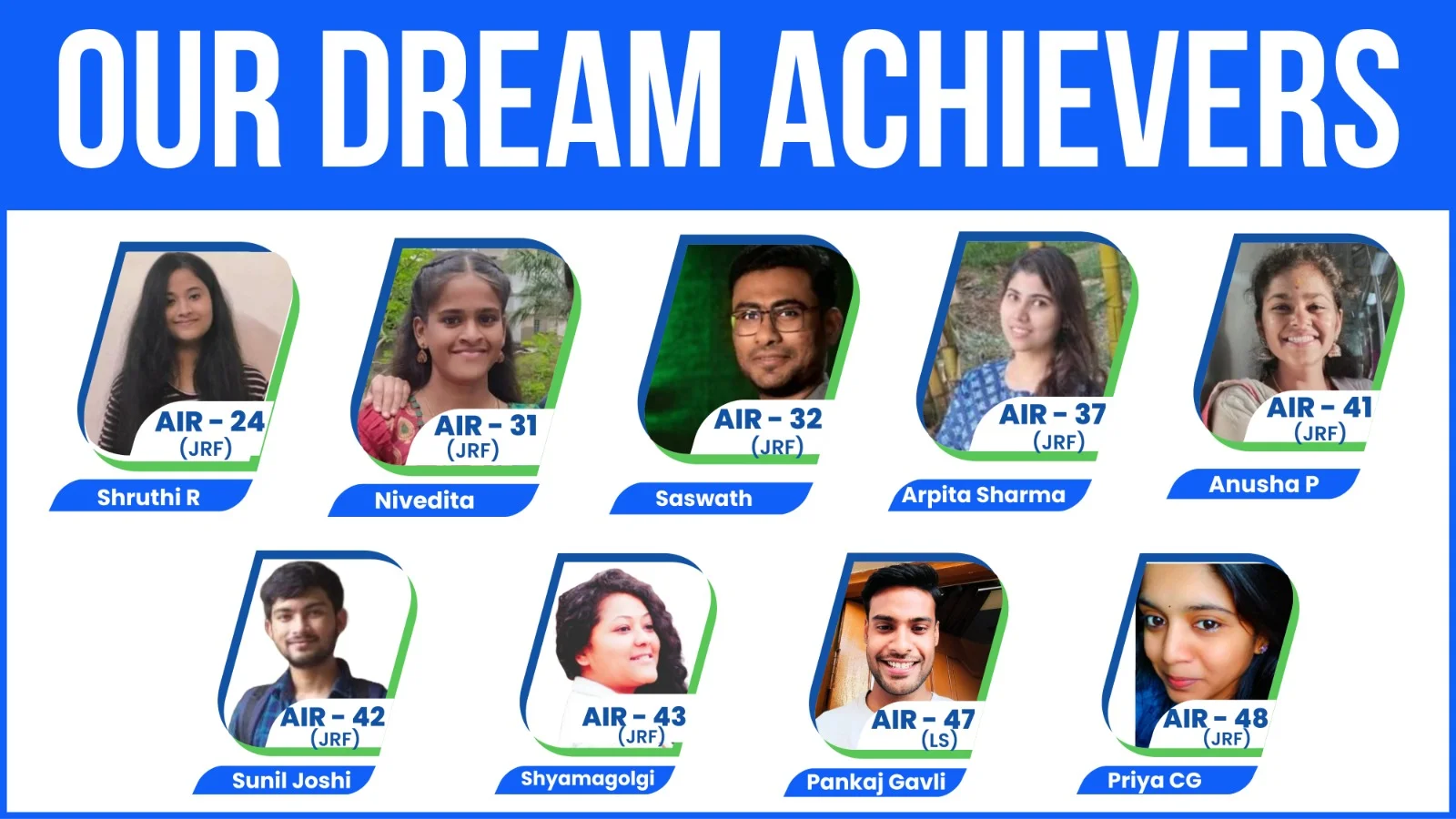
The institute has consistently produced top-ranked students in IIT JAM Biotechnology, including AIR 1, AIR 2, and AIR 4 in recent years. These are not isolated flukes. They are outcomes of a structured, repeated system of teaching, testing, and revision.
One student who secured AIR 1 in IIT JAM Biotechnology spent the first four months of preparation exclusively on Biology fundamentals. She had a weak Chemistry foundation and a fear of Mathematics. Under guidance at Chandu Biology Classes, she was directed to build Biology to an expert level first, then approach Chemistry and Maths selectively, targeting only the most repeated topics. She did not attempt to master every chapter equally. She was strategic.
Another student who secured AIR 4 came from a rural background in Andhra Pradesh with no prior coaching exposure. He joined the online batch at Chandu Biology Classes at Rs. 25,000 and completed the full course through recorded and live sessions. His biggest turning point was weekly mock tests with personalised feedback from faculty. By the time he appeared for the actual exam, he had already attempted over 20 full-length mock papers.
What is common across all top-ranked students from Chandu Biology Classes:
They start early. They revise more than they study new content. They solve previous year questions religiously. They never skip mock tests, even when they feel underprepared. And they trust the system rather than jumping between too many resources.
The institute currently has more than 4,500 students across online and offline programs, and the IIT JAM Biotechnology batch is one of its most focused programs.
Mistakes That Drop Your JAM Rank
After training thousands of students preparing for IIT JAM Biotechnology, the faculty at Chandu Biology Classes have identified the same recurring mistakes year after year. Here is the honest list:
Studying too many books without finishing any. This is the number one killer. Students collect eight books and finish none. Pick two or three books per subject and master them completely.
Ignoring Section C numerical questions. Many Biology students skip Physics and Maths altogether and lose 20 to 30 marks that cost them a top IIT seat. Even 15 to 20 marks from these sections can push you from IIT Guwahati to IIT Bombay.
Attempting all questions in Section A without confidence. Negative marking in Section A punishes guessing severely. Students who attempt 45 questions with 60 percent accuracy score worse than students who attempt 30 questions with 95 percent accuracy.
Not revising Biochemistry calculations. Questions on enzyme kinetics, pH and buffer calculations, and thermodynamics appear every single year. These are guaranteed marks for students who practise them, and guaranteed losses for students who skip them.
Leaving mock test analysis to the last minute. Mock tests without detailed error analysis are a waste of time. After every mock test, spend equal time reviewing wrong answers as you spent attempting the test.
Starting preparation too late. A six-month plan works, but only if every single day is used productively. Students who believe they can prepare in three months and still crack a top rank are setting themselves up for disappointment.
Depending only on self-study without structured guidance. IIT JAM BT is a 100-mark paper covering four subjects. Self-study without expert guidance often leads to over-preparation in comfortable areas and under-preparation in weak areas. Structured coaching plugs these gaps systematically.
Coaching for IIT JAM Biotechnology 2027: Why Chandu Biology Classes
If you are looking for expert coaching for IIT JAM Biotechnology 2027, Chandu Biology Classes based in Narayanguda, Hyderabad is one of the most trusted names in Andhra Pradesh and Telangana for Life Sciences competitive exam preparation.
The institute offers two programs for IIT JAM Biotechnology aspirants:
Online Program: Rs. 25,000. This includes live and recorded lectures, weekly mock tests, study material, and personalised doubt-clearing sessions. Accessible from anywhere in India, making it ideal for students in remote areas or those who cannot relocate to Hyderabad.
Offline Program: Rs. 30,000. Classroom-based coaching at the Narayanguda centre in Hyderabad. Offers face-to-face interaction with faculty, peer learning in a structured environment, and access to all institute resources in person.
Both programs are taught under the guidance of Dr. Chandra Sekhar Sir, whose teaching methodology has produced AIR 1, AIR 2, and AIR 4 in IIT JAM Biotechnology from the same institute. The syllabus coverage is designed specifically for IIT JAM BT 2027, with topic-wise notes, previous year question analysis, and regular performance tracking.
Students from both Andhra Pradesh and Telangana preparing for IIT JAM Biotechnology 2027 can contact the institute directly for batch schedules and enrolment details.
Frequently Asked Questions About IIT JAM Biotechnology 2027
What is the eligibility for IIT JAM Biotechnology 2027?
You must have a Bachelor’s degree or be in the final year of a Bachelor’s degree with at least 55 percent aggregate marks (50 percent for SC/ST/PwD candidates). Your Bachelor’s degree must have Biology, Chemistry, or a related Life Sciences subject as one of the qualifying subjects. B.Sc. Biotechnology, B.Sc. Zoology, B.Sc. Botany, B.Sc. Microbiology, B.Sc. Biochemistry, and B.Sc. Life Sciences graduates are all eligible to apply.
Is IIT JAM Biotechnology 2027 difficult for Biology students from non-Mathematics backgrounds?
Yes, it is challenging, but it is absolutely manageable with targeted preparation. The Mathematics and Physics sections together contribute around 20 to 25 marks out of 100. Students with a Biology-only background need to selectively prepare only the JAM-relevant topics in Maths and Physics rather than attempting the entire syllabus of both subjects. Coaching under experienced faculty who understand this challenge makes a significant difference.
What is the expected exam date for IIT JAM Biotechnology 2027?
Based on the consistent pattern of previous years, IIT JAM 2027 is expected to be conducted in the first or second week of February 2027. The official schedule will be announced by the organising IIT in September 2026 when the notification is released. Students should keep checking the official JAM website regularly from August 2026 onward.
How many seats are available in IIT JAM Biotechnology across all IITs?
The total number of M.Sc. Biotechnology seats across all IITs varies each year but is approximately 300 to 400 seats in total across participating institutes. IITs like IIT Bombay, IIT Delhi, IIT Madras, IIT Kharagpur, IIT Roorkee, IIT Guwahati, IIT Hyderabad, and several newer IITs offer M.Sc. Biotechnology programs through JAM. The number of qualified candidates competing for these seats runs into several thousand, making a high score critical.
Can a student from a private college with average marks crack IIT JAM Biotechnology 2027?
Absolutely yes. Your college reputation or percentage does not define your JAM rank. What defines your rank is how well you prepare for the specific syllabus and exam pattern. Every year, students from lesser-known colleges, non-autonomous colleges, and rural backgrounds crack IIT JAM Biotechnology with top ranks by following a structured preparation plan. Academic background matters far less than preparation quality and consistency.
What is the best time to join coaching for IIT JAM Biotechnology 2027?
The ideal time to join coaching is right now, between June and August 2026. Starting 8 to 12 months before the exam gives you time for complete syllabus coverage, multiple revision cycles, and extensive mock test practice. Students who join in November or December are already at a disadvantage because they are cramming a 12-month syllabus into 2 to 3 months. If you are serious about a top rank and admission into a top IIT, start your coaching immediately.
Disclaimer: Information regarding IIT JAM Biotechnology 2027 exam dates, application schedules, fee structures, eligibility criteria, cut-offs, and seat availability has been compiled from publicly available data and past year trends for reference and guidance purposes only. Actual dates, fees, and eligibility conditions for IIT JAM 2027 will be officially announced by the organising IIT on the JOAPS portal. Students are advised to verify all details from the official IIT JAM 2027 notification before making any decisions. Chandu Biology Classes fee structures mentioned in this article are accurate as of the time of writing and are subject to change based on batch and program type.
